Disclosure: Chasing Whereabouts is reader-supported. This guide contains affiliate links to partners like Tiqets, GetYourGuide, Viator and Headout. If you make a purchase through these links, we may earn a small commission at no extra cost to you. This helps us continue providing free, first-hand travel guides. Thank you for your support!
Spain is one of the few countries in Europe where "best places to visit" genuinely depends on what kind of trip you're planning, because the regions barely resemble each other. The Basque Country in the north has more in common with rural France than it does with Andalucía. The Canary Islands are closer to Morocco than to mainland Spain. Trying to see all of it in ten days is how people end up with a blur of train stations and no real memory of any single place.
This list covers 20 destinations across the mainland, the Balearics, and the Canaries — grouped roughly by region so you can build a realistic itinerary instead of zigzagging the country. Each entry has what it's actually known for, roughly what things cost, and how to get there. At the end there's a sample itinerary and an AI itinerary generator if you want a personalized version.
Best Places to Visit in Spain at a Glance
| Region | Standout destination | Best for | Getting there |
|---|---|---|---|
| Catalonia | Barcelona | Architecture, beaches, nightlife | Direct flights, AVE from Madrid (2h30) |
| Central Spain | Madrid | Museums, tapas culture, day trips | Direct flights, AVE hub |
| Andalucía | Seville / Granada | Moorish history, flamenco, cheap food | AVE from Madrid (2h30 / 3h20) |
| Basque Country | San Sebastián | Pintxos, beaches, Michelin stars | Train from Madrid or Bilbao (5h / 1h20) |
| Balearic Islands | Mallorca / Ibiza | Beach clubs, coves, nightlife | Direct flights from most EU hubs |
| Canary Islands | Tenerife | Year-round sun, hiking, volcano | Direct flights, ~4h from northern Europe |
| Galicia | Santiago de Compostela | Pilgrimage route, seafood, low crowds | Flight to Santiago airport or train from Madrid (5h30) |
Andalucía: Moorish Architecture and the Cheapest Tapas in Spain

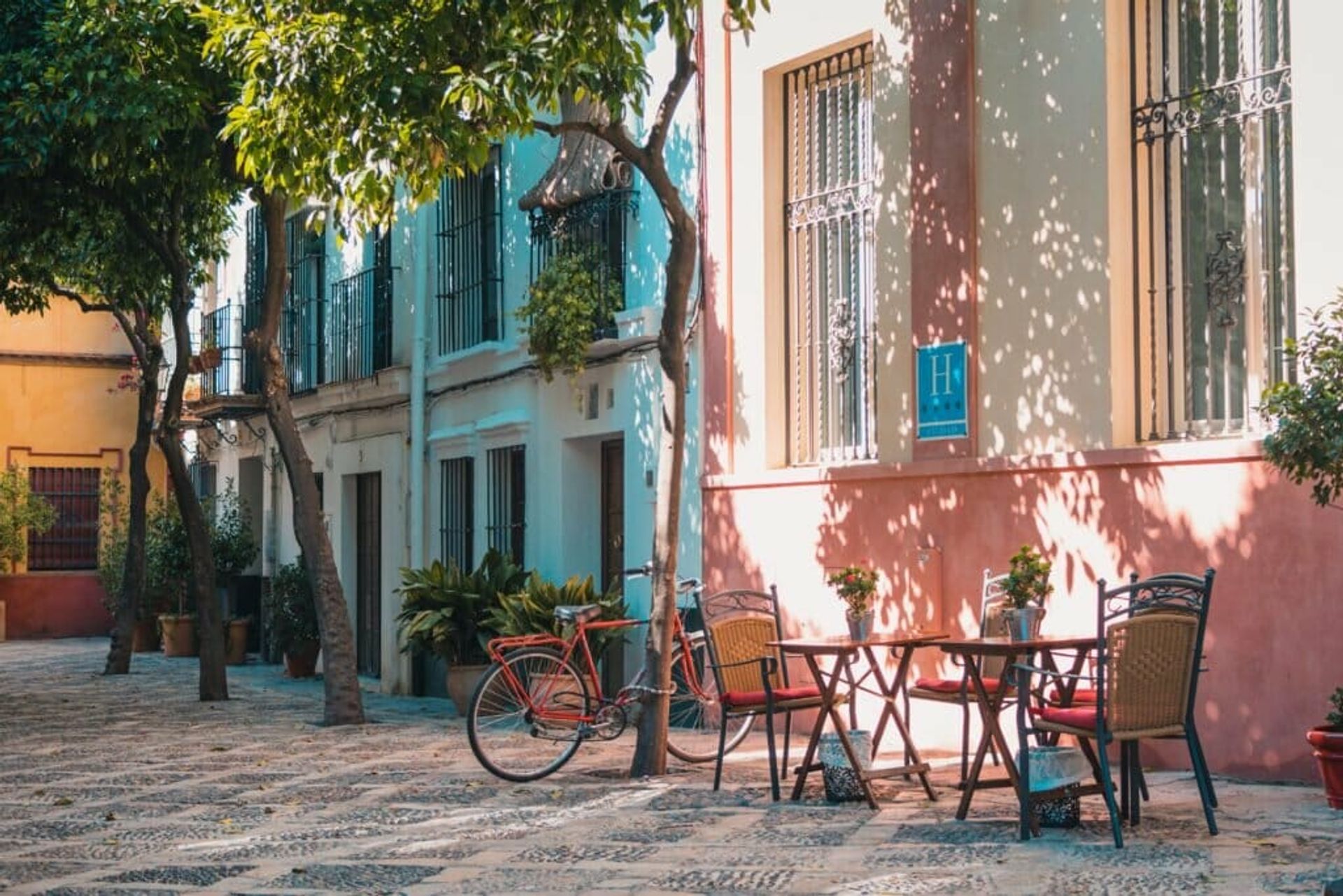
Andalucía is where most people's mental image of Spain comes from — whitewashed villages, flamenco, orange trees on the street. It's also the most travel budget calculator-friendly region: tapas bars in Seville and Granada still give you a free tapa with every drink, which isn't the case further north.
Advertisement
Seville has the Real Alcázar (from €14.50, book the Royal Bedchambers slot separately if you want to skip the worst of the queue) and the cathedral with the old minaret tower, La Giralda (€11). Do a night walking tour of the Santa Cruz quarter — it's when the city actually comes alive, especially outside peak summer heat.
Granada is built around the Alhambra, and you need to book tickets weeks ahead in high season — general admission runs €19.60 and regularly sells out. The Alhambra includes the Nasrid Palaces and the Generalife gardens; don't skip the gardens, they're half the reason people come back. Granada is also one of the few places left in Spain where a €3 beer still comes with a full tapa, no upsell.
Córdoba is a half-day trip from either city by AVE (Seville to Córdoba: 45 minutes) — go for the Mezquita-Catedral (€13), a mosque with a Renaissance cathedral built directly inside it. It photographs better than it sounds.
San Sebastián and Bilbao: The Best Food Region in Spain
If food is the priority, skip straight to the Basque Country. San Sebastián has more Michelin stars per capita than almost anywhere in the world, but the real draw is pintxos — bar-hopping through the old town, ordering whatever's on the counter, €2–4 a plate. La Concha beach is genuinely one of the best urban beaches in Europe, not just a tourist claim.
Bilbao is 1h20 by train from San Sebastián and worth it for the Guggenheim (€18) and the Mercado de la Ribera food market, one of the largest covered markets in Europe. Skip the Guggenheim gift shop and go 15 minutes out to Getxo instead — it's a working fishing town with a much less staged version of Basque coastal life.
Advertisement
Neither city is cheap by Spanish standards — expect Basque prices closer to France than to Andalucía.
Rioja: Wine Country Without the Napa Prices
Rioja is a 45-minute drive or bus from Bilbao and worth a day if you like wine. Tastings at established bodegas like Ysios or Baigorri run €15–25 with a guided cellar tour. For something less polished, the 18th-century El Fabulista winery in Laguardia still crushes grapes the old way and charges closer to €10 for a tasting. If you want to spend more, the Marqués de Riscal hotel in Elciego (designed by Frank Gehry) has a wine-based spa — treatments start around €90, which is steep for the region but it's a genuine one-off experience, not a marketing exaggeration.
Catalonia: Barcelona, Girona, and the Costa Brava

Barcelona needs no introduction, but book Sagrada Família (from €26) and Park Güell (€10) online in advance — both sell out same-day walk-up slots in summer. La Boqueria market on La Rambla is worth an hour, but eat lunch somewhere else; the market stalls charge tourist prices for what's cheaper two streets over. Barceloneta and Icaria beaches are convenient but crowded — if you have a car, the beaches north toward Costa Brava are quieter.
Girona, 40 minutes from Barcelona by AVE, is worth a day trip for the old town alone — narrow medieval streets along the Onyar river, and El Celler de Can Roca if you can get a reservation (book months ahead; it's a three-Michelin-star restaurant).
Advertisement
Costa Brava towns like Cadaqués, Begur, and Tossa de Mar are best reached by car — public transport along this stretch is patchy. Cala Sa Boadella near Lloret de Mar is one of the better beaches if you're willing to walk down from the car park.
The Balearic Islands: Ibiza and Mallorca
Ibiza is genuinely two islands in one — the superclub scene (Pacha, Amnesia) around Playa d'en Bossa and San Antonio, and a much quieter north coast with yoga retreats and juice bars. If clubbing isn't your thing, base yourself north and you'll barely notice the party island reputation. Club entry alone runs €40–80 before drinks, so budget for it if that's the plan.
Mallorca has shifted upmarket over the last decade — Palma's old town and cathedral are worth a day, but the island's real appeal is renting a car and doing the Serra de Tramuntana coast road through Valldemossa and Sóller. Beach clubs here charge similar prices to Ibiza; if budget matters, the public beaches are just as good and free.
The Canary Islands: Tenerife and Gran Canaria
Both islands work as winter sun destinations when the rest of Spain is cold — average highs stay around 20–22°C in January. Tenerife is built around Mount Teide (Spain's highest point); the cable car to near the summit costs €38 return and you need a free permit booked in advance to walk the final stretch to the actual peak. Playa de las Teresitas has imported golden sand; Playa de Benijo is black volcanic sand and much less crowded.
Gran Canaria has more landscape variety in a smaller area — the Maspalomas dunes look like a different continent, and Mogán is the better bet for seafood over the more touristy resort strips.
Advertisement
Northern Spain: Galicia, Asturias, and A Coruña
This is the part of Spain most first-time visitors skip, which is exactly why it's worth going. Santiago de Compostela is the endpoint of the Camino de Santiago pilgrimage route — even if you're not walking it, the old town's granite streets and the cathedral are worth a weekend trip planner, and it's one of the cheaper city breaks left in Spain.
A Coruña has a genuinely good urban beach scene and some of the best seafood in the country — Calle Estrella is where the seafood bars cluster, and prices are noticeably lower than the coastal south. Oviedo, further east in Asturias, is a cider region — the local custom of pouring cider from a height (escanciar) to aerate it is worth watching in one of the bars around Calle Mon before you try it yourself.
Two More Worth Planning Around
Zaragoza, roughly halfway between Madrid and Barcelona on the AVE line, is often skipped entirely, which is a mistake if you have a spare day — the Basílica del Pilar and the old quarter (El Tubo) are genuinely worth the stop, and hotel prices are a fraction of Madrid or Barcelona's.
Cuenca is an hour from Madrid by train and built into a gorge — the Casas Colgadas (hanging houses) are the postcard image, but the town itself, away from the two main squares, is quiet enough that you can actually hear yourself think, which is rare for a Spanish city break this close to the capital.
What's Not Worth It
Not every well-known name on this list deserves equal time. Ibiza's superclub circuit is expensive and, if you're not into that scene, adds nothing — the north of the island is the better use of your days. And if you only have one week in Spain, trying to combine the Canary Islands with the mainland is a mistake — the flights alone eat a full day each way, and you'll end up with two rushed half-trips instead of one good one.
Advertisement
Best Time to Visit Spain
- April–June: Best overall balance — warm without peak-summer heat, fewer crowds, lower hotel prices than July–August.
- July–August: Hottest, busiest, most expensive. Interior cities like Madrid and Seville can hit 40°C — coastal and northern destinations (San Sebastián, Galicia) are more bearable.
- September–October: Sea is still warm, crowds thin out, prices drop. Often the best window for the south.
- November–March: Good for the Canary Islands (mild year-round) and city breaks in Madrid or Barcelona; too cold for northern beach towns.
Sample Itinerary: 10 Days Covering Two Regions
Days 1–4 — Andalucía: Seville (2 nights) → Granada (2 nights), AVE between them. Days 5–7 — Basque Country: Fly or take the AVE to Madrid, then train north to San Sebastián (2–3 nights), day trip to Bilbao. Days 8–10 — Barcelona: Train or flight to Barcelona for the final stretch — Sagrada Família, Park Güell, Girona as a day trip if time allows.
This covers three distinct versions of Spain without the rushed, one-night-per-city pace that ruins most first trips. For a version built around your own dates and interests, the itinerary generator will adjust the pacing automatically.
FAQ: Best Places to Visit in Spain
What are the best places to visit in Spain?
For a first trip, Barcelona, Madrid, Seville, and Granada cover the most ground. If you've already done the big cities, San Sebastián, Girona, and Santiago de Compostela are the better second-trip picks.
Where should I go in Spain for a beach holiday?
The Balearic Islands (Ibiza, Mallorca) and the Canary Islands (Tenerife, Gran Canaria) are the main beach regions. For mainland beaches without an island flight, Costa Brava (Catalonia) and San Sebastián's La Concha are both strong options.
What are the best places to travel in Spain for first-timers?
Madrid and Barcelona are the easiest entry points — most direct flights, best rail connections, and enough to fill 3–4 days each. Add Seville or Granada if you have more than a week.
What are the top destinations in northern Spain?
Bilbao, San Sebastián, Santiago de Compostela, A Coruña, and Oviedo. This region is less touristed than the south and noticeably cheaper for food and hotels.
How many days do you need to see the best of Spain?
Ten days is enough to properly cover two regions (for example Andalucía and the Basque Country) without rushing. Two weeks lets you add a third, like Barcelona or the islands.
Is it better to visit northern or southern Spain?
Southern Spain (Andalucía) has the Moorish architecture, flamenco, and cheaper prices most people picture when they think of Spain. Northern Spain has better food, cooler summer weather, and far fewer tourists. Neither is objectively better — it depends on whether you're chasing sun or food.
City Passes — Where to Book
Save on attraction entry with official city passes, booked through Tiqets (instant e-ticket):
- Barcelona: Book on Tiqets → · Full review →
- Madrid: Book on Tiqets → · Full review →
Best Tours & Experiences
For guided tours and experiences, I recommend checking Viator — they have a huge selection with free cancellation on most bookings. You can also browse TripAdvisor Experiences for more local tours, day trips, and attraction tickets with real traveller reviews.
Save More
Save 5% on activities
Use code CHASINGWHEREABOUTS5 in the GetYourGuide app.
Book this exact experience in GetYourGuide appGet Travel Tips in Your Inbox
Join 5,000+ travelers. Get exclusive itineraries, honest reviews, and budget hacks once a week.
No spam. Only high-quality travel advice. Unsubscribe anytime.