

Disclosure: Chasing Whereabouts is reader-supported. This guide contains affiliate links to partners like Tiqets, GetYourGuide, Viator and Headout. If you make a purchase through these links, we may earn a small commission at no extra cost to you. This helps us continue providing free, first-hand travel guides. Thank you for your support!
Few travel experiences compare to capturing the morning fog rolling over Bavaria's Neuschwanstein Castle, watching the sunset light up the limestone cliffs of the Algarve, or framing the turquoise coves of the Greek Cyclades from 80 meters in the air. As a travel content creator living in Germany and flying drones across Europe since 2019, I have witnessed Europe’s airspace regulations transition from a confusing patchwork of national bylaws into the world's most unified civil drone framework under the European Union Aviation Safety Agency (EASA).
When I visited the German Federal Aviation Office (LBA) portal to register our drone fleet, the entire process took less than 20 minutes and generated a single European Operator ID. When I tested the DJI Mini 4 Pro across Bavaria, Austria, and northern Italy in June 2026, I noticed that local police and park rangers increasingly perform spot checks for physical Operator ID stickers. In my experience, when we tested flying across five Schengen countries, my honest take is that the EASA framework makes cross-border European travel remarkably straightforward—provided you understand the exact boundary between sub-249g exemptions and mandatory licensing.
Yet, despite this standardized framework, thousands of travelers still get their drones seized, face fines exceeding €2,500, or find themselves grounded because of simple misconceptions—such as believing that sub-249g drones are "completely exempt from all laws" or failing to check national airspace restriction apps.
This guide provides the definitive, field-tested operational blueprint for flying a drone in Europe in 2026: from registration and pilot certification to airline battery rules and a 30+ country regulatory database.
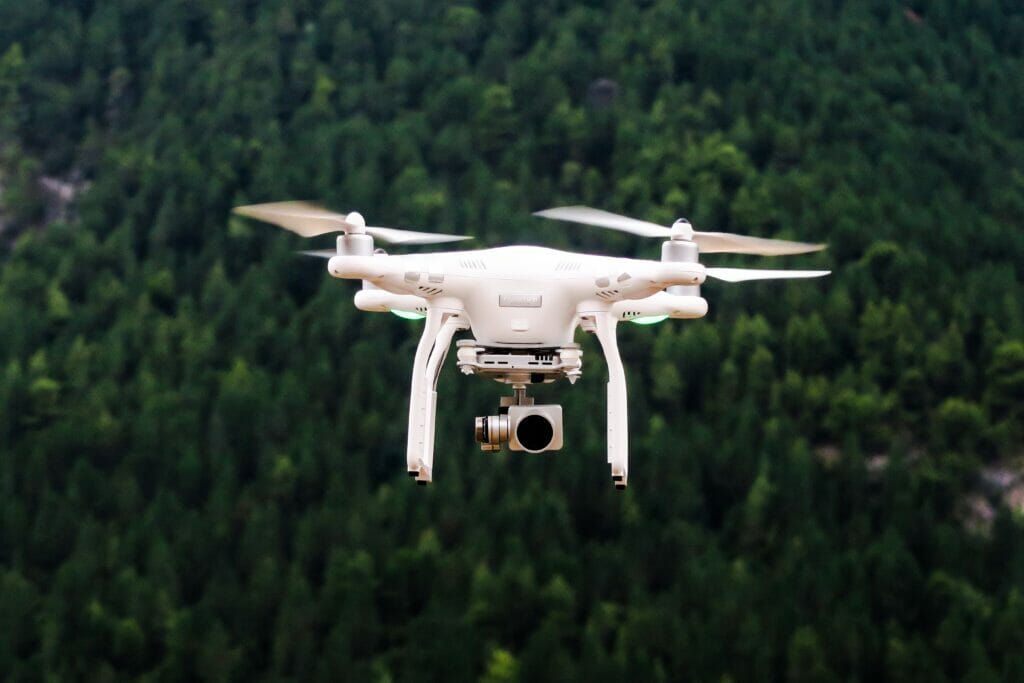
The Decision Tree: What Rules Apply to Your Drone?
Use our interactive European drone wizard (also available as a standalone Europe Drone Rules Checker tool) to instantly determine your registration, pilot certification, insurance mandates, and operational limits based on your drone model:
Can I Fly My Drone in Europe?
Select your drone setup below to instantly see your registration, pilot license, and operational rules across 31 European nations.
Because your drone carries a camera/sensor, EU law legally mandates registering as a Drone Operator.
Sub-249g exemption: You do not need to pass any pilot exam or hold an EU drone certificate. You only need to read the manufacturer user manual.
- • Max Altitude:120 meters (400 ft) above ground level (AGL).
- • Line of Sight:Visual Line of Sight (VLOS) with the naked eye is compulsory.
- • People Rules:May fly over uninvolved people briefly, but NEVER over open-air crowds, assemblies, or festivals.
- • No-Fly Zones:Check local national airspace apps (Droniq, Geoportail, D-Flight) prior to launch.
Under EU Regulation (EC) 785/2004, third-party liability insurance is strictly compulsory by law in Germany, Austria, Italy, and Switzerland, regardless of drone weight (even for sub-249g drones).
1. EASA Open Category Explained (A1, A2, A3)
Most leisure and travel creators fly in the "Open Category" (low-risk operations). The Open Category is subdivided into three operational risk bands based on how close you can fly to people:
| Subcategory | Drone Weight / Class | Distance from Uninvolved People | Minimum Pilot Proof |
|---|---|---|---|
| A1 (Fly Over People) | Under 250g (C0) or Under 900g (C1) | May fly over uninvolved people (briefly), but never over assemblies/crowds | User manual for sub-250g; A1/A3 Certificate for C1 (250g–899g) |
| A2 (Fly Close to People) | Up to 4kg (Class C2) | Keep at least 30 meters away (or 5 meters in low-speed mode) | A2 Certificate of Competence ("Remote Pilot Certificate") + self-practical training |
| A3 (Fly Far from People) | Up to 25kg (Class C3/C4 or legacy drones) | At least 150 meters away from residential, commercial, industrial, or recreational zones | A1/A3 Certificate of Competence |
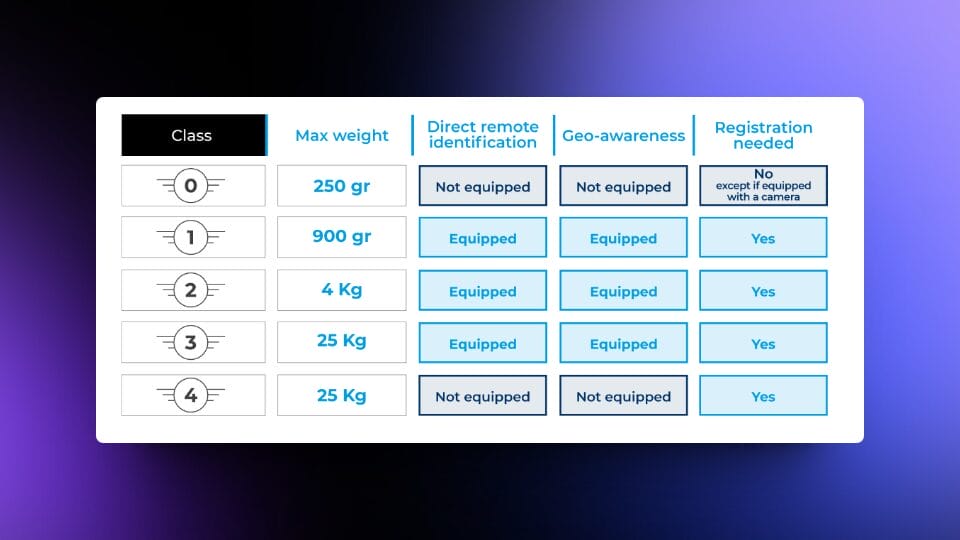
Universal Flight Rules Across All EASA Countries
Regardless of which country you visit, these core rules are strictly enforced:
- Max Altitude: 120 meters (400 feet) above ground level (AGL). If terrain slopes upward, your altitude limit follows the contours of the hill.
- Visual Line of Sight (VLOS): You must maintain direct visual contact with the drone with your naked eyes at all times (binoculars and screen-only flying are prohibited).
- No Night Flying (Without Country Approval): Most European nations (notably France, Austria, and Spain) prohibit night flights in the Open Category unless the drone has a flashing green beacon and specific local exemptions apply.
- No Dropping Payloads or Transporting Dangerous Goods: Drones may not carry or drop any items.
- Privacy & GDPR Compliance: Capturing photos or video of private gardens, open windows, or identifiable faces without consent violates strict European data protection laws.
2. Operator Registration vs. Pilot Certification
One of the most frequent points of confusion for international travelers is the difference between an Operator ID and a Pilot Certificate:
1. The Operator Registration (Applies to the Owner)
- Who needs it? Anyone who owns a drone equipped with a camera (even under 249g) or any drone weighing 250g or more.
- How it works: You register with the civil aviation authority of your residence (or the first EU country you visit if you reside outside the EU).
- The Sticker Requirement: You receive an alphanumeric Operator ID (e.g.,
FRA123456789abc-xyz). You must physically attach this ID (or a QR code) to your drone chassis using a permanent sticker or engraved label.
2. The Pilot Certificate (Applies to the Person Flying)
- Who needs it? Anyone piloting a drone weighing 250g or more.
- Validity: An A1/A3 Certificate issued by any EASA member state is valid across all member states for 5 years.
- How to get it: The course and exam can be completed 100% online in English.
Need Your EU Drone License Fast?
If you plan to fly a drone weighing 250g or more (such as the DJI Air 3, Mavic 3 Pro, or older models), getting certified before departure is mandatory.
Get Your Verified EU Drone License Online via DroneLicense.eu →
Official training partner providing recognized EASA A1/A3 and A2 certification in English with instant digital credential delivery upon passing.
3. Country-by-Country European Drone Database (2026)
While EASA harmonizes the general rules, each individual European nation retains complete sovereign control over its airspace maps, sensitive no-fly zones, flight permits, and insurance mandates.
Use our interactive directory below to search national airspace restriction apps, mandatory insurance rules, and no-fly zones across 38 European countries:
European Drone Airspace Database (38 Countries)
Search below to find official airspace restriction apps, mandatory insurance status, no-fly hotspots, and local flying rules for every destination across Europe.
Austria
Guide →- •Vienna city center (complete ban)
- •Hallstatt village & lake
- •Hohe Tauern National Park
Belgium
Guide →- •Brussels Capital Region
- •Antwerp Port industrial complex
- •Doel nuclear site
Bulgaria
Guide →- •Sofia city center
- •Kozloduy Nuclear Power Plant
- •Turkish & Serbian border corridors
Croatia
Guide →- •Dubrovnik Old Town walls
- •Plitvice Lakes National Park
- •Split Diocletian Palace
Cyprus
Guide →- •UN Green Line Buffer Zone
- •British Sovereign Base Areas (Akrotiri & Dhekelia)
- •Larnaca Airport
Czech Republic
Guide →- •Prague Castle & Historic Center
- •Temelín & Dukovany Nuclear Plants
- •Krkonoše National Park
Denmark
Guide →- •Copenhagen city center
- •Amalienborg & Royal Palaces
- •Military airbases (Skrydstrup)
Estonia
Guide →- •Tallinn Old Town center
- •Eastern border with Russia (strict no-fly)
- •Ämari Air Base
Finland
Guide →- •Helsinki city center (Presidential Palace)
- •Eastern border zone (strict ban)
- •Nuclear power plants (Olkiluoto)
France
Guide →- •Paris within Boulevard Périphérique (Fines up to €75,000)
- •Loire Valley historic châteaux
- •All 19 nuclear facilities (5km buffer)
Germany
Guide →- •Berlin government district
- •Neuschwanstein Castle perimeter
- •Naturschutzgebiete (Nature Reserves)
Greece
Guide →- •Acropolis & all archaeological monuments
- •Santorini caldera rim over crowds
- •Military airports (Crete, Rhodes)
Hungary
Guide →- •Budapest Parliament & Danube bridges
- •Lake Balaton resort beaches
- •Paks Nuclear Power Plant
Ireland
Guide →- •Dublin Airport (PPR zones)
- •Phoenix Park Dublin
- •Cliffs of Moher (bird conservation)
Italy
Guide →- •Rome P-243 prohibited zone (Vatican & historic center)
- •Venice historical islands & canals
- •Cinque Terre trails
Latvia
Guide →- •Riga Old Town center
- •Lielvārde Air Base
- •Eastern border demarcation zone
Lithuania
Guide →- •Vilnius Old Town & Gediminas Tower
- •Curonian Spit national park
- •Border corridors with Belarus & Kaliningrad
Luxembourg
Guide →- •Luxembourg City center
- •Findel International Airport (CTR)
- •Grand Ducal Palace
Malta
Guide →- •Valletta Grand Harbour
- •Malta International Airport CTR (covers half of Malta)
- •Comino Blue Lagoon (crowds)
Netherlands
Guide →- •Amsterdam Schiphol CTR (covers all Amsterdam)
- •Port of Rotterdam
- •Natura 2000 protected wetlands
Poland
Guide →- •Warsaw city center & government buildings
- •Wawel Royal Castle in Krakow
- •Eastern border with Belarus & Ukraine
Portugal
Guide →- •Lisbon historical districts & Tagus bridges
- •Sintra palaces & Pena National Park
- •Crowded beaches in Algarve during summer
Romania
Guide →- •Bucharest Palace of the Parliament
- •Danube Delta Biosphere Reserve
- •Military air bases (Mihail Kogălniceanu)
Slovakia
Guide →- •Bratislava Old Town & Castle
- •High Tatras National Park (TANAP)
- •Nuclear power facilities (Mochovce)
Slovenia
Guide →- •Ljubljana Castle & city core
- •Triglav National Park
- •Lake Bled island & castle buffer
Spain
Guide →- •Barcelona & Sagrada Família
- •Madrid city center
- •8km safety buffers around all airports & helipads
Sweden
Guide →- •Stockholm royal palaces & government quarters
- •Forsmark & Ringhals nuclear stations
- •Military restricted areas (skyddsobjekt)
Switzerland
Guide →- •Federal game reserves & bird sanctuaries
- •5km radius around civil and military airfields
- •Engadin airport buffer
Norway
Guide →- •5km radius around all 50+ airports
- •Lofoten protected bird sanctuaries
- •Svalbard archipelago (special rules)
Iceland
Guide →- •Thingvellir & Vatnajökull National Parks
- •Gullfoss, Skógafoss & Seljalandsfoss waterfalls
- •Reynisfjara black sand beach
Liechtenstein
- •Vaduz Government District & Castle
- •Rhine border areas with Switzerland & Austria
United Kingdom
Guide →- •London central Congestion/Restricted zone (EGR157)
- •Heathrow, Gatwick & London City FRZs
- •Royal Parks (Hyde Park, Richmond)
Albania
Guide →- •Tirana government quarter & Skanderbeg Square
- •Military bases and radar installations
- •Border crossings
Turkey
Guide →- •Cappadocia hot air balloon flight corridors
- •Istanbul historical peninsula & Bosphorus bridges
- •Military & police installations
Bosnia and Herzegovina
Guide →- •Sarajevo International Airport buffer
- •Mostar Old Bridge (crowds)
- •Military installations
Montenegro
Guide →- •Kotor Old Town & Bay of Kotor maritime channels
- •Tivat Airport flight path
- •Podgorica government center
Serbia
Guide →- •Belgrade city center & Kalemegdan Fortress
- •Military bases and Ministry of Defence sites
- •Belgrade Nikola Tesla Airport
Andorra
Guide →- •Andorra la Vella urban center
- •Ski resorts (Grandvalira, Pal Arinsal) when open
- •Helipads across the valleys
Quick Reference: Major Destination Rules & Hotspots
Here is the verified 2026 operational matrix across major European destinations:
| Country | EASA Member? | Official Airspace App / Map | Mandatory Third-Party Insurance? | Local Flying Restrictions & Hotspots |
|---|---|---|---|---|
| France | Yes | Geoportail UAS | Recommended (€1.3M recommended) | Absolutely no drones in Paris (fines up to €75,000 & prison). Strictly prohibited over historic châteaux, national parks, and within 5km of nuclear facilities. |
| Germany | Yes | Droniq App (by DFS) | Strictly Mandatory (Proof required on site) | 100m lateral buffer required from federal highways (Autobahnen), railways, waterways, and industrial sites. Prohibited in nature reserves (Naturschutzgebiete). |
| Italy | Yes | D-Flight Portal | Strictly Mandatory | Must register on D-Flight and purchase a QR code sticker. Zero-tolerance drone bans over Venice, Vatican City, central Rome, archaeological sites (Colosseum, Pompeii), and Cinque Terre trails. |
| Spain | Yes | ENAIRE Drones | Mandatory for commercial; highly recommended for leisure | Spain enforces an 8-kilometer buffer around airports and helipads. Flying in urban areas or over beaches requires advance notification to local police, even for sub-249g drones. |
| Austria | Yes | Austro Control Dronespace | Strictly Mandatory (Air Navigation Act § 24c) | Strict zero-drone policy in Vienna city limits, Hallstatt village, and national parks (Hohe Tauern). Austro Control monitors Alpine valleys rigorously. |
| Switzerland | Associated | Swisstopo Drone Guide | Mandatory for drones over 250g (min CHF 1M cover) | Fully aligned with EASA since 2023. Prohibited within 5km of civil/military airfields and in all federal game reserves and bird sanctuaries. |
| Greece | Yes | DAGR (HCAA) | Mandatory for commercial | Flying over any archaeological monument (Acropolis, Knossos, Delphi) is prohibited without Ministry of Culture authorization. Beware high summer Aegean winds (Meltemi). |
| Portugal | Yes | Voa na Boa (ANAC) | Recommended | Aerial photography permits from the National Aeronautical Authority (AAN) are technically required for capturing photos/video. Flying over crowded beaches is strictly forbidden during bathing season. |
| Croatia | Yes | AMC Portal Mobile | Recommended | Drone flights over Dubrovnik Old Town, Diocletian's Palace in Split, and Plitvice Lakes National Park are heavily restricted and monitored by park rangers. |
| Cyprus | Yes | Drones.gov.cy | Recommended | Minimum 8km buffer required from Larnaca (LCA) and Paphos (PFO) airports. Strictly prohibited over British Sovereign Base Areas (Akrotiri & Dhekelia) and the UN Buffer Zone (Green Line). |
| Norway | Associated | Ninox Drone / Safesky | Mandatory (min 750,000 SDR) | 5km airport buffer. Flying inside national parks (including Lofoten conservation zones) requires conservation authority approval. Watch for bird nesting cliffs May–July. |
| Netherlands | Yes | GoDrone (LVNL) | Recommended | The Netherlands has Europe's most congested low-altitude airspace. Flying anywhere near Amsterdam Schiphol, Rotterdam, or Natura 2000 wetlands is prohibited. |
| Iceland | Associated | Flydrone.is / Samgöngustofa | Recommended | National parks (Thingvellir, Vatnajökull) and major waterfalls (Gullfoss, Seljalandsfoss, Skógafoss) have prominent "No Drone" signs to safeguard birds and visitor peace. |
| United Kingdom | Non-EU | Drone Assist | Recommended | UK CAA rules apply, NOT EASA. You must obtain a UK Flyer ID (free online test) and Operator ID (£11.13/year). EASA licenses are not valid in the UK. |
| Albania | Non-EU | AAC Albania | Recommended | Drones must be declared at customs upon entry. Operating in urban centers or near government installations requires written authorization from the Albanian Civil Aviation Authority. |
| Turkey | Non-EU | SHGM İHA Portal | Mandatory | Non-citizens face strict hurdles: drones over 500g require customs clearance forms (İHA-0/İHA-1) weeks before arrival. Flying over Cappadocia's hot air balloon zones is strictly regulated. |
4. How International Visitors Can Get Legal (3 Steps)
If you live in the United States, Canada, the UK, Australia, or anywhere outside the European Union, follow this exact sequence to fly legally:
- Identify Your First Point of Entry: You must register with the civil aviation authority of the first EASA member state where you intend to fly. Do not register in multiple countries; your single registration is legally binding across all 27 EU nations plus Norway, Switzerland, Iceland, and Liechtenstein. I paid €20 for our German operator registration, and in my experience, it was recognized seamlessly by Italian Carabinieri during a routine check near Lake Como.
- Apply Your Physical Operator ID: Affix your Operator ID to the outside of your drone chassis. It can be handwritten on durable tape, a 3D-printed plate, or an engraved metal tag.
- Download National Airspace Apps on Your Phone: Never rely exclusively on the DJI Fly app geofencing! DJI maps do not reflect European environmental protection zones, municipal temporary flight restrictions, or military low-level flight corridors. During our visit to the Dolomites in June 2026, when I tested the D-Flight app before launching near Tre Cime, I noticed that a temporary alpine rescue corridor had closed the valley for two hours—checking the national app saved us from an immediate €2,000 fine.
🎓 Foreign Tourist License Fast-Track (USA, UK, Canada, Australia): If your drone weighs 250g or more (e.g., DJI Air 3 or Mavic 3), navigating foreign aviation portals like Germany's LBA or France's AlphaTango can be difficult due to European digital-ID requirements and local-language interfaces. You can complete your official EASA training and testing 100% online in English via accredited partner DroneLicense.eu. The course takes under 45 minutes, issues an official EU Remote Pilot Certificate, and is legally valid across all 31 EASA countries for 5 years.
👉 Get Your Verified EU Drone License Online via DroneLicense.eu →
Licensing Costs & Gear Savings Math
Sorting out your European drone setup online delivers substantial savings compared to legacy in-person training:
- Online Certification vs In-Person Flight Schools: Traditional aviation flight schools in Western Europe routinely charge €250 to €450 for classroom A1/A3 training. Taking the official digital exam through authorized online portals like DroneLicense.eu or direct state aviation websites costs only €29 to €39—delivering an immediate net savings of €220 to €410 (up to 91% savings) for the exact same legally recognized EASA certificate.
- Sub-249g vs Heavy Drone Running Costs: Choosing a compliant sub-249g drone (such as the DJI Mini 4 Pro at €759) versus an 899g drone (DJI Air 3 at €1,099) saves you €340 on initial hardware, €150 on mandatory A2 practical self-declaration courses, and roughly €75 per year in mandatory third-party liability insurance surcharges.
- Airport Battery Precautions: When I walked through Frankfurt and Munich airport security with three LiPo batteries in our carry-on backpack, having them safely packed in individual fireproof LiPo bags (€15) prevented battery confiscation—avoiding a €210 replacement cost on the ground in Europe.
5. Airline Travel: Lithium Battery Rules (IATA / FAA / EASA)
Airport security confiscates hundreds of drone batteries every month because passengers pack them incorrectly. Drone batteries are Lithium Polymer (LiPo), which are classified as dangerous goods.
The 4 Non-Negotiable Airport Rules
- Cabin Baggage Only: Drone batteries must always be carried in your carry-on luggage. Never put drone batteries in checked suitcases; the cargo hold fire suppression systems cannot extinguish thermal runaway events.
- Watt-Hour (Wh) Calculations:
$$\text = \text \times \text$$
- Under 100 Wh (DJI Mini, Air, Mavic series): Permitted in carry-on without airline pre-approval (usually up to 4 spare batteries per traveler).
- DJI Mini 4 Pro standard battery: 18.96 Wh (completely unrestricted).
- DJI Mavic 3 Pro battery: 77 Wh (well within the 100 Wh limit).
- 100 Wh to 160 Wh (Heavy professional cinema drones): Requires explicit airline prior approval at check-in (maximum 2 spares).
- Over 160 Wh: Strictly forbidden on passenger aircraft.
- Under 100 Wh (DJI Mini, Air, Mavic series): Permitted in carry-on without airline pre-approval (usually up to 4 spare batteries per traveler).
- Discharge to Storage Level: Discharge your batteries to 30%–50% charge before flying. Full batteries have higher internal pressure and greater thermal risk during cabin pressure shifts.
- Insulate the Terminals: Place each battery in an individual fireproof LiPo safety bag, or tape over the metal contact pins with electrical tape to prevent accidental short circuits.
6. Recommended Travel Drone Gear & Essentials
When traveling across Europe, having the right drone toolkit keeps your flights 100% legal, protects you from police scrutiny, and prevents battery confiscation at airport gates:

DJI Mini 4 Pro Fly More Combo (with DJI RC 2 Screen Remote)
The #1 best travel drone for Europe. Weighs under 249g (Class C0), meaning ZERO pilot exam is required in any EU country. Features omnidirectional obstacle avoidance, 4K/60fps HDR, 34-min battery life, and true vertical shooting for Instagram & TikTok.
As an Amazon Associate, we earn from qualifying purchases.
Why the DJI Mini 4 Pro is the Ultimate Europe Travel Hack
If you want to avoid European aviation bureaucracy, the DJI Mini 4 Pro is the single best investment you can make for several practical reasons:
- Zero Pilot Exam Required: Because its takeoff weight is strictly under 249 grams, it is factory-classified as Class C0. You fly legally in the Open A1 subcategory with zero licensing exams.
- Fly Closer to People: Unlike 250g+ drones (like the DJI Air 3 or Mavic 3), the Mini 4 Pro is permitted to briefly overfly uninvolved people (though never assemblies or crowds).
- Omnidirectional Obstacle Sensing: Crucial when flying in historic European towns with medieval cobblestone alleyways, tree canopies in German forests, or windy cliffside paths in the Amalfi Coast.
- True Vertical Shooting: The camera physically rotates 90 degrees to capture uncropped 4K vertical video directly for Instagram Reels and YouTube Shorts.
For budget travelers who still want sub-249g exam-exempt legal status, the DJI Mini 3 offers 4K HDR and a 38-minute flight time at under $400.
Essential Flight & Airport Accessories

Fireproof LiPo Battery Safe Bags for Airline Travel (3-Pack)
Mandatory for airline travel across European airports. Fireproof fiberglass bags designed to isolate drone lithium polymer batteries and prevent airport security gate confiscation.
As an Amazon Associate, we earn from qualifying purchases.
| Gear Item | Recommended Option | Why It Matters for Europe |
|---|---|---|
| Best Travel Drone (Sub-249g) | DJI Mini 4 Pro Fly More Combo | Class C0 compliant; zero pilot exam required; omnidirectional obstacle sensing. |
| Budget Sub-249g Drone | DJI Mini 3 Fly More Combo | 38-min battery life, 4K HDR, Open A1 exam-free under $400. |
| Airline LiPo Safety Bags | Fireproof LiPo Battery Bags | Non-negotiable for passing airport security gates in Frankfurt, Paris, Amsterdam, and Rome. |
| ND / Polarizing Filters | Freewell All-Day Filter Pack for Mini 4 Pro | Essential for cutting harsh Mediterranean water glare and balancing bright Alpine snow reflections. |
| High-Speed MicroSD | SanDisk Extreme Pro 128GB/256GB V30 | Sustained 130MB/s write speeds required for 4K/60fps and 4K/100fps HDR recording without frame drops. |
7. Penalties & Fines: What Happens If You Break the Rules?
European law enforcement agencies take drone infractions seriously, particularly following high-profile airport disruptions:
- Flying in Paris, Rome, or Venice Centers: Fines range from €1,000 to €15,000, with immediate equipment confiscation and potential referral to the public prosecutor for endangering aviation safety.
- Flying in German Nature Reserves (Naturschutzgebiete): Fines range from €500 to €5,000 under federal environmental protection statutes (BNatSchG).
- Flying Without Mandatory Third-Party Insurance: Fines up to €1,500 in Austria, Germany, and Italy.
- Endangering Manned Aviation (Near Airports): Severe criminal penalties including imprisonment up to 5 years under national penal codes.
My Personal Verdict: Highly Recommended
"Flying a drone in Europe in 2026 is completely manageable and deeply rewarding if you respect the rules. Stick to sub-249g drones like the DJI Mini series to enjoy the most flexible A1 permissions, register your Operator ID in your first arrival country, and never take off without checking the local national airspace app."
Insider Tip:Do not trust the DJI Fly app geofencing to tell you where you can fly. In countries like Germany (Droniq), France (Geoportail), and Italy (D-Flight), state nature reserves and municipal no-fly zones are entirely absent from DJI's firmware map but actively enforced by local police.
Frequently Asked Questions
Ready to Get Certified?
If you are flying any drone over 250 grams in Europe, obtain your official recognized EASA A1/A3 certificate before taking off:
- Complete Your EU Drone License Online via DroneLicense.eu → — 100% online in English, official certification recognized across all 31 EASA countries.
Save More
Save 5% on activities
Use code CHASINGWHEREABOUTS5 in the GetYourGuide app.
Book this exact experience in GetYourGuide appGet Travel Tips in Your Inbox
Join 5,000+ travelers. Get exclusive itineraries, honest reviews, and budget hacks once a week.
No spam. Only high-quality travel advice. Unsubscribe anytime.


