
Disclosure: Chasing Whereabouts is reader-supported. This guide contains affiliate links to partners like Tiqets, GetYourGuide, Viator and Headout. If you make a purchase through these links, we may earn a small commission at no extra cost to you. This helps us continue providing free, first-hand travel guides. Thank you for your support!
🇧🇪 This guide is part of our Belgium Travel Guide. For city passes and attraction discounts, see the Brussels Card review and Bruges pass review.
Belgium is one of Europe's most underrated countries. In a single week you can walk medieval cobblestones in Bruges, feel the pulse of a proper European capital in Brussels, explore Ghent's waterways at golden hour, and eat your body weight in frites in Antwerp. I've done this trip twice — once in spring and once in autumn — and this itinerary is the version I'd actually repeat.
Trip at a glance: Brussels (2 nights) → Bruges (2 nights) → Ghent (1 night) → Antwerp (1 night) → Brussels (fly out)
Getting to Belgium
By train from London: Eurostar London St Pancras → Brussels Midi in 2h. Book at least 3 weeks ahead for prices from €49 each way. Worth it to avoid airport faff.
By plane: Brussels Airport (BRU) is 20 minutes from the city centre by train (€12, runs every 15 min). Charleroi (CRL) is travel budget calculator-airline territory — factor in a 1h bus transfer.
Advertisement
From other European cities: IC and Thalys trains connect Paris (1h20), Amsterdam (1h50), and Cologne (1h50) directly to Brussels. Belgium's rail network is excellent.
Day 1: Arrive in Brussels — Grand Place & Ixelles
Land or arrive at Brussels-Midi and take the metro/pre-metro directly to the city centre (€2.10 single, 20 min).
Morning: Grand Place
Drop your bags at the hotel and head straight to the Grand Place. It's a genuine jaw-drop the first time — a UNESCO-listed medieval square ringed by gilded guild houses. Get there before 10am to beat tour groups. The Hôtel de Ville (Town Hall) is free to admire from outside; guided interior tours run for €5.
From the Grand Place, duck down the side streets to find:
- Manneken Pis — smaller than you expect, but the changing-costume ritual is charming. 2 min walk from Grand Place.
- Galeries Royales Saint-Hubert — Europe's oldest covered shopping arcade. Beautiful ironwork, great for a coffee stop.
Afternoon: Sablon & Ixelles
Walk 15 minutes south to the Sablon neighbourhood for the best chocolate shops in the city. Neuhaus and Pierre Marcolini have flagships here. Buy nothing yet — you'll want to compare. The Grand Sablon square has an antique market on weekends.
Advertisement
Continue into Ixelles for a wander through Brussels' most characterful streets. The Art Nouveau buildings here are extraordinary — particularly around Place du Châtelain.
Evening: Beer dinner
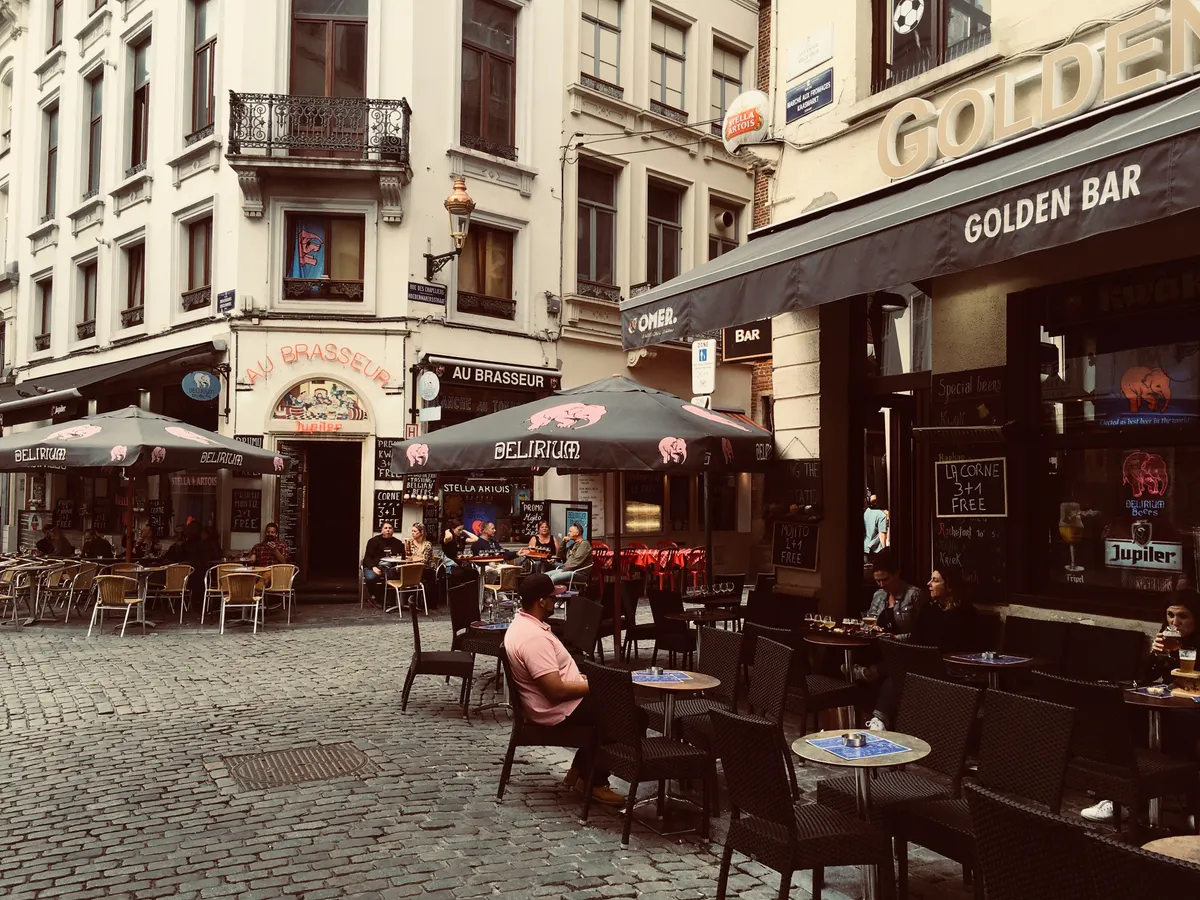
Belgians treat beer the way the French treat wine. The Delirium Café (near Grand Place) stocks 2,000+ beers. For food, head to the Rue des Bouchers for moules-frites — it's touristy but the mussels are genuinely excellent. Budget €20–30 for a full dinner with beer.
Where to stay in Brussels: The European Quarter (near the EU institutions) or the city centre near Grand Place. Budget: Hotel ibis Brussels Centre Gare Midi (€80/night). Mid-range: Hotel Amigo (€160/night, a two-minute walk from Grand Place).
Day 2: Brussels — Museums & Atomium
Morning: Royal Museums of Fine Arts
Belgium punches above its weight on art. The Royal Museums of Fine Arts hold Flemish Primitives, Bruegel, Rubens, and Magritte's surrealist collection. All under one roof. Plan 2–3 hours. Entry: €15 adults, or free with the Brussels Card.
The Brussels Card (€28/24h, €36/48h, €43/72h) covers 50+ museums plus unlimited public transport. If you're planning more than 3 museum visits, it pays for itself.
Advertisement
Afternoon: Atomium
Take metro line 6 north to Laeken (30 min from city centre, €2.10). The Atomium — a steel structure built for the 1958 World's Fair at 9x the scale of an iron crystal — is one of Belgium's most distinctive landmarks. The panoramic views from the top sphere are excellent. Entry €16, or included in Brussels Card.
Next door, the Mini-Europe park (€17) recreates 80 European monuments at 1:25 scale. Worth it if you're travelling with kids; optional otherwise.
Evening: Molenbeek or Saint-Gilles
For something local, head to Saint-Gilles for neighbourhood bars and excellent Vietnamese and North African restaurants (Brussels has superb immigrant cuisine). Dinner budget: €15–25.
Day 3: Brussels → Bruges (Base in Bruges)
Check out and take the IC train Brussels-Midi → Bruges (1h10, runs every 30 min, ~€15 second class). Store your bags at Bruges station (coin lockers, €3–4) or check straight into your accommodation.
Afternoon: First impressions of Bruges
Walk from the station into the Markt — the central square framed by step-gabled guild houses and the 83m Belfry. Climb the Belfry for €14 (366 steps, worth every one — views across the entire medieval city and out to the flat Flemish countryside).
Advertisement
Take a canal boat tour (€14, 30 min, multiple departure points). In Bruges, this is not a tourist trap — it's genuinely the best way to understand the city's layout and see the rear façades of buildings that face the water.
Evening: De Halve Maan Brewery
The De Halve Maan is the only family brewery still operating within Bruges' city walls (since 1564). Tours run on the hour, €12, and include a beer at the end. Book ahead — they fill up. The rooftop views of Bruges are superb.
Dinner: Den Dyver for Belgian classics with beer pairings (€30–45), or the Brasserie Erasmus for affordable mussels near the Markt.
Where to stay in Bruges: The centre is small — anywhere within the canal ring is walkable. Budget: Hotel de Orangerie (canal views, €130/night). Mid-range: Hotel Adornes (€110/night, in a quiet canal-side location).
Day 4: Bruges — Deeper Exploration
Bruges rewards slow travel. Don't rush to see everything in a day.
Advertisement
Morning: Basilica of the Holy Blood & Burg Square
The Burg Square is one block from the Markt and, in my opinion, more beautiful. The Basilica of the Holy Blood (free entry) holds a relic claimed to be a fragment of cloth bearing Christ's blood — one of Europe's most venerated relics. The upper chapel is Gothic; the lower Romanesque. Takes 20 minutes.
The Stadhuis (City Hall, €6) next door has a stunning Gothic Hall inside.
Afternoon: Groeninge Museum + Béguinage
The Groeninge Museum (€14, or Bruges Card) holds the definitive collection of Flemish Primitive paintings — Jan van Eyck, Hans Memling, and Hieronymus Bosch. Budget 1.5–2 hours.
Walk south to the Begijnhof — a UNESCO-listed religious community of whitewashed houses around a tranquil green. Still inhabited by Benedictine nuns. Free to enter, deeply peaceful.
The nearby Minnewater (Lake of Love) and its surrounding park make for a good afternoon walk.
The Bruges Card (€42/48h, €50/72h) covers 26 museums including Groeninge, the Belfry, and Memling — plus free bicycle rental for two hours. Saves €30+ if you visit 4+ attractions. Is it worth it? Full review →
Evening: De Garre
For the best beer experience in Bruges, find De Garre — a tiny alley bar off the Breidelstraat, easy to miss. They serve a single house Tripel at 11.5% ABV. The alley fits about 40 people. It fills up by 7pm.
Day 5: Bruges → Ghent (Stay in Ghent)
Train Bruges → Ghent-Sint-Pieters (30 min, runs every 30 min, €8). Ghent deserves more time than it usually gets on Belgium itineraries — it's a proper city with a real student population and a more authentic feel than Bruges.
Afternoon: Graslei and Korenlei
The Graslei and Korenlei — two guild house-lined quays facing each other across the River Leie — are Ghent's most photographed stretch. At golden hour, the reflections in the water are extraordinary.
Walk to the Gravensteen castle (€12), a 12th-century fortress right in the city centre. The self-guided audio tour covers medieval torture instruments with dark humour.
Evening: Sint-Baafs Cathedral and the Ghent Altarpiece
Sint-Baafs Cathedral (free entry, €4 for the Van Eyck Chapel) houses the Ghent Altarpiece by Jan and Hubert van Eyck — arguably the most important painting in Western art history. It was painted in 1432, stolen by Napoleon, looted by the Nazis, and recovered by Monuments Men. Now it's in a climate-controlled room with dedicated lighting. Worth every cent of the €4 access fee.
Dinner in Patershol — a maze of narrow cobblestone streets in the old weavers' quarter, now packed with Belgian restaurants. Try Brasserie Pakhuis for Ghent's local speciality, waterzooi (a cream-based chicken or fish stew, ~€22).
Where to stay in Ghent: The city centre is compact. Budget: Pillows Grand Hotel Reylof (~€120/night). Hostel: Uppelink (canal-view dorms from €30/night).
Day 6: Ghent → Antwerp (Stay in Antwerp)
Train Ghent-Sint-Pieters → Antwerp-Centraal (50 min, runs every 30 min, €12). Antwerp Centraal station itself is worth the detour — a neo-baroque cathedral of a railway station that was voted the world's most beautiful in multiple surveys.
Afternoon: Cathedral of Our Lady & Rubens
The Cathedral of Our Lady (€6) holds four Rubens masterpieces including The Descent from the Cross. Rubens lived in Antwerp and his house-museum, the Rubenshuis (€14), is a 15-minute walk away — his studio and living quarters preserved exactly as they were.
Antwerp's Diamond District around the train station is worth a walk-through. The city processes 85% of the world's rough diamonds. You won't buy anything, but it's a fascinating concentration of diamond cutting shops and Orthodox Jewish traders.
Evening: Zuid Neighbourhood
Take the tram to Het Zuid (South) — Antwerp's hipster-gallery quarter. The Royal Museum of Fine Arts (KMSKA) here is one of the best collections in Europe, though check opening days. The surrounding café scene is excellent for dinner. Try Fiskebar for Belgian-style seafood (~€25–35).
Antwerp's fashion district near the Meir is worth an evening wander — the city is genuinely one of Europe's fashion capitals. Six of the Antwerp Six designers (Dries Van Noten, Ann Demeulemeester, etc.) trained here.
Where to stay in Antwerp: Near Centraal station or in Het Zuid. Mid-range: Radisson Blu Astrid (~€130/night, 5 min from Centraal).
Day 7: Antwerp → Brussels Airport (Fly Out)
Train Antwerp-Centraal → Brussels-Airport (30 min, runs every 30 min, €10). Allow 2 hours before departure.
If your flight is late, use the morning to revisit anything you missed — or take the metro into Brussels from the airport for one more Grand Place coffee (40 min round trip, easily doable for a midday flight).
Getting Around Belgium
Belgium has Europe's densest rail network. The SNCB/NMBS app (iOS/Android) is excellent for booking. Key facts:
- Single tickets bought on the train cost €2 extra — always buy at the machine or app
- Go Pass 10 (€90 for 10 single journeys, valid 1 year) is the best value for a week-long trip with multiple cities
- weekend trip planner tickets give a 50% discount on Saturday/Sunday — useful if you're not rushed
- Brussels public transport (metro, tram, bus): single €2.10, day pass €7.50. The Brussels Card includes unlimited transport
Where to Stay — Best Neighbourhoods
| City | Best area | Why |
|---|---|---|
| Brussels | Ixelles / Sablon | Walkable, good restaurants, 15 min walk to Grand Place |
| Brussels | City centre | Right on Grand Place but noisier |
| Bruges | Inside the canal ring | Everything is walkable within 20 min |
| Ghent | City centre / Patershol | 5-10 min walk to all sights |
| Antwerp | Near Centraal / Het Zuid | Train access + food scene |
Budget Breakdown
Prices are per person for one week, mid-range travel.
| Category | Budget (€) | Mid-range (€) |
|---|---|---|
| Transport (trains + city) | 80 | 80 |
| Accommodation (6 nights) | 180 | 420 |
| Food (3 meals/day) | 175 | 280 |
| Attractions + museums | 60 | 110 |
| Chocolate + beer extras | 30 | 50 |
| Total | ~€525 | ~€940 |
Cost-saving tips:
- Buy the Brussels Card for the Brussels days — it covers museums and transport
- Use the Bruges Card for the Bruges days — covers Belfry, Groeninge, and free bike rental
- Lunch set menus (€12–18) at proper restaurants offer far better value than dinner for the same quality
- Belgian supermarkets (Colruyt, Delhaize) sell excellent local beers for €1.50–2 a bottle
Best Time to Visit Belgium
April–May: Best for weather, tulip season, and the outdoor café culture kicking in. The Ghent Floralies flower festival happens every 5 years (next: 2030).
June–August: Peak season. Hot (20–28°C), busy in Bruges especially. Book accommodation 6–8 weeks ahead.
September–October: My favourite. Fewer crowds, lower prices, beautiful autumn light on the canals. I visited in late September and it was perfect.
November–February: Cold and grey, but Christmas markets in Brussels and Bruges (late November through December) are genuinely excellent. Off-peak prices throughout.
Practical Tips
- Chocolate: The best value is from local supermarkets (Leonidas, Côte d'Or) not tourist shops. A 1kg box from a supermarket costs €8–12 versus €40+ at airport duty-free.
- Frites: Belgian frites are twice-fried in beef tallow and served in paper cones. The best are from street frietkot stalls (€3–4) not restaurants.
- Language: Brussels is officially bilingual (French/Dutch). Bruges and Ghent are Flemish (Dutch). Antwerp is Flemish but nearly everyone speaks English — no issues.
- Tipping: Not expected. Round up to the nearest euro or leave 5–10% for good service.
- Beer etiquette: Each Belgian beer is served in its own branded glass. Asking for a Duvel in a Chimay glass is a minor faux pas. Bartenders take this seriously.
- Book ahead for weekends: Bruges especially fills up on autumn weekends. Hotels in the old centre book out 6–8 weeks ahead from September onwards.
Related Guides
- Brussels Card: Is It Worth It? — Full review with museum-by-museum breakdown
- Bruges Pass Review — Does the 48h card pay off?
- Belgium Travel Guide — Country overview, visa info, safety
- Things To Do in Brussels — Deep dive on the capital
- Day Trips from Brussels — Waterloo, Mechelen, Leuven
Belgium is a week well spent. The chocolate is real, the beer is extraordinary, and the medieval cities are as beautiful as anywhere in Europe — without the Rome or Amsterdam queues.
Save More
Save 5% on activities
Use code CHASINGWHEREABOUTS5 in the GetYourGuide app.
Book this exact experience in GetYourGuide appGet Travel Tips in Your Inbox
Join 5,000+ travelers. Get exclusive itineraries, honest reviews, and budget hacks once a week.
No spam. Only high-quality travel advice. Unsubscribe anytime.