
Disclosure: Chasing Whereabouts is reader-supported. This guide contains affiliate links to partners like Tiqets, GetYourGuide, Viator and Headout. If you make a purchase through these links, we may earn a small commission at no extra cost to you. This helps us continue providing free, first-hand travel guides. Thank you for your support!
🇵🇹 Lisbon was days 4–6 of our 2 Weeks in Portugal. We arrived by train from Porto and left by train for Lagos. Three days was the perfect amount of time.
Lisbon is one of Europe's most compelling capitals — ancient Moorish quarters above the Tagus, baroque monasteries, Fado music drifting from cellar bars, and some of the world's best pastéis de nata. It is also wonderfully walkable, with a character unlike any other European city.
Three days lets you do Lisbon properly — the Alfama in the morning cool, Belém in the afternoon, sunset at a miradouro, and a night in Bairro Alto or LX Factory. Here is our exact day-by-day plan.
Where to Stay for 3 Days in Lisbon
We stayed in a GuestReady apartment in the Príncipe Real neighbourhood — a short walk from Bairro Alto and Baixa, beautiful design, and entirely different from a hotel experience. GuestReady manages exceptional apartments across Lisbon; they were the highlight of our Portugal accommodation and we cannot recommend them highly enough. Browse their Lisbon properties at guestready.com.
For hotels and alternatives, Booking.com has excellent options. The best neighbourhoods to stay in:
Advertisement
- Chiado/Bairro Alto — most central, great nightlife access
- Príncipe Real — elegant, quieter, excellent restaurants
- Baixa — touristy but very central
- Alfama — the most atmospheric but hilly and noisy at weekends
Also check: The Lisbon Card — if you plan to visit 4+ museums and use public transport daily, it can save you money.
Day 1: Alfama, Fado, and the Castle

Morning
Start early (before 9am if possible) in the Alfama — Lisbon's oldest neighbourhood, a labyrinth of Moorish-era lanes tumbling down from the castle to the river. At this hour it is quiet, the light is extraordinary, and you can hear fado drifting from an open window.
Climb to the Miradouro das Portas do Sol and Miradouro de Santa Luzia — two adjacent viewpoints that give you Lisbon's most iconic view: the terracotta rooftops of the Alfama, the river, and the bridge beyond.
Continue up to São Jorge Castle (Castelo de São Jorge) — a Moorish-era fortress that has dominated the Lisbon skyline for over a thousand years. Walk the ramparts, explore the towers, and enjoy views over the entire city.
Advertisement
Book: São Jorge Castle Ticket
Afternoon
Descend through the Alfama to the Cathedral (Sé) — Lisbon's oldest church (12th century), a striking Romanesque fortress-church. The cloisters have excellent archaeological excavations visible beneath.
Walk down to the waterfront and head west along the Tagus to the Museu Nacional do Azulejo — if you visit one museum in Lisbon, make it this one. The National Tile Museum has Portugal's most comprehensive collection of azulejos and is housed in a stunning convent.
Book: Azulejo Museum Ticket
Evening
Return to the Alfama for Fado. The neighbourhood has numerous Fado houses (casas de fado) where you can eat dinner while listening to live Fado — Portugal's hauntingly beautiful national music. Book in advance.
Advertisement
Day 2: Belém, Pastéis, and the River

Morning
Take tram Line 15 (or Uber, takes 20 minutes) west to Belém — Lisbon's riverside monument district, built to celebrate Portugal's Age of Discovery.
First stop: the unmissable queue at Pastéis de Belém — the original pastéis de nata bakery, operating since 1837. Order a half dozen warm from the oven, dust with cinnamon and icing sugar, and eat at the marble counter.
Then visit the Mosteiro dos Jerónimos — one of the most extraordinary buildings in Portugal. The Manueline Gothic cloister is among the finest architectural spaces in Europe. Henry the Navigator is buried here.
Advertisement
Afternoon
Walk the riverside to the Torre de Belém — Lisbon's most iconic landmark, a 16th-century river tower that was the last sight of sailors departing on oceanic voyages. The views from the top are superb.
Book: Torre de Belém Entry
Continue to the Padrão dos Descobrimentos (Monument to the Discoveries) — a spectacular stone sculpture on the riverbank, shaped like a caravel, featuring 33 figures from Portugal's Age of Discovery. Climb to the top for river views.
Sit on the Ribeira das Naus waterfront (near Praça do Comércio) for sundowners. This wide marble esplanade is one of Lisbon's best sunset spots.
Advertisement
Evening
Praça do Comércio at sunset, then up through Baixa to Bairro Alto for dinner. Bairro Alto is Lisbon's bohemian quarter — a grid of steep streets filled with restaurants, wine bars, and eventually late-night bars. Dinner at one of the tasca-style restaurants (try Solar dos Presuntos in Baixa for traditional Lisbon cooking, or Taberna da Rua das Flores in Chiado for modern Portuguese).
Day 3: Chiado, LX Factory, and a Miradouro Sunset

Morning
Start with coffee at A Brasileira in Chiado — Lisbon's most famous café, with the bronze statue of Fernando Pessoa on the terrace outside.
Explore Chiado — Lisbon's elegant shopping neighbourhood, mixing fashion boutiques with bookshops (including the extraordinary Livraria Bertrand, the world's oldest operating bookshop, dating to 1732) and excellent coffee shops.
Walk up through Príncipe Real to the Jardim do Príncipe Real market — on Saturdays and Sundays there is an excellent organic and artisan market in the garden.
Afternoon
Take a tram or Uber to LX Factory — a 19th-century industrial complex now home to restaurants, design studios, bookshops, and creative spaces. Sunday market (Mercado de LX) is the best day to visit. Have lunch at one of the food stalls or sit-down restaurants inside.
Walk across to the Museu Nacional de Arte Antiga (National Museum of Ancient Art) — Portugal's most important fine art museum, with superb works by Hieronymus Bosch, Dürer, Velázquez, and the extraordinary Panels of São Vicente (the defining masterwork of Portuguese medieval painting).
Evening
Sunset at Miradouro da Graça or Miradouro do Monte — two viewpoints in the hilltop neighbourhood above the Alfama that offer the best sunset views in Lisbon. Buy a wine from the kiosk, settle in, and watch the light fall over the river.
Final dinner: return to the Alfama or Chiado for a last meal in Lisbon. If you can get a reservation, Alma (in Chiado) or Cervejaria Ramiro (Intendente, for seafood) are exceptional.
Day 4: Sintra Day Trip (Optional)
Skip Sintra if your feet are wrecked from three days of cobblestones. The Pena Palace draws massive crowds and requires serious uphill walking even with the shuttle bus. Go only if you have genuine energy left and pre-booked tickets for the earliest 9:00 AM slot.
Trains leave Rossio Station every 20 minutes; the ride takes 40 minutes and costs €2.30 each way. travel budget calculator at least six hours total including transit. Return to Lisbon by late afternoon to catch sunset at Miradouro da Senhora do Monte without the weekend rush.
Lisbon 3-Day Itinerary: Quick Reference
Day 1 covers Alfama and São Jorge Castle in the morning, followed by lunch at Time Out Market and an evening Fado show in Mouraria. Day 2 focuses on Belém’s Jerónimos Monastery and Pastéis de Belém before heading to LX Factory for drinks and dinner. Day 3 explores Príncipe Real’s concept stores, rides Tram 28 to Estrela, and ends with ginjinha tasting in Bairro Alto.
Start each day by 8:30 AM to beat tour groups at major sites. Allocate two hours minimum for sit-down lunches; Portuguese service is unhurried. Keep evenings flexible—most restaurants don’t open until 7:30 PM and kitchens close by 10:30 PM.
Getting from Lisbon to Lagos (Algarve)
CP trains run direct from Lisboa Oriente to Lagos in roughly 3 hours 45 minutes. Tickets start at €19.90 when booked 60+ days ahead on cp.pt; walk-up fares hit €35. Reserve seats early—summer services sell out weeks in advance.
Buses via Rede Expressos take 4 hours but cost half as much. Departures leave from Sete Rios station, reachable by metro blue line. Choose the train if timing matters; choose the bus if budget does. Either way, arrive in Lagos before dark to navigate the old town’s unlit staircases safely.
Frequently Asked Questions
Is 3 days enough to see Lisbon? Three days covers the essential highlights well. You will see Alfama, Belém, Chiado, and Bairro Alto, with time for Sintra on day 4 if you add a night. For a deeper experience, 4–5 days is better.
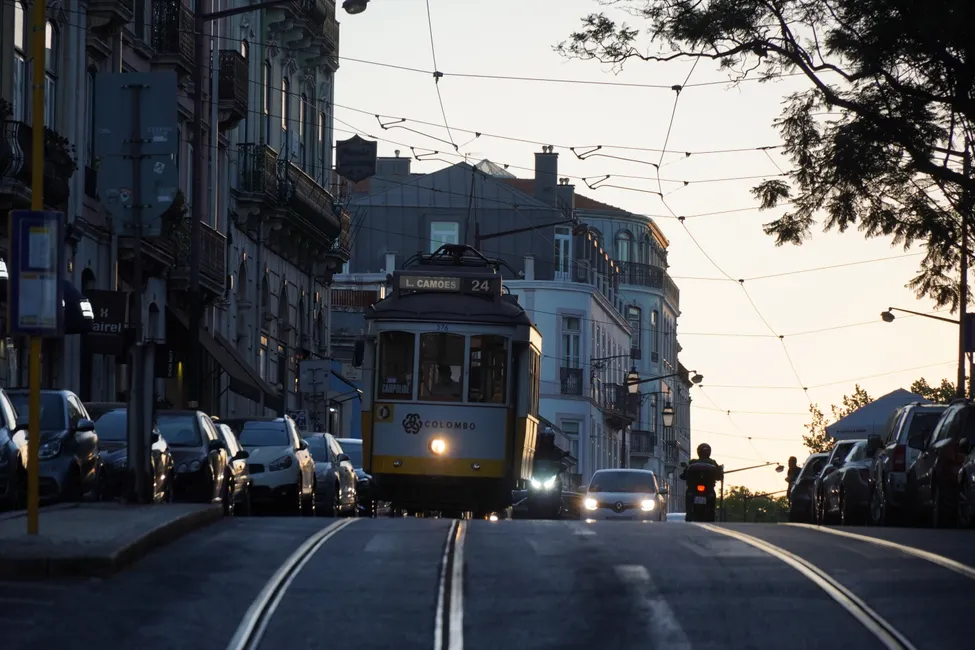
What is the best way to get around Lisbon? Walking covers most of the historic centre. Trams (Lines 15 and 28), the Metro, and Uber are all useful. Avoid hiring a car — Lisbon's old streets are not made for driving and parking is a nightmare.
Do I need the lisbon city pass? If you are visiting 4+ sights and using public transport daily, yes. See our Lisbon Card review for a detailed cost analysis.
What is the best neighbourhood to stay in Lisbon? Chiado/Príncipe Real for a balance of elegance, convenience, and atmosphere. Alfama for maximum old-city immersion (note: hilly, can be noisy). Baixa for central convenience (but touristy).
More Lisbon and Portugal Planning
The Lisbon Card pays off only if you hit four paid attractions daily plus unlimited transit. Most travelers break even at three sites; calculate your route before buying. Validate the card immediately upon first use or risk fines on trams.
Portugal’s rail network requires separate bookings for Alfa Pendular versus regional trains. Regional services accept no reservations and fill fast on Fridays. Download the CP app offline maps before departure; signal drops frequently between Lisbon and Porto.
Save More
Save 5% on activities
Use code CHASINGWHEREABOUTS5 in the GetYourGuide app.
Book this exact experience in GetYourGuide appGet Travel Tips in Your Inbox
Join 5,000+ travelers. Get exclusive itineraries, honest reviews, and budget hacks once a week.
No spam. Only high-quality travel advice. Unsubscribe anytime.