
Disclosure: Chasing Whereabouts is reader-supported. This guide contains affiliate links to partners like Tiqets, GetYourGuide, Viator and Headout. If you make a purchase through these links, we may earn a small commission at no extra cost to you. This helps us continue providing free, first-hand travel guides. Thank you for your support!
🇪🇺 This guide is part of our comprehensive Europe Travel Guide.
Budapest earns its nickname — the Pearl of the Danube — every single morning when the rising sun hits the Hungarian Parliament across the water. Split down the middle by one of Europe's great rivers, it is actually two cities: hilly, castle-topped Buda on the west bank and flat, grand, bar-filled Pest on the east. Walk the Chain Bridge between them and you get both worlds in under ten minutes.
I spent two weeks in the city across different seasons. What follows is the practical version: which attractions are actually worth your time, what they cost in HUF (the Hungarian Forint), when to show up, and how to get between them without wasting a morning.
Quick-Reference Table: Top Budapest Attractions
Advertisement
| Attraction | Entry fee | Time needed | Book ahead? |
|---|---|---|---|
| Buda Castle grounds | Free | 1–2 h | No |
| Castle Museum (Budapest History Museum) | HUF 3,200 | 1.5 h | No |
| Fisherman's Bastion | Free (towers HUF 1,500) | 45 min | No |
| Hungarian Parliament tour | HUF 6,000 | 1 h | Yes |
| Széchenyi Thermal Bath | HUF 6,800–8,500 | 2–4 h | Yes (weekends) |
| Dohány Street Synagogue | HUF 5,000–6,000 | 1 h | No |
| Great Market Hall | Free | 1–1.5 h | No |
| Andrássy Avenue & Heroes' Square | Free | 1–2 h | No |
| St Stephen's Basilica | Free (dome HUF 1,000) | 45 min | No |
| Margaret Island | Free | 2–3 h | No |
| Jewish Quarter street art | Free | 1 h | No |
| Chain Bridge (Széchenyi Lánchíd) | Free | 10 min walk | No |
| Szimpla Kert ruin bar | Free most days | 2+ h | No |
Buda Side: Castles, Views and History
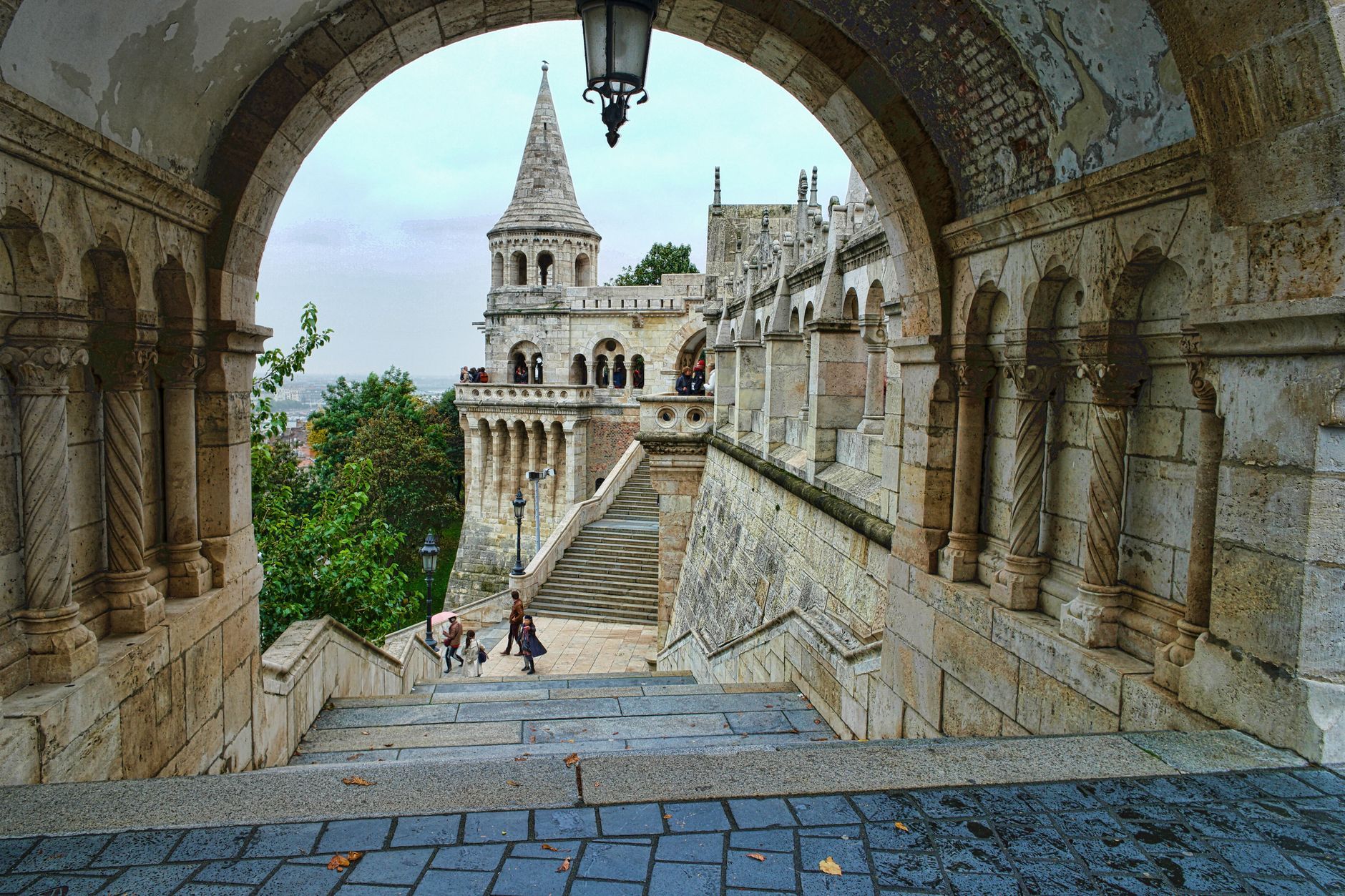
Buda Castle and the Royal Palace
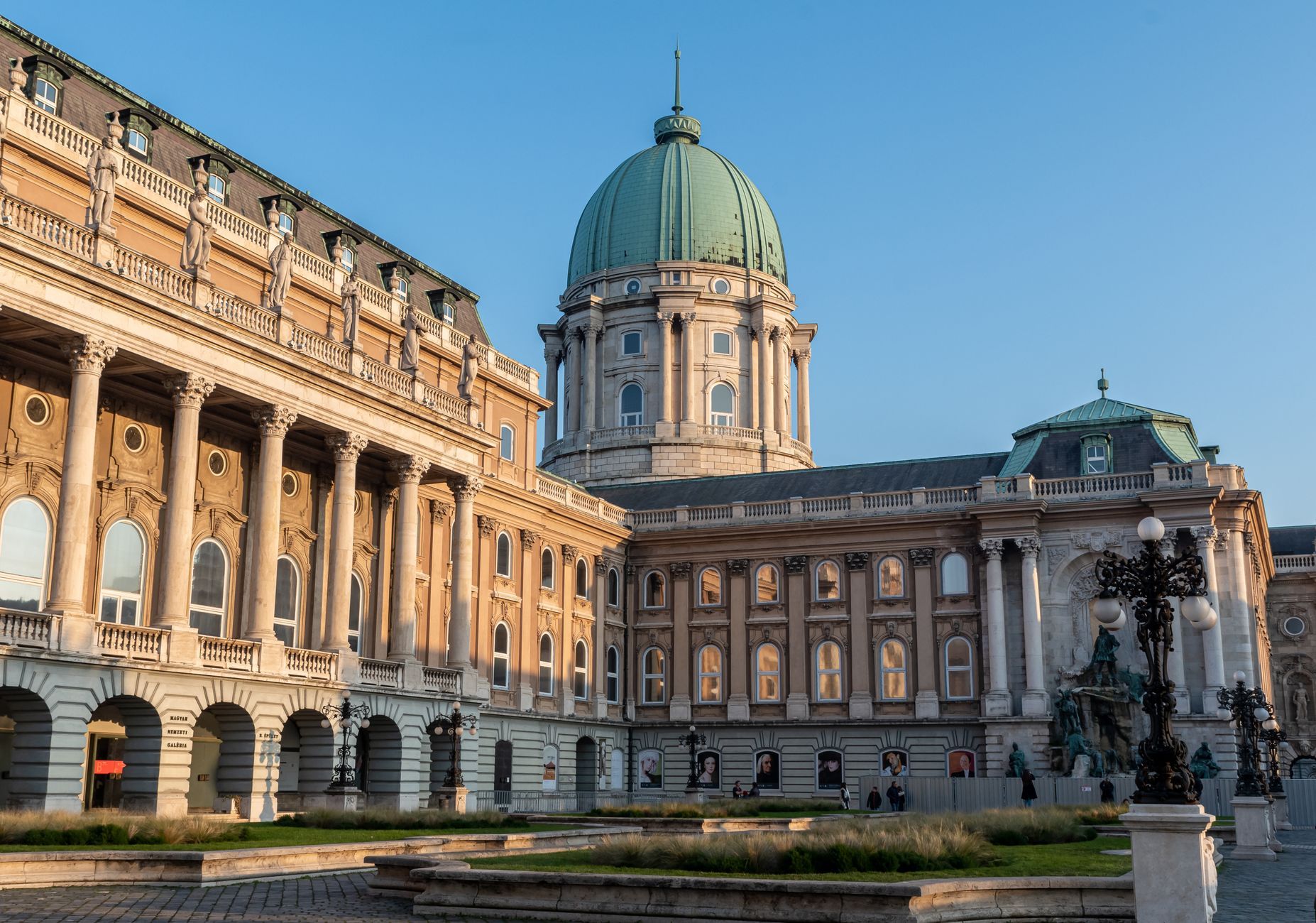
Buda Castle is the anchor of the city. The hill it sits on — Castle Hill, or Várhegy — has been a royal seat since the 13th century. Today the complex houses the Budapest History Museum (HUF 3,200), the Hungarian National Gallery (HUF 3,200), and enough cobbled courtyards to fill an afternoon.
The grounds themselves are free and open all day. Most people take the Castle Hill Funicular (Budavári Sikló) up from Clark Ádám tér at the Buda end of the Chain Bridge — it costs HUF 3,000 one way and takes 90 seconds. If that feels steep, Bus 16 runs from Deák Ferenc tér for the price of a BKK ticket (HUF 350 single, or HUF 530 for a 24-hour pass).
Best time to visit: weekday mornings between 9–11am before tour groups arrive. The castle courtyard facing the Danube gives one of the city's best skyline shots of the Parliament.
The Budapest History Museum inside the Royal Palace is worth the entry if you're interested in medieval Budapest — Roman-era ruins are visible in the basement and the excavated medieval halls are genuinely surprising. The National Gallery is the better pick if you want Hungarian art from Gothic altarpieces to 20th-century realism.
Advertisement
Fisherman's Bastion
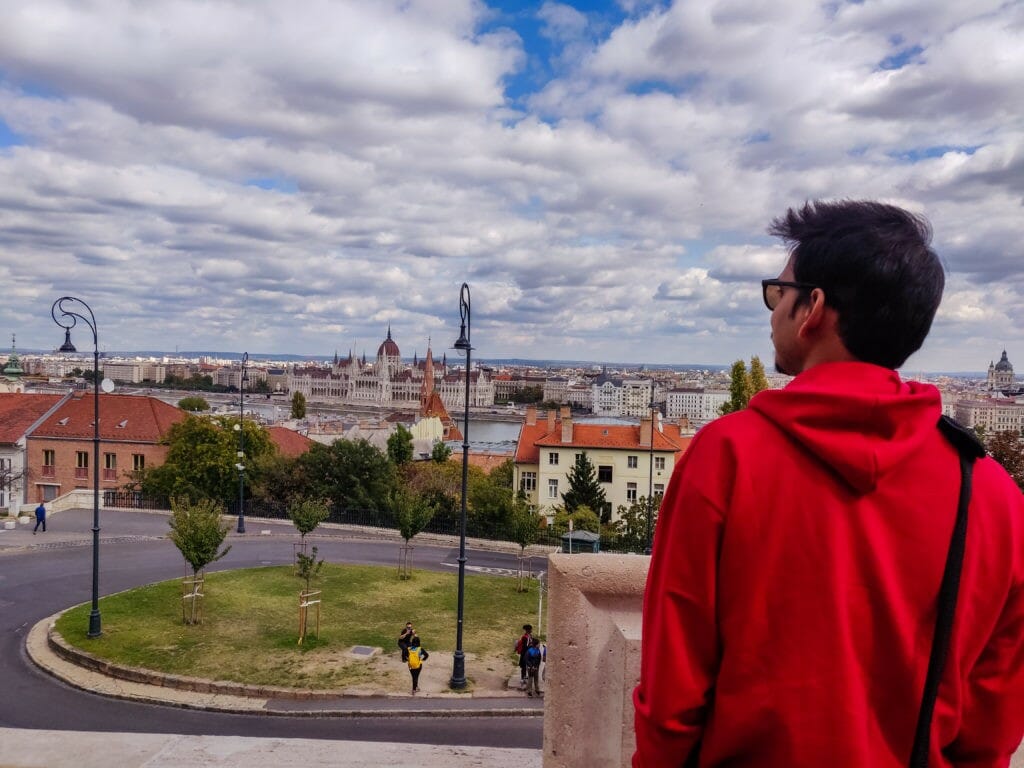
Five minutes' walk from the castle gates, Fisherman's Bastion is a neo-Romanesque terrace with seven towers representing the seven Magyar tribes that settled the Carpathian Basin. It was built between 1895 and 1902 and despite looking ancient, it was always decorative rather than defensive.
Entry: the terrace is free year-round. Access to the towers costs HUF 1,500 and adds height but not dramatically different views. Most people skip the tower fee and find the free terrace more than adequate.
Sunrise tip: show up at 6–7am in summer. The bastion faces east, straight towards the Parliament on the Pest bank. No crowds, golden light on the dome, worth the early alarm.
Matthias Church stands immediately behind the bastion — entry costs HUF 3,500 and the interior has beautifully restored medieval tilework and some of the finest Gothic detailing in Central Europe.
Gellért Hill and the Citadella
South of the castle, Gellért Hill rises 235 metres above the Danube. Walk up in 20–30 minutes from the Gellért Baths at the bottom or take Bus 27 from Móricz Zsigmond körtér. The Citadella fortress at the top has been under renovation but the panoramic views across both Buda and Pest are the main draw, and those are free.
Advertisement
The Liberty Statue — a woman raising a palm frond — is visible from most of the city and marks the hilltop.
Pest Side: Grand Boulevards, Baths and Bars
The Hungarian Parliament Building
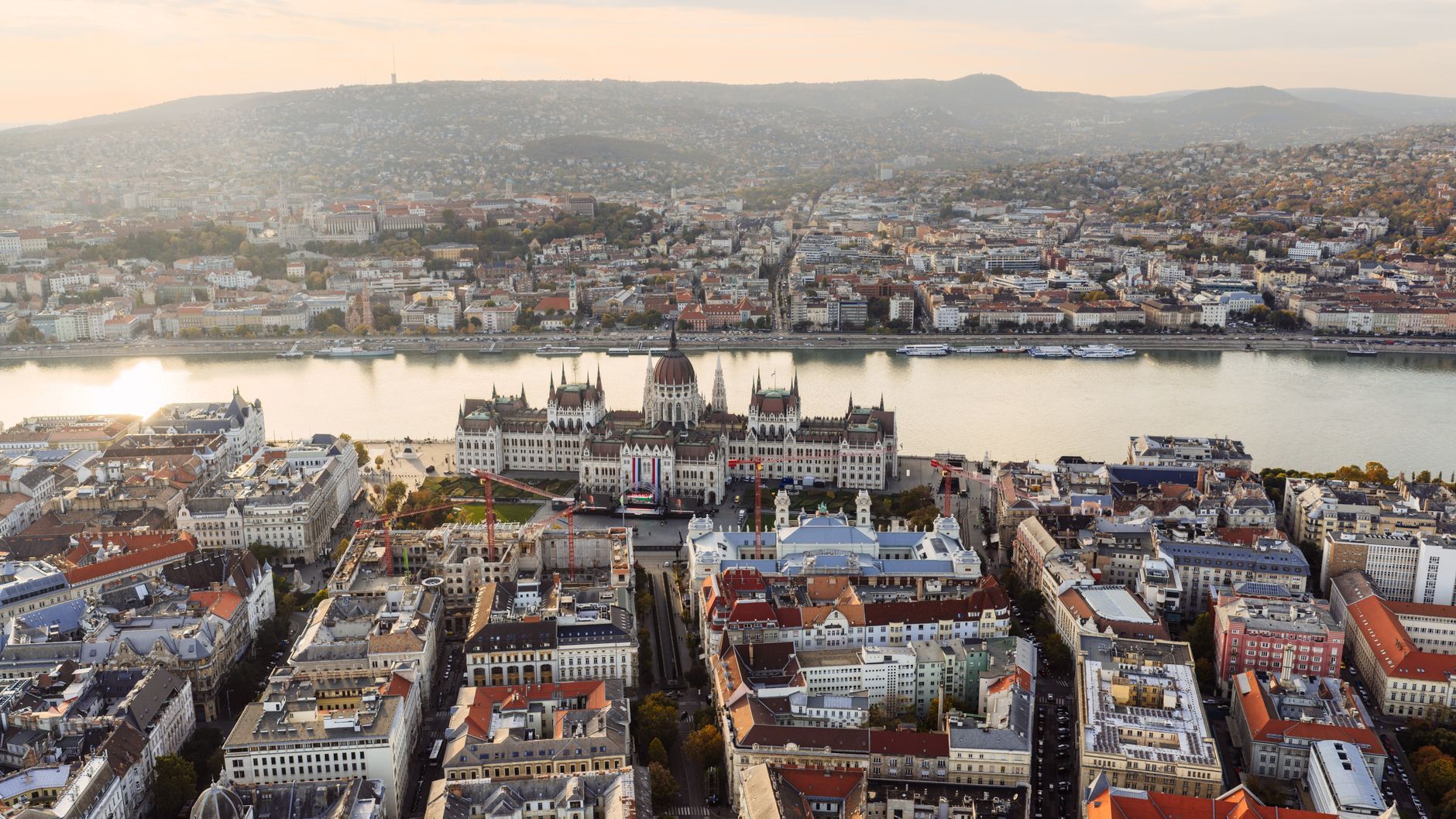
The Parliament is Pest's defining landmark and one of the largest parliament buildings in the world. Its neo-Gothic spires run 268 metres along the Danube bank and the dome matches St Stephen's Basilica at exactly 96 metres — a deliberate nod to the year 896 when the Magyars settled the Carpathian Basin.
Guided tours: HUF 6,000 for non-EU citizens, HUF 2,000 for EU citizens with ID. Tours run through the main staircase, two debating chambers, and the Crown Jewels room where Hungary's Holy Crown of Saint Stephen is kept. Book online at látogatóközpont.parlament.hu — popular time slots fill up, especially in summer.
Exterior: free and spectacular from the Danube bank (the Pest side waterfront, specifically the section near Kossuth tér). The building is lit at night and the reflection in the river is one of the city's great photo opportunities. Tram 2 runs along this stretch of the embankment.
Széchenyi Thermal Bath
Budapest sits on 118 natural thermal springs. The Romans used them, the Ottomans built bath houses over them, and today the city has more than a dozen public baths still in operation. Széchenyi (pronounced SAY-chen-yee) in City Park is the most famous and the most practical introduction to the thermal bath experience.
Advertisement
The complex has 18 pools — three outdoor, fifteen indoor — fed by water at 74–77°C that is cooled before use to 27–38°C depending on the pool. The two outdoor pools are the ones you've seen in photos: circular, grand, Neo-Baroque building, chess players in the water.
Prices (2026):
- Weekday cabin: HUF 8,500
- weekend trip planner cabin: HUF 9,200
- Locker (cheaper, shared changing): HUF 6,800–7,200
- Online booking saves HUF 300–500 and guarantees entry on busy weekends
What to bring: swimsuit, flip-flops, and a towel (rentable on site for HUF 900–1,200 but bring your own). Leave valuables locked up.
Gellért Baths in the Art Nouveau Gellért Hotel on the Buda bank is the more atmospheric option if you prefer ornate interiors over the outdoor pools. Entry from HUF 7,200–9,500.
Rudas Baths near Gellért Hill is the most historical — a 16th-century Ottoman bath with the original octagonal pool and starred dome. Entry HUF 6,000–7,500. Friday and Saturday nights it runs as a rooftop pool party (HUF 5,500, swimsuit required, brings a younger crowd).
Advertisement
Book ahead: weekday mornings are quietest. Saturday afternoons in summer mean long queues without an online ticket.
Dohány Street Synagogue (Great Synagogue)
The Dohány Street Synagogue — Dohány utcai zsinagóga — is the largest synagogue in Europe and the second largest in the world after Temple Emanu-El in New York. Built in 1859 in Moorish Revival style, it seats 3,000 and still functions as a working place of worship.
The complex includes the synagogue itself, the Hungarian Jewish Museum, a memorial garden with a weeping willow sculpture by Imre Varga commemorating Hungarian Holocaust victims, and the graves of those who died in the Budapest Ghetto in 1944–45.
Entry: HUF 5,000–6,000 depending on whether you take a guided tour (recommended — the history of Budapest's Jewish community is richly explained). The tour takes about one hour. Modest dress required; head coverings provided for men.
Location: Dohány utca 2–8 in the VII district, a 5-minute walk from Deák Ferenc tér (all three metro lines stop here).
The Great Market Hall (Központi Vásárcsarnok)
The Central Market Hall at the southern end of Váci utca is the best indoor food market in the city — and entry is free. Built in 1897 with cast-iron columns and Zsolnay tile on the roof, it functions as both a working market for locals and a good stop for visitors who want to eat well and take something home.
Ground floor: butchers, fishmongers, fruit and vegetables, bread. Prices are genuinely local. A bag of Hungarian paprika (the sweet or hot kinds) runs HUF 500–2,000 depending on size and quality — this is the best place to buy it.
First floor: the tourist-facing level with souvenirs and the famous langos (deep-fried dough) and chimney cake (kürtőskalács) stalls. Expect to pay HUF 800–1,200 for a chimney cake, HUF 600–1,000 for a basic langos, and HUF 1,000–1,500 for one with toppings.
Practical note: the market closes Sunday. Go in the morning when produce is fresh and stalls are at full capacity. It gets crowded midday.
Andrássy Avenue and Heroes' Square
Andrássy Avenue is Budapest's grand boulevard — a 2.5km stretch of Neo-Renaissance mansions, restaurants, and embassies connecting the inner city to City Park. It is a UNESCO World Heritage Site and best walked in the late afternoon when the light hits the buildings at an angle.
Notable stops along the way:
- Hungarian State Opera House — guided tours available (HUF 3,900), or buy a cheap ticket to an actual performance. The interior is one of the most beautiful in Central Europe
- House of Terror (Terror Háza) at Andrássy út 60 — the former headquarters of both the Arrow Cross and the communist secret police, now a museum covering Hungary's 20th-century dictatorships. Entry HUF 4,000; deeply affecting, not for the faint-hearted
- Oktogon — the central crossroads, busy day and night
Heroes' Square (Hősök tere) marks the end of Andrássy. The Millennium Monument at its centre was built for Hungary's thousandth anniversary in 1896 and features statues of seven chieftains alongside Hungarian kings and national heroes. The two museum buildings flanking it — the Museum of Fine Arts and the Kunsthalle — face each other across the square. Entry to the Museum of Fine Arts is HUF 4,000.
City Park (Városliget) is immediately behind the square — free to enter, good for a walk, and home to the Széchenyi Baths and the photogenic Vajdahunyad Castle (exterior free, the Agriculture Museum inside costs HUF 1,600).
St Stephen's Basilica
The Basilica of St Stephen (Szent István-bazilika) in central Pest is Budapest's other main domed church. The exterior is Neo-Renaissance, the interior is white marble and gilded mosaics, and it houses the right hand of St Stephen — Hungary's first king — in a reliquary that is one of the country's most venerated religious objects.
Entry: the church is free. The observation deck at the top of the dome costs HUF 1,000 and involves either a lift or 300 steps. The view looks across central Pest and on clear days out to the Buda Hills. Worth the climb in the morning before it gets warm.
The square in front of the basilica is the site of summer outdoor concerts and the best Christmas market in Budapest (December only) with HUF 200–800 mulled wine and traditional crafts.
Jewish Quarter and Street Art
The VII district around Kazinczy utca, Klauzál tér, and Dob utca is Budapest's historic Jewish quarter and current nightlife hub. The streets are layered with commissioned street art — large-scale murals on entire building facades — and the neighbourhood has a density of bars, coffee shops, and restaurants that makes it easy to spend a half-day wandering.
Walk north from the Dohány Street Synagogue towards the ruin bars and you'll pass through the neighbourhood naturally. The Kazinczy utca mikve (Jewish ritual bath) and several synagogues are interspersed with the bars and restaurants.
Entry: free. Just walk.
Chain Bridge (Széchenyi Lánchíd)
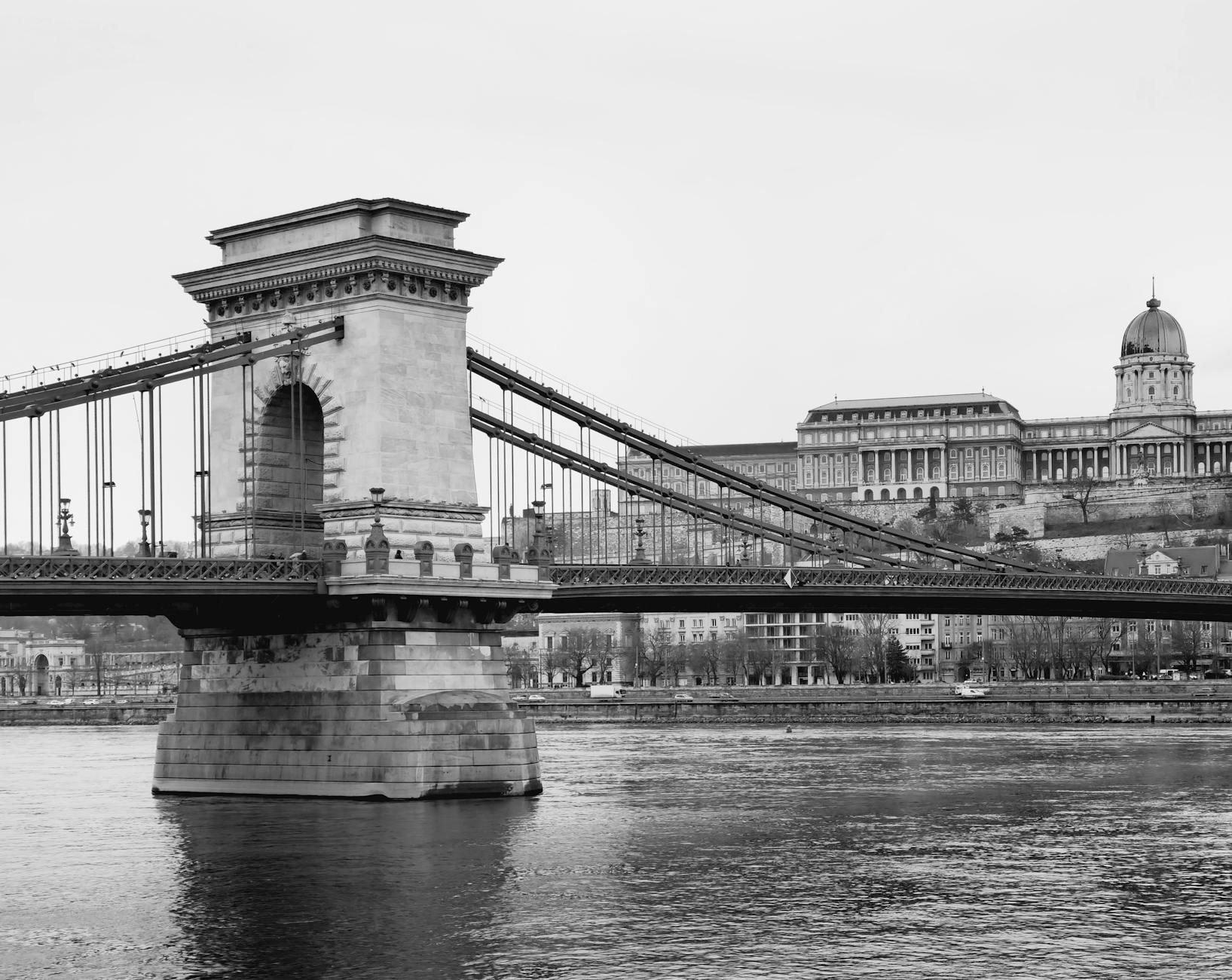
The Chain Bridge connecting Buda and Pest is Budapest's most recognisable landmark — the one you've seen in every cityscape photo. Built in 1849, it was the first permanent bridge across the Danube in the city and gave Pest and Buda their first fixed land connection.
Walk across it. It takes about 10 minutes, it is free, and the views from the middle — Parliament downstream on the left, Buda Castle and Gellért Hill on the right — are the single best view in the city. Go at golden hour or after dark when the bridge is lit and both banks glow.
The Buda end drops you at Clark Ádám tér, where you can catch the funicular up to the castle or walk south along the riverbank to Gellért. The Pest end opens onto Roosevelt tér with the Four Seasons Hotel and the Academy of Sciences. Both banks of the Danube along this stretch are UNESCO World Heritage Site territory.
Entry: free. Open to pedestrians at all times. Avoid midday in summer when the iron surface heats up considerably.
The Ruin Bars: Szimpla Kert and Beyond
Szimpla Kert (Kazinczy utca 14, VII district) started in 2002 in a derelict apartment building and became the template for a category of bar that now exists nowhere else in quite the same way. Multiple rooms, multiple bars, an inner courtyard, vintage furniture pulled from closing factories and state institutions, and a vibe that is simultaneously hipster and genuinely neighbourhood.
Entry: free most evenings (some weekend events charge HUF 1,000–2,000). Open from 12pm daily.
Sunday farmers market: from 9am–2pm Szimpla hosts an organic farmers market in its courtyard. Local producers sell bread, cheese, vegetables, honey, and preserves. Entry free. Worth doing even if you wouldn't normally go to a farmers market.
Other ruin bars worth visiting:
- Instant-Fogas (Akácfa utca 49–51) — a multi-club complex with outdoor garden area
- Doboz (Klauzál utca 10) — slightly more polished, good cocktails
- Csendes (Ferenczy István utca 5) — quieter, good for an afternoon drink without the tourist crowd
Margaret Island: The Green Lung
Margaret Island (Margitsziget) sits in the middle of the Danube between the Margaret and Árpád bridges. It is 2.5km long, car-free, and entirely given over to parks, rose gardens, running tracks, a small zoo, outdoor pools, and a musical fountain that runs shows at 9pm in summer.
Entry: free. You can walk across the Margaret Bridge from either bank.
BKK ferry: the D11 water bus stops at the island. A single ticket is HUF 750 (or covered by a Budapest travel card). The ferry runs from Boráros tér in Pest and is a pleasant way to approach the island from the south.
What's there:
- Rose garden (best late May–June)
- Palatinus Strand outdoor pools (HUF 3,000–4,000, open May–September)
- Medieval ruins of a Franciscan church and Dominican convent
- Musical fountain — free, shows run daily from May–October at 9pm (check seasonal schedule)
- Bike hire at the island entrances (HUF 1,500–2,500/hour)
Margaret Island is best visited in the morning on a weekday when it is genuinely peaceful. Weekends in summer it fills with Budapestians using the pools and running paths — still pleasant, but different in character.
Buda vs Pest: How to Structure Your Days
Most visitors try to do too much. The city rewards slowing down. Here is a practical framework:
Day 1 — Buda: Start early at Fisherman's Bastion (sunrise if possible), walk through the Castle District, visit the Budapest History Museum or National Gallery, take the funicular down. Afternoon at Gellért Baths or a walk up Gellért Hill. Dinner in the I district at the bottom of Castle Hill.
Day 2 — Central Pest: Parliament exterior and tour (book ahead), walk the Danube embankment (Tram 2), St Stephen's Basilica and the dome, Great Market Hall for lunch (langos upstairs), Váci utca, Jewish Quarter afternoon walk.
Day 3 — Andrássy and City Park: Dohány Street Synagogue in the morning, walk Andrássy Avenue, House of Terror, Heroes' Square, Museum of Fine Arts or Vajdahunyad Castle exterior, Széchenyi Baths in the afternoon (book ahead for weekends). Ruin bars in the evening.
Day 4 — Margaret Island + anything missed: take the ferry to Margaret Island in the morning, afternoon free for any missed attractions or a return to a favourite neighbourhood.
Transport in Budapest
Budapest public transport runs on a single-operator BKK system covering metro, trams, buses, trolleybuses, the HÉV suburban trains, and the Danube ferries. A single ticket (valid for one uninterrupted journey) costs HUF 450. A 24-hour travelcard costs HUF 2,500 and a 72-hour pass costs HUF 5,500 — worth it for anything beyond two days.
Validate your ticket every time you board. Inspectors are active and fines start at HUF 16,000.
Metro: four lines. M1 (yellow, the oldest underground railway in continental Europe, 1896) runs under Andrássy Avenue. M2 (red) and M3 (blue) are Soviet-era. M4 (green) is modern and runs through Kelenföld to Keleti station.
Trams: Line 2 along the Pest Danube embankment is one of the most scenic tram rides in Europe. Line 4/6 is the main circular route around central Pest.
Taxis: use the Bolt app. Taxify/Bolt meters are standard and cheaper than hailing on the street. A cross-city ride runs HUF 2,500–5,000.
Getting from the airport: Budapest Airport (BUD, Liszt Ferenc) is 25km southeast of the centre. Minibus transfers run HUF 4,500–9,000 door-to-door. Bus 100E (direct airport express) costs HUF 1,100 and runs to Deák Ferenc tér in 35–40 minutes. Metro M3 connection at Kőbánya-Kispest takes longer but is HUF 450 on a standard ticket.
What Things Cost in Budapest (2026)
| Item | HUF | Approx GBP |
|---|---|---|
| Single metro/bus ticket | 450 | £1.00 |
| 24-hour travelcard | 2,500 | £5.50 |
| Langos (basic) | 600–1,000 | £1.30–2.20 |
| Chimney cake | 800–1,200 | £1.80–2.70 |
| Coffee (espresso) | 600–900 | £1.30–2.00 |
| Beer in a ruin bar | 900–1,600 | £2.00–3.50 |
| Goulash soup in a restaurant | 1,500–2,500 | £3.30–5.50 |
| Széchenyi Baths (weekday locker) | 6,800 | £15 |
| Parliament guided tour | 6,000 | £13 |
| Funicular (Castle Hill, one way) | 3,000 | £6.60 |
Hungary is significantly cheaper than Vienna, Prague, or Kraków for day-to-day costs. travel budget calculator around HUF 20,000–35,000 (£44–77) per day for accommodation, food, and two or three paid attractions.
Practical Tips
Currency: Hungary uses the Hungarian Forint (HUF), not the euro, and is unlikely to join the eurozone before 2030. Exchange at bank ATMs (use local bank ATMs — OTP, Erste, Raiffeisen) rather than airport booths or street exchange shops. The worst rates in the city are the exchange shops on Váci utca and near the main tourist sites.
Language: Hungarian (Magyar) has no relation to any other major European language. Locals in tourism generally speak good English. Learning köszönöm (thank you, pronounced roughly KER-ser-nem) and kérem (please) goes a long way.
Thermal bath etiquette: swimming cap required in some pools (sold on site for HUF 400). Nudity is prohibited in mixed-gender areas. Arrive at least 30 minutes before a session ends to get adequate bath time.
Safety: Budapest is generally destination safety index. Pickpocketing happens on crowded public transport and in the party district. Use standard precautions. Taxis ordered via app are safe; unmarked cabs at the airport are not — use 100E bus or order a Bolt.
Jewish Quarter on Shabbat: the Dohány Street Synagogue is closed Saturday (Shabbat). Plan the visit for Sunday–Friday.
My Personal Verdict: Highly Recommended
"Budapest is the best value capital city in Central Europe — Széchenyi Baths at HUF 6,800 (£15), Parliament tour at HUF 6,000, goulash lunch for HUF 2,500. Every major city has grand buildings; Budapest has them and costs half what Vienna charges."
Insider Tip:Skip the funicular (HUF 3,000 one way) if you have time — the walk up Castle Hill from Clark Ádám tér takes 15 minutes and goes through the old castle district lanes. Save the HUF 6,000 round trip for a second bath session.
FAQ
How many days do you need in Budapest?
Three full days covers the main attractions at a reasonable pace. Four days is comfortable if you want to include a day trip (Eger, Szentendre, or the Danube Bend) or spend meaningful time in the baths and parks. One week suits visitors who want to go deep into one neighbourhood per day.
Is Budapest expensive for tourists?
By Western European standards, Budapest is very affordable. A sit-down goulash lunch costs HUF 1,500–2,500 (£3–5.50), a pint in a ruin bar is HUF 900–1,600 (£2–3.50), and Széchenyi Baths with a locker costs HUF 6,800 (£15). The main cost in the city is accommodation, which has risen sharply post-2020.
What is the best area to stay in Budapest?
The V district (central Pest, near the Parliament and Váci utca) and the VII district (the Jewish Quarter / ruin bar area) are the most convenient bases. Both are walkable to most attractions and well-served by public transport. Buda side accommodation tends to be quieter and slightly cheaper but requires crossing the river for most of Pest's nightlife and restaurants.
Do I need to book Széchenyi Baths in advance?
Online booking is strongly recommended for weekends and Hungarian public holidays. Weekday mornings generally have capacity without pre-booking, but online tickets save HUF 300–500 and guarantee a locker. Book at szechenyibath.com or via official apps.
Is the Parliament tour worth it?
Yes. At HUF 6,000 (under £14) it is one of the best value guided tours in the city. The Crown Jewels room alone justifies the price. Tours run in English several times daily. Book a few days ahead in summer.
What is the best time to visit Budapest?
Late April to June and September to October offer the best balance of mild weather and manageable crowds. July and August are hot (35°C+ is common) and heavily touristed but the baths are at their most fun. December has fewer crowds and excellent Christmas markets. Avoid Hungarian national holidays (20 August — St Stephen's Day — is the busiest day of the year in the city).
Can I visit Budapest on a day trip from Vienna?
Yes. Vienna to Budapest by IC/EC train takes 2h30 and costs €25–50 booked in advance (ÖBB or MAV). Flixbus is slower (3–4h) but cheaper. A focused day trip could cover the Parliament, Fisherman's Bastion, and a market visit, but an overnight stay dramatically improves the experience.
Is Budapest safe for solo travellers?
Budapest is generally safe for solo travellers including solo female travellers. The main issues are petty theft in tourist crowds and overcharging at restaurants that don't display prices — check menus for prices before ordering, especially around Váci utca and the waterfront. The ruin bar district is lively but not threatening in the way some European nightlife areas can be.
What is Budapest famous for?
Primarily: its thermal bath culture (the only capital city in the world where medicinal thermal baths are a genuine local institution rather than a tourist add-on), its grand early-20th-century architecture, the ruin bar scene in the Jewish Quarter, the Danube riverfront (a UNESCO World Heritage Site along with Andrássy Avenue and Castle Hill), and Hungarian food — goulash, paprika, chimney cake, and pálinka fruit brandy.
City Passes — Where to Book
Save on attraction entry with official city passes, booked through Tiqets (instant e-ticket):
- Vienna: Book on Tiqets → · Full review →
- Prague: Book on Tiqets → · Full review →
Best Tours & Experiences
For guided tours and experiences, I recommend checking Viator — they have a huge selection with free cancellation on most bookings. You can also browse TripAdvisor Experiences for more local tours, day trips, and attraction tickets with real traveller reviews.
Save More
Save 5% on activities
Use code CHASINGWHEREABOUTS5 in the GetYourGuide app.
Book this exact experience in GetYourGuide appGet Travel Tips in Your Inbox
Join 5,000+ travelers. Get exclusive itineraries, honest reviews, and budget hacks once a week.
No spam. Only high-quality travel advice. Unsubscribe anytime.