Disclosure: Chasing Whereabouts is reader-supported. This guide contains affiliate links to partners like Tiqets, GetYourGuide, Viator and Headout. If you make a purchase through these links, we may earn a small commission at no extra cost to you. This helps us continue providing free, first-hand travel guides. Thank you for your support!
🇪🇺 This guide is part of our Europe Travel Guide.
When I moved to Frankfurt, beach holidays meant Spain or Croatia. Germany? People looked at me like I'd suggested swimming in the Rhine. Then I drove up to Rügen one August weekend trip planner and understood what I'd been missing — chalk cliffs glowing white against the sea, wide powder-sand beaches, and that specifically German beach culture: Strandkörbe everywhere, families with thermoses of coffee, the smell of Fischbrötchen from the pier stalls.
Germany has two coastlines, two very different personalities, and some genuinely world-class beaches. Here's what each coast actually delivers.
Baltic Sea vs North Sea: Which German Coast Is Right for You?
German beaches in summer are best for a relaxed coastal break rather than guaranteed Mediterranean heat. The Baltic coast usually offers calmer water and more sheltered resort beaches; the North Sea is windier, wider, and more tidal.
Advertisement
| Baltic Sea (Ostsee) | North Sea (Nordsee) | |
|---|---|---|
| Water temp (Aug) | 18–20°C | 16–18°C |
| Waves | Calm, good for swimming | Stronger, tidal |
| Tidal flats | No | Yes (UNESCO Wadden Sea) |
| Best for | Families, swimming, resort towns | Kitesurfing, walking, dramatic scenery |
| Key islands | Rügen, Usedom, Hiddensee, Fehmarn | Sylt, Amrum, Föhr, Juist, Langeoog |
| From Berlin | Rügen: ~3h by train | Sylt: ~5h+ by train |
| From Hamburg | Warnemünde: ~2.5h | Sylt: ~3h by train |
The Baltic coast is the right choice if you want warmer water, calmer conditions, and classic German seaside resort towns. North Sea if you want raw, windswept beaches and don't mind the water being a bit choppier.
Best Beaches on the Baltic Sea (Ostsee)
Rügen — Germany's Flagship Baltic Island
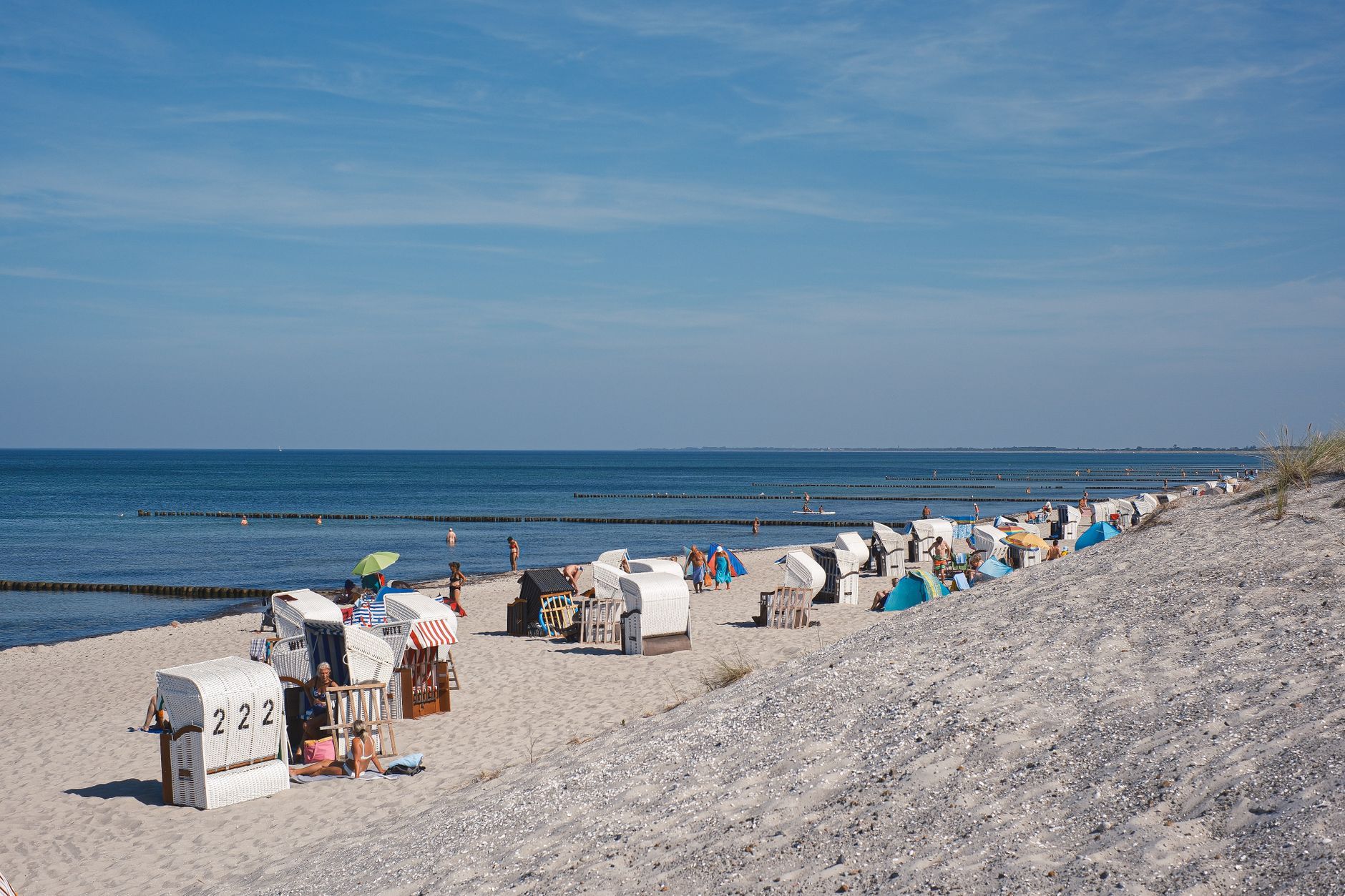
Rügen is Germany's largest island and its most iconic beach destination. The chalk cliffs at Königsstuhl in Jasmund National Park are the image people have when they think "German coast" — those are the cliffs Caspar David Friedrich painted. But Rügen is also a proper beach holiday destination.
Binz is the main resort town: a 5km wide sandy beach, a 370m wooden pier, and Bäderarchitektur resort villas from the 1890s lining the seafront. Water is calm enough for kids, Blue Flag certified, and the beach is split into textile, nudist, and dog sections. Lifeguards (DLRG) are on duty in season.
Sellin is smaller and arguably more charming — a 400m pier with an Art Nouveau pavilion, quieter beach, and the historic Hotel Bernstein up on the cliff. Prora, technically part of Binz, has a vast stretch of beach backed by the enormous Nazi-era Prora complex, now converted into apartments and a hostel.
Advertisement
How to get there: Berlin Hbf → Stralsund (→ Rügen via causeway bridge) by IC/ICE, ~3h, from €20–35 one way on a saver. Rent a bike or take the narrow-gauge Rasender Roland railway between beach towns on the island.
Prices: Strandkorb rental €15–25/half day. Kurtaxe (beach access fee) ~€3–4/person/day in season. Jasmund National Park (chalk cliffs viewpoint) entry free; Königsstuhl visitor centre ~€10.
Usedom — The Sunshine Island
Usedom averages more sunshine hours than almost anywhere else in Germany, which is why it's been a resort destination since the Kaiser era — Emperor Wilhelm II summered here. The three imperial spa towns — Ahlbeck, Heringsdorf, and Bansin — collectively known as Dreikaiserbäder — share a continuous 12km beach promenade, the longest in Europe.
The sand here has a quirk: dry, fine grains that squeak underfoot when the wind hits them right. Ahlbeck's pier (Seebrücke) dates from 1898 and is one of the most photographed on the Baltic coast.
The eastern end of Usedom is actually in Poland — you can walk across the border on the beach from Ahlbeck to Świnoujście.
Advertisement
How to get there: Berlin Ostbahnhof → Heringsdorf by regional train, ~3–3.5h, change in Ducherow or Züssow. From €20–30 return with a Deutschlandticket day pass.
Prices: Kurtaxe €2.50–3.50/person/day. Strandkorb from €15/half day.
Warnemünde — Best Beach Day Trip from Berlin
Warnemünde is Rostock's beach district and one of the easiest German beaches to reach from Berlin. The beach is wide and flat, the seafront promenade is pleasant, and the 19th-century lighthouse is worth climbing for the view over the Warnow river meeting the Baltic.
It's a cruise ship port, so in summer the waterfront can get busy — arrive early or outside cruise days. But the beach itself stretches far enough that you'll find space.
How to get there: Berlin Hbf → Warnemünde, direct RE train, ~2.5h, from €15–25. Fully covered by the Deutschlandticket (€49/month).
Advertisement
Hiddensee — The Car-Free Island
West of Rügen, Hiddensee is reached only by ferry — no cars allowed on the island. That restriction is the point. 17km long, around 1,000 permanent residents, heathland and dunes, sandy beaches at Kloster and Neuendorf, and a pace of life that belongs to another era. German artists have been retreating here since the late 19th century. Gerhart Hauptmann is buried here.
How to get there: Ferry from Stralsund or Schaprode (Rügen), ~45min–1.5h. Explore on foot or bike.
Travemünde & Timmendorfer Strand — Near Lübeck
Travemünde has been a seaside resort since 1802 and still has the character to prove it — Leuchtturm Travemünde (built 1539, oldest on the German Baltic coast) stands at the river mouth, a huge sailing week happens every July, and ferries to Scandinavia depart from here. Thomas Mann's family summered in Travemünde; it appears in Buddenbrooks.
Timmendorfer Strand, 6km of beach in the Bay of Lübeck, is the Baltic's beach for residents of Hamburg and Lübeck — a resort town with beach volleyball, a wildlife park, and regular concerts on the seafront.
How to get there from Hamburg: S-Bahn to Lübeck, then regional train or bus to Travemünde or Timmendorfer Strand, ~1–1.5h total.
Advertisement
Best Beaches on the North Sea (Nordsee)
Sylt — Germany's Celebrity Island
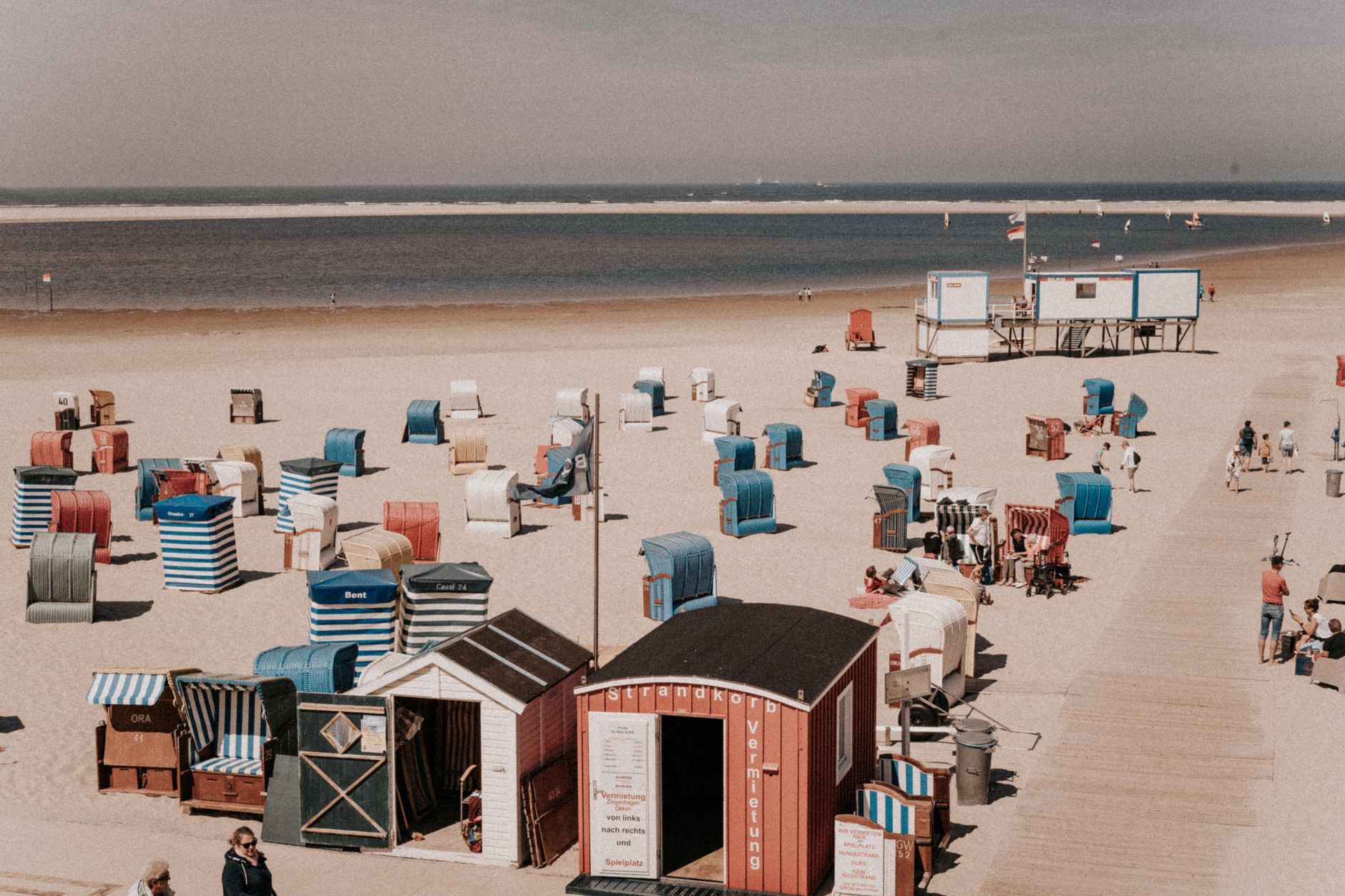
Sylt is Germany's most famous beach destination, and the most expensive. Nearly 40km of wide sandy beach, towering red cliffs at Kampen, dramatic dunes, and the kind of beach bars (Sansibar, Samoa) that celebrities actually go to. The village of Kampen is where the money goes — champagne, designer boutiques, the famous Kliff-Terrasse viewpoint.
Westerland is the main town: good beaches, lively, more accessible. Wenningstedt-Braderup is calmer and family-oriented.
Getting there is part of the experience. Sylt is connected to the mainland by the Hindenburgdamm causeway — car trains (Autozug) run from Niebüll. You can also take the train directly.
How to get there: Hamburg Hbf → Westerland (Sylt) by Marschbahn train, ~3h, from €25–40 one way. Fully covered by Deutschlandticket. Car: Autozug from Niebüll, ~€60–80 return per car.
Prices: Strandkorb from €20–30/half day. Beach fees (Kurtaxe) ~€3.50–5/person/day. Sylt is expensive everywhere — budget €15–20 for a Fischbrötchen and beer.
St Peter-Ording — The Biggest Beach in Germany
St Peter-Ording doesn't have the celebrity status of Sylt but it has something better: an enormous beach. When the tide goes out, the sand extends so far you can't see the water. At high tide, kitesurfers take over the surf zone. The distinctive beach houses on stilts (Pfahlbauten) stand out over the sand like something from a Nordic fairy tale.
The dune section (Dünen area) doesn't charge beach access fees. The Dünen-Therme wellness centre offers sulphur spring pools — unusual, legitimately relaxing, worth it on a rainy day (from €18/2h).
How to get there from Hamburg: Hamburg Hbf → Heide (Holstein) → St Peter-Ording, ~2.5h by regional train, from €20. Deutschlandticket valid.
East Frisian Islands — Juist, Langeoog, Norderney, Amrum
The East Frisian Islands line the North Sea coast of Lower Saxony, most of them car-free. They're part of the UNESCO Wadden Sea (Wattenmeer) — the world's largest tidal flat system, a migration stopover for millions of birds, home to seals year-round.
Langeoog has wide white-sand beaches and gets on with being a car-free island quietly and well. Norderney is the largest and most developed. Juist (called Töwerland — "magic land") is 10 miles long, car-free, and reachable by ferry or small plane from Norddeich.
How to get there: Ferry from Norddeich (Norderney, Juist), Carolinensiel (Harlesiel → Langeoog), etc. Allow a full travel day from Hamburg or Frankfurt.
Beach Practicalities: What to Know Before You Go
Strandkorb — The German Beach Chair
The Strandkorb (literally "beach basket") is the hooded wicker basket chair that lines virtually every German beach. They're rented by the half-day or full day, usually face the sea, and provide shelter from the wind while letting you sit at eye level with the beach. Rental: €15–25/half day, depending on beach and season. You can't use a Strandkorb without paying for it — they're numbered and attendants check.
Kurtaxe — Beach Entry Fee
Most Baltic and North Sea beaches charge a Kurtaxe (spa tax / beach tax), typically €2–5/person/day. You get a Kurkarte (guest card) that often includes free bus travel in the area. Kids under 6 are usually free. If you're staying in accommodation locally, the Kurtaxe is often included in your room rate.
Can You Swim in the Sea in Germany?
Yes — comfortably, in summer. Baltic Sea water reaches 18–20°C in July–August, which is genuinely swimmable. The North Sea runs slightly cooler at 16–18°C and has stronger currents. All major beaches have lifeguards (DLRG) in season (late June–late August). Look for the flagging system: yellow flag = swimming only with caution, red = no swimming.
Best Time to Visit German Beaches
| Period | Conditions | Notes |
|---|---|---|
| July–August | 22–28°C air, 18–20°C water (Baltic) | Peak season — busy, full Strandkorb availability, lifeguards on duty |
| June / September | 18–22°C air, 16–18°C water | Shoulder — less crowded, better prices, beaches still open |
| May / October | 12–17°C air | Off-season — Hiddensee and Rügen are beautiful, cold but peaceful |
German school summer holidays (Sommerferien) vary by state — Baden-Württemberg and Bavaria often go last, meaning August is when beach towns are busiest. Check your state's holiday dates if crowds matter.
How to Get to German Beaches
Deutsche Bahn connects all major beach destinations. The Deutschlandticket (€58/month as of 2026) covers all regional trains — worth buying if you're doing multiple beach trips or staying a week. For the North Sea islands, allow extra time for ferry connections.
Key routes:
- Berlin → Rügen (Binz/Sassnitz): IC/ICE to Stralsund, then regional, ~3h total
- Berlin → Usedom (Heringsdorf): Regional via Ducherow, ~3–3.5h
- Berlin → Warnemünde: Direct RE, ~2.5h
- Hamburg → Sylt (Westerland): Marschbahn, ~3h
- Hamburg → St Peter-Ording: Regional via Heide, ~2.5h
- Frankfurt → Rügen: ICE to Hamburg + regional, ~5–5.5h
- Frankfurt → Sylt: ICE to Hamburg + Marschbahn, ~5.5–6h
FAQs: Best Beaches in Germany
Does Germany have good beaches?
Yes. The Baltic Sea coast (Rügen, Usedom, Warnemünde) has sandy beaches with calm water reaching 18–20°C in August — genuinely swimmable and comparable to Danish or Polish Baltic beaches. The North Sea coast has wilder, larger beaches (St Peter-Ording, Sylt) with stronger winds. Germany won't out-compete Croatia or Greece on water clarity or guaranteed sunshine, but for a summer beach holiday within Germany, the beaches are excellent.
Does Germany have any warm beaches?
The Baltic Sea (Ostsee) is the warmer option. Water temperatures at Rügen, Usedom, and Warnemünde typically reach 18–20°C in July and August. The North Sea runs cooler (16–18°C) and is more tidal. Neither coast matches Mediterranean warmth — bring a wetsuit or accept that you'll swim for 20 minutes and then warm up in a Strandkorb.
What is the warmest beach in Germany?
Usedom consistently records some of the highest sunshine hours in Germany and the Baltic water there tends to be among the warmest on the German coast, reaching 20°C+ in good summers. Rügen's Binz and Prora beaches also have warm, sheltered Baltic water.
What are the most popular beaches in Germany?
Binz and Sellin on Rügen, the Kaiser-era spas of Ahlbeck and Heringsdorf on Usedom, Warnemünde near Rostock, and Sylt and St Peter-Ording on the North Sea side. If you are shortlisting Germany beaches for a first trip, these are the names that come up again and again — and every one of them is reachable by train.
Are Germany's beaches family-friendly?
Very much so. Most Baltic beaches — Binz on Rügen, Ahlbeck and Heringsdorf on Usedom, Warnemünde, Timmendorfer Strand — have calm, shallow water, lifeguards in season, and excellent facilities (toilets, Strandkorb rentals, beach restaurants). Hiddensee and the East Frisian islands are car-free, making them particularly good for families with young children.
Can visitors reach Germany's beaches without a car?
Easily. Deutsche Bahn connects Berlin to Rügen in ~3h, Hamburg to Sylt in ~3h. The Deutschlandticket (€58/month) covers all regional trains. Most island beaches are reached by ferry from mainland ports. For Rügen, the narrow-gauge Rasender Roland railway connects Putbus, Binz, Sellin, and Göhren without needing a car.
When is the best time to visit Germany's beaches?
July and August for the full beach holiday experience — warmest water, lifeguards on duty, everything open. June and September are excellent shoulder months with fewer crowds and lower accommodation prices. May and October suit walkers and those who like dramatic empty coastlines — the water is too cold for most swimmers but the scenery is stunning.
What is a Strandkorb?
A Strandkorb is the iconic hooded wicker beach chair unique to German and Danish beaches. The hood provides wind shelter while you face the sea. Renting one is non-negotiable if you want to sit on a German beach for more than an hour — costs €15–25/half day. They're numbered, and attendants come around to check payment.
Do German beaches charge entry fees?
Most do, via the Kurtaxe (beach tax). You typically pay €2–5/person/day at the beach entrance and receive a Kurkarte that often includes free local bus travel. If you're staying locally, it's usually built into your accommodation rate. The dune areas of St Peter-Ording are free. Lake beaches (Wannsee in Berlin, Starnberger See near Munich) don't charge Kurtaxe.
📍 Related reading: Planning a summer in Germany? See our guides to road trips from Frankfurt and how to travel around Germany on a budget.
City Passes — Where to Book
Save on attraction entry with official city passes, booked through Tiqets (instant e-ticket):
- Frankfurt: Book on Tiqets → · Full review →
- Hamburg: Book on Tiqets → · Full review →
Save More
Save 5% on activities
Use code CHASINGWHEREABOUTS5 in the GetYourGuide app.
Book this exact experience in GetYourGuide appGet Travel Tips in Your Inbox
Join 5,000+ travelers. Get exclusive itineraries, honest reviews, and budget hacks once a week.
No spam. Only high-quality travel advice. Unsubscribe anytime.