

Disclosure: Chasing Whereabouts is reader-supported. This guide contains affiliate links to partners like Tiqets and GetYourGuide. If you make a purchase through these links, we may earn a small commission at no extra cost to you. This helps us continue providing free, first-hand travel guides. Thank you for your support!
Growing up in India, vegetarian food is not a special dietary preference. It's just food. You don't ask for the vegetarian menu. Half the menu is vegetarian. Your grandmother cooks an entire festival meal with no meat and nobody thinks it's remarkable. Then you move to Germany and someone proudly tells you the dish you just ordered "only has a little bit of bacon in it."
Germany has a reputation problem with vegetarian food. Some of it is deserved — traditional German cuisine really is heavily meat-based. Schweinshaxe, Bratwurst, Schnitzel, Sauerbraten. These are the icons of German cooking and none of them help you. What the reputation misses is that German cities, particularly over the last decade, have developed genuinely strong vegetarian and vegan scenes. And Cologne is among the best of them.
I've visited Cologne several times, including in May 2026. I'm vegetarian. I've eaten well each time. This guide is what I wish someone had told me before the first visit.
Disclosure: This post contains affiliate links. If you book through these links, I may earn a small commission at no extra cost to you.
Is Germany Actually Vegetarian-Friendly?
The honest answer: traditional German cuisine is not, but modern Germany increasingly is — and you're rarely eating exclusively traditional food anyway.
Advertisement
The Germany of heavy meat dishes and Schmalz on bread is real. Order randomly at an old-school Gaststätte and you'll encounter it. But that's not where most people eat most of the time in a city like Cologne. The cafés, Asian restaurants, Turkish street food counters, Italian trattorias, and dedicated vegetarian restaurants have made it easier than the stereotype suggests.
What helps: Germany has one of Europe's most active plant-based food markets. The major supermarket chains — REWE, Edeka, Lidl — carry extensive vegetarian and vegan sections. Brands like Rügenwalder Mühle (which makes excellent vegetarian Wurst alternatives), Oatly, Alpro, and a growing range of German-brand tofu and plant-based products are standard grocery items. If you're self-catering or supplementing restaurant meals, you're very well served.
What to watch out for: Fleischbrühe (meat stock) is used in many traditional soups and stews even when the dish itself contains no visible meat. If you're asking about a soup or sauce, ask specifically whether it's made with meat broth. "Enthält die Brühe Fleisch?" Most restaurant staff in Cologne will give you a straight answer and find you something else if needed.
What Vegetarians Can Order at a Traditional Brauhaus
The Brauhaus is Cologne's most specific cultural restaurant experience — the long wooden benches, the cylindrical 0.2-litre Kölsch glasses, the Köbes (waiters) who just bring more beer until you put a coaster on top of your glass. You should eat at one. The experience is worth it even if your options are limited. The good news: you have more options than you think.
Advertisement
Reibekuchen is the one to know. These are potato pancakes — grated potato, fried until crisp, served with Apfelmus (apple sauce) on the side. They are filling, they are satisfying, and they are entirely vegetarian. Every Brauhaus serves them. Every Brauhaus does them well. Order a plate and you have a real meal.
Halver Hahn is the dish that confuses every visitor. "Halver Hahn" translates to "half chicken." There is no chicken in it. This is one of those historical naming quirks of Cologne dialect — halver Hahn is a rye bread roll (Roggenbrötchen) with a thick slice of aged Gouda cheese, butter, mustard, and sometimes pickled onions. That's it. It's a Kölsch-era snack designed to accompany beer. It's vegetarian. It's excellent. Order it without hesitation once you know what it actually is.
Käsespätzle is the most substantial vegetarian option at most traditional restaurants — egg noodles tossed with melted cheese and caramelised onions. Rich, properly filling, satisfying in the way a good bowl of pasta is satisfying. It appears on Brauhaus menus and general German restaurant menus alike. Not vegan (contains eggs and cheese), but solidly vegetarian.
Flammkuchen — the thin-crust Alsatian-style tart that has spread across German menus — often has a vegetarian version with crème fraîche, caramelised onions, and sometimes mushrooms or other vegetables. Check the menu; the standard version includes Speck (bacon), but a vegetarian alternative is frequently listed.
Kartoffelsalat (potato salad) in its standard German form is usually vegetarian — dressed with vinegar, oil, and sometimes yoghurt. Avoid versions that explicitly list bacon.
Advertisement
What to order carefully: Linsensuppe (lentil soup) and other bean soups are often made with meat stock even though the visible contents are vegetables. Same applies to Sauerkraut in some preparations. The question "Wird das mit Fleischbrühe gekocht?" ("Is this cooked with meat broth?") will get you an accurate answer at a Cologne restaurant.
The Best Areas for Vegetarian Food in Cologne
Belgisches Viertel — Where to Spend Your Meal Time
Belgisches Viertel (the Belgian Quarter) is unambiguously the best neighbourhood in Cologne for vegetarian and vegan eating. It's where the concentration of dedicated plant-based options is highest, where cafés routinely have full vegetarian menus, and where you don't need to strategise about what to order.
The quarter runs along Aachener Straße, Brüsseler Platz, and Bismarckstraße — walkable within about 20 minutes from the Cathedral, or two stops on the tram. Independent cafés here treat vegetarian and vegan food as the default rather than the accommodation. I've eaten well here on every Cologne visit without making reservations or planning far in advance.
For a full picture of the neighbourhood — what it's like to walk around, the square at Brüsseler Platz, the independent shops — see my Belgisches Viertel neighbourhood guide.
City Centre and Near the Cathedral
More tourist-oriented, higher prices, fewer dedicated vegetarian options — but not hopeless. Italian restaurants (pasta, pizza, risotto) are reliable everywhere in Cologne's centre and the vegetarian options are consistent. Asian restaurants — Vietnamese, Chinese, Thai — scattered through the Innenstadt generally have solid vegetarian sections on their menus.
Advertisement
The Cathedral area itself: eat breakfast at your hotel or pick up something from a bakery, then head away from the tourist core for lunch and dinner. The concentration of tourist restaurants immediately adjacent to the Dom keeps quality down and prices up.
Near Hauptbahnhof — Turkish Options
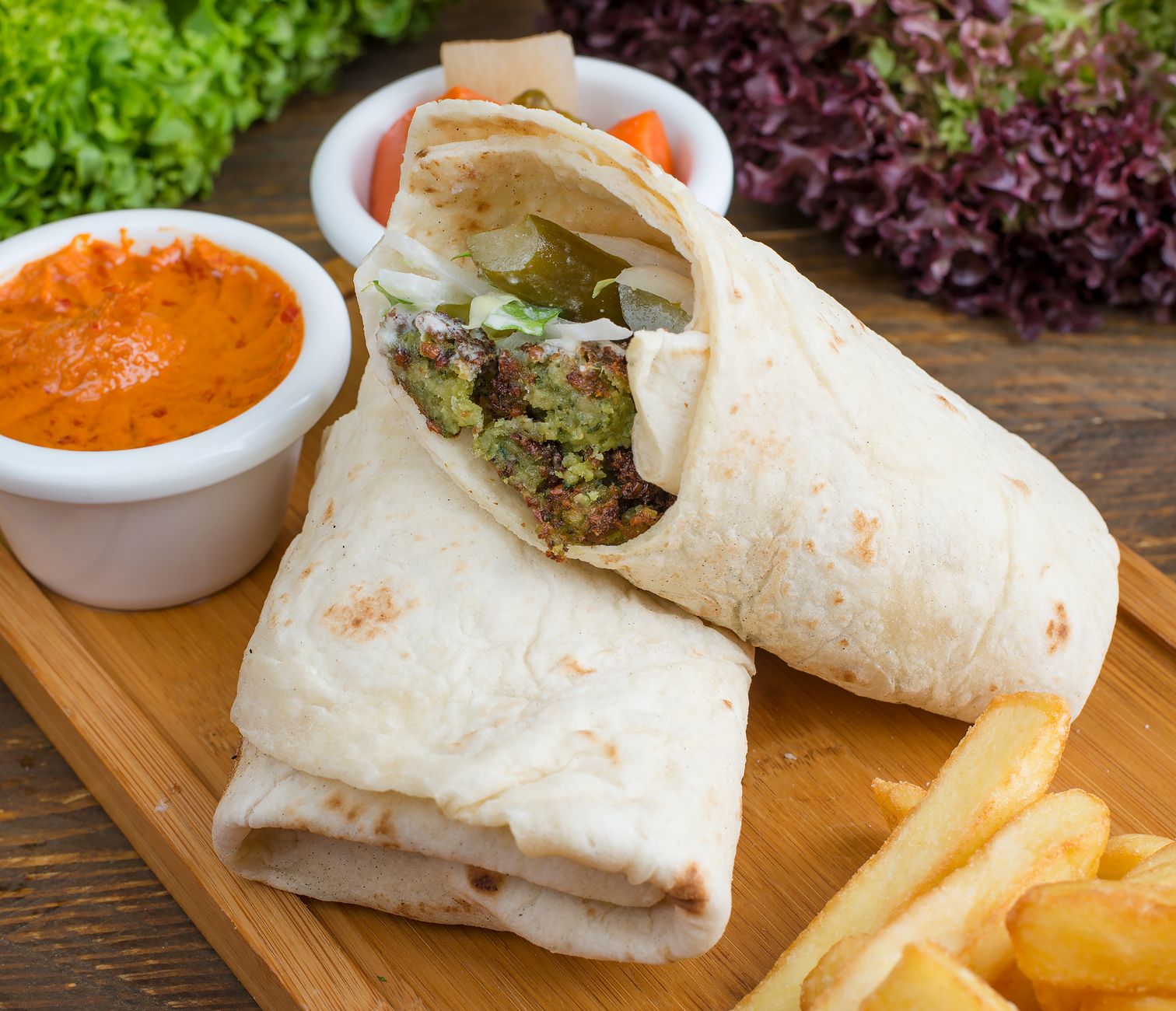
The area around Cologne's main train station and continuing into Ehrenfeld has a good concentration of Turkish restaurants and snack bars. These are among the most reliable spots for vegetarian eating in Germany generally: falafel wraps (Falafel Dürüm), lentil soup (Linsensuppe — check whether it's the vegetarian kind, some are), hummus with bread, vegetarian meze platters. Prices are low, quality is usually good. If you arrive at Cologne Hauptbahnhof hungry and vegetarian, walk a block east or north and you'll find falafel within five minutes.
Ehrenfeld
The further-west creative district has a younger, more countercultural character than Belgisches Viertel — more street art, more vegan options specifically, slightly more edge. Worth a look if you're staying more than three nights in Cologne and want to see more than the tourist circuits. Less convenient from the centre but reachable by tram.
Types of Cuisine That Work Well
Indian restaurants: Cologne has a handful of Indian restaurants of variable quality. As someone who grew up eating the real thing, I'm going to be honest — they're generally adequate rather than excellent. Good enough for a curry craving. Useful for vegetarians who need a reliable meal with plenty of options. For notes on eating Indian food and navigating Cologne as a South Asian visitor, see Cologne for Indian Travellers (forthcoming).
Advertisement
Vietnamese and Thai: Generally very reliable for vegetarians. Pho with vegetable broth is worth asking for specifically (the default is often beef or chicken broth — ask for vegetarische Brühe or "ohne Fleisch"). Tofu stir-fries, spring rolls, rice dishes. Prices are usually very reasonable and the food is genuinely good.
Chinese: Similar story to Vietnamese — good range of vegetable and tofu dishes. Less reliable at the cheap buffet end; better at sit-down restaurants.
Italian: The vegetarian fallback that works everywhere in Europe and works reliably in Cologne too. Pasta, pizza, risotto. Not revelatory but competent and widely available. Useful when you haven't planned ahead.
Turkish: Already covered above — one of the best options for vegetarians in Germany. The street food tradition of falafel and vegetable meze translates well to quick meals and budget eating.
The Supermarket Strategy
Not glamorous advice, but genuinely useful: German supermarkets are excellent for vegetarians and increasingly for vegans too.
REWE and Edeka both carry large plant-based sections. You'll find: oat milk (Hafermilch), plant-based Wurst alternatives from Rügenwalder Mühle and other brands, tofu in multiple forms, ready meals (quality varies but some are good), a wide range of cheeses including vegan alternatives in larger stores, muesli and granola, yoghurt alternatives, hummus, and good bread.
The practical application: buy breakfast from a supermarket (bread rolls, Müsli, oat milk, fruit — all cheap, all good), then use that saving toward a proper sit-down lunch. Alternatively, assemble a picnic — good bread, cheese, potato salad from the deli counter, fruit — and eat on the Rhine promenade. This is a genuinely pleasant way to spend an afternoon in Cologne and costs a fraction of restaurant prices.
For vegans specifically, the supermarket is often the most reliable breakfast solution — German hotel breakfasts and traditional bakeries lean heavily on dairy and eggs, and supermarket alternatives are better and cheaper than navigating that.
What's Harder for Vegans
Vegetarian is manageable in Cologne with moderate effort. Vegan is manageable but requires more intention.
The specific challenges: dairy is embedded in German bread culture (butter on most bread, egg-wash on rolls), most traditional baked goods contain butter or milk, Käsespätzle (a natural vegetarian fallback) contains eggs and cheese, and Gelatine turns up in some desserts. At a traditional Brauhaus, vegan options essentially don't exist — Reibekuchen is made with egg, Halver Hahn has dairy throughout. The experience is still worth having for atmosphere, but you'd be eating very little.
The practical solution: Belgisches Viertel restaurants and dedicated vegetarian/vegan cafés are your main eating venues. Asian and Turkish restaurants cover middle meals reliably. Supermarkets cover breakfast. The city is navigable.
Saying "Ich bin vegan" at any restaurant in Cologne will be understood. Follow it with "Was kann ich essen?" ("What can I eat?") and staff will tell you directly. German restaurant culture tends toward honest, direct communication — you'll get a real answer rather than a vague one.
Useful German for Vegetarians
These will get you further than pointing at a menu and hoping:
- Ich bin Vegetarier (m) / Ich bin Vegetarierin (f) — I am vegetarian
- Ich bin vegan — I am vegan
- Kein Fleisch — no meat
- Kein Fisch — no fish
- Ohne Fleischbrühe — without meat broth (critical for soups)
- Enthält das Gelatine? — Does this contain gelatine?
- Enthält das Eier oder Milchprodukte? — Does this contain eggs or dairy?
- Vegetarisch — vegetarian (look for this label on menus)
- Vegan — vegan (increasingly marked on German menus with a "V" or "Ve")
- Was würden Sie empfehlen? — What would you recommend? (after you've established your diet)
German is a direct language and Germans tend to answer direct questions directly. You won't be made to feel difficult for asking. If a dish can't be made vegetarian, they'll tell you. If something can be adapted, they'll often offer to adapt it.

The Honest Verdict
Cologne is not Amsterdam. It's not London. If you arrive expecting the vegetarian-first food culture of cities that built their identity around it, you'll be disappointed. What you'll find instead is a German city that has moved meaningfully in the right direction — where Belgisches Viertel genuinely competes with the best of European neighbourhoods for plant-based eating, where Turkish and Asian food fills the gaps reliably, where supermarkets are excellent, and where traditional Brauhaus dining is navigable if you know the three dishes worth ordering.
As someone who comes from a culture where vegetarian food needs no explanation or accommodation — where it is simply normal — Germany required a recalibration of expectations when I first moved to Frankfurt. Cologne required less recalibration than most. The city has made space for people who don't eat meat, and it continues to improve year on year.
Know where to go. Know what to ask for. You'll eat well.
Related: Belgisches Viertel Cologne Guide · Best Kölsch Breweries in Cologne · Cologne for Indian Travellers · Things to Do in Cologne
Save More
Save 5% on activities
Use code CHASINGWHEREABOUTS5 in the GetYourGuide app.
Book this exact experience in GetYourGuide appGet Travel Tips in Your Inbox
Join 5,000+ travelers. Get exclusive itineraries, honest reviews, and budget hacks once a week.
No spam. Only high-quality travel advice. Unsubscribe anytime.