Disclosure: Chasing Whereabouts is reader-supported. This guide contains affiliate links to partners like Tiqets, GetYourGuide, Viator and Headout. If you make a purchase through these links, we may earn a small commission at no extra cost to you. This helps us continue providing free, first-hand travel guides. Thank you for your support!
🇦🇹 This guide is part of our comprehensive Austria Travel Guide.
Linz is Austria's third-largest city and one of its most underrated. It has Europe's most forward-thinking digital arts museum, a UNESCO World Heritage baroque town square, a hilltop pilgrimage church reached by a 125-year-old tramway, and day-trip access to both Hallstatt and Salzburg in under two hours. It's also considerably cheaper than Vienna or Salzburg for accommodation and food.
I came here on a train from Frankfurt as a cheaper alternative to Vienna — the round trip by train costs around €40 versus €100+ for a flight. It turned out to be one of the best unplanned stops of that trip.
Linz Attractions — Quick Comparison
| Attraction | Entry Price | Time Needed | Notes |
|---|---|---|---|
| Ars Electronica Center | €17 adult | 2–3h | Fri/Sat evening "Deep Space Night" |
| Pöstlingbergbahn (return) | €10.10 | Half-day | Includes city tram, scenic ride |
| Linz Castle (Schlossmuseum) | €9 adult | 1.5–2h | Best Danube panorama in the city |
| Hauptplatz + Old Town | Free | 1–2h | Austria's largest Baroque square |
| Lentos Art Museum | €9 adult | 1.5–2h | Klimt, Schiele, Warhol collection |
| Mariendom (New Cathedral) | Free | 30–45 min | Austria's largest church, stained glass |
| St. Florian Monastery | €12 adult | 2–3h | 35km from Linz, Bruckner's tomb |
| Grottenbahn at Pöstlingberg | €5 adult | 30 min | Fairytale underground ride |
1. Ars Electronica Center — Europe's Best Digital Art Museum
The Ars Electronica Center is Linz's flagship attraction and one of the most genuinely interesting museums in Central Europe. It sits on the Danube riverbank and focuses on the intersection of art, technology, and society — not in a dry way, but through hands-on installations covering AI, robotics, space exploration, digital fabrication, and bio-science.
Advertisement
Deep Space 8K is the centrepiece: an 8K projection room the size of a small cinema where you can walk on a to-scale moon surface, fly through the human bloodstream, or watch live satellite feeds. Sessions run throughout the day; check the schedule at the ticket desk.
Cost: €17 adult, €9 child (6–15), family ticket €38
Hours: Tuesday–Friday 9am–5pm, Saturday–Sunday 10am–6pm; Deep Space Night Friday/Saturday evenings until 10pm (same price, smaller crowds, different programme)
Location: Ars-Electronica-Straße 1 — directly on the north bank of the Danube, 10-min walk from Hauptbahnhof or 3 stops by tram
Book ahead: Not required but worth checking ars.electronica.art for current exhibitions
2. Pöstlingberg — Hill Railway and City Views
The Pöstlingbergbahn is one of the steepest adhesion tramways in the world, operating since 1898. It runs from Hauptplatz (tram line 50) up a 10.6% gradient through residential Linz to the hilltop at 537m. The ride takes about 20 minutes and the views widen progressively as you climb.
At the top:
- Pilgrimage Basilica (Wallfahrtsbasilika): twin-towered Baroque church, free entry, views from the terrace
- Grottenbahn: underground fairytale train ride through illuminated cave scenes — €5 adult, €7 child, good for families
- Pöstlingberg-Schlössl restaurant: Austrian food with panoramic terrace, lunch stop
Cost: Pöstlingbergbahn ticket €10.10 return (includes city tram connection from Hauptplatz). Single €7.60. Covered by Linz Linien day pass (€6.30).
Frequency: Every 30 minutes from Hauptplatz (tram line 50)
Best time: Sunset or early morning for photography; avoid midday summer crowds
Advertisement
3. Hauptplatz and Old Town
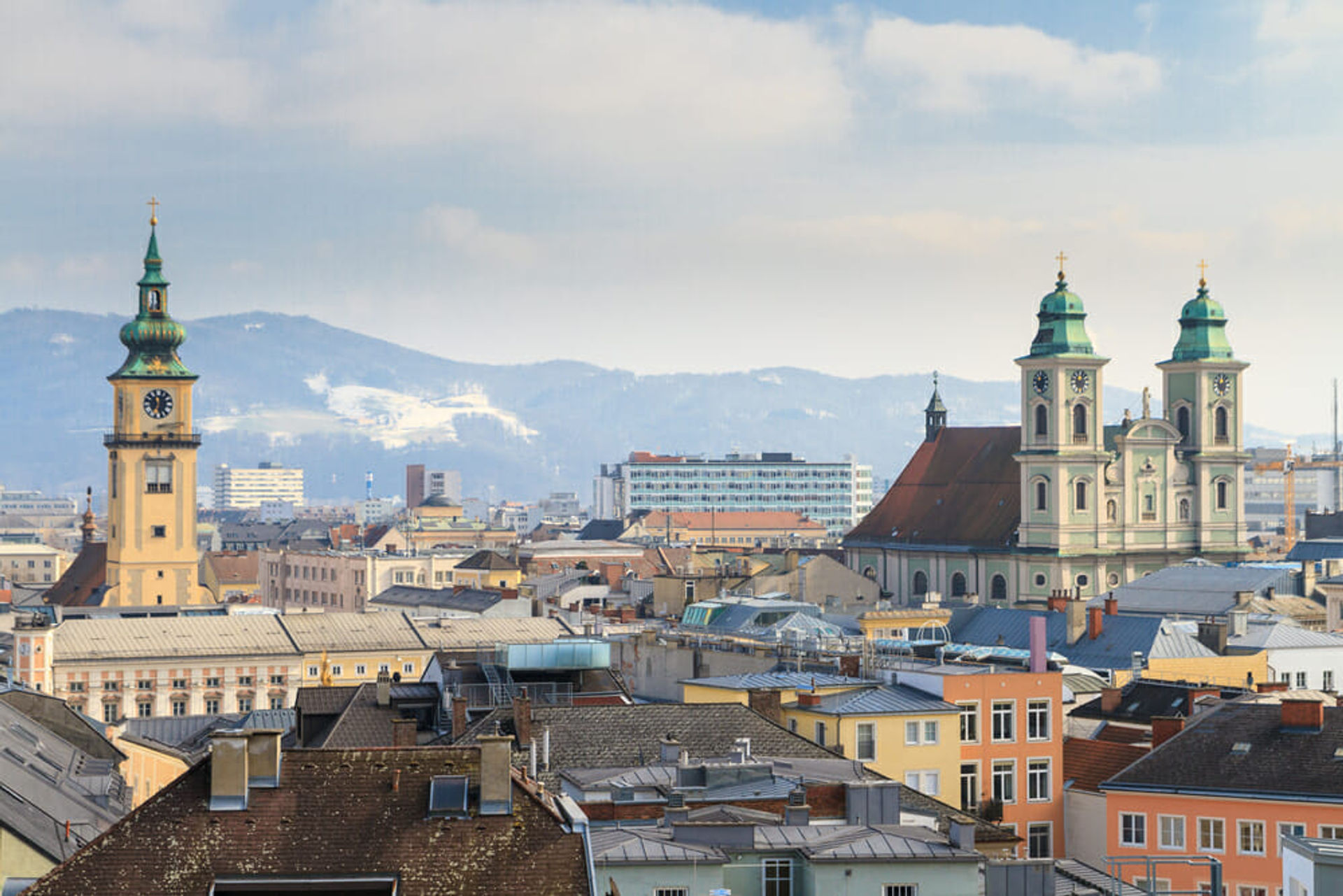
Linz's Hauptplatz is one of the largest Baroque town squares in the German-speaking world — 230m long — and the natural centre of the city. The Trinity Column (1723) stands in the middle, an ornate Baroque plague monument and a UNESCO World Heritage landmark.
The surrounding streets of the Altstadt (old town) are compact and walkable. Key spots:
- Landhaus Courtyard: Renaissance-style inner courtyard behind the state parliament building, often missed by tourists, usually quiet
- Mozarthaus Linz: Mozart stayed here in 1783 and composed his Linz Symphony in four days. Small memorial plaque; building is a café now
- Old Town Hall (Altes Rathaus): 16th-century façade facing the square
- Landstraße: the main pedestrian shopping street running south from Hauptplatz, with cafés and independent shops
Cost: Free to wander
Time: 1–2 hours at a relaxed pace; more if you want to shop or sit at the square cafés
4. Linz Castle (Schlossmuseum)
Linz Castle sits on a hill above the old town, and the views from the castle terrace — over the Hauptplatz, the Danube, and the surrounding hills — are the best in the city. The current building is 16th-century Habsburg; there has been a fortress here since Roman times.
The Schlossmuseum inside covers Upper Austrian history, art, and natural history across several floors. The arms collection and the collection of medieval woodcarving are the strongest parts.
Advertisement
Cost: €9 adult, €5 child (6–14), family ticket €18
Hours: Tuesday–Friday 9am–6pm, Saturday–Sunday 10am–5pm (closed Monday)
Getting there: 10-min walk from Hauptplatz uphill through the castle gardens
5. Lentos Art Museum
The Lentos sits directly on the Danube promenade, in a striking glass-and-steel building that glows blue at night. The collection focuses on 20th-century Austrian art: the strongest holdings are in Expressionism — Klimt, Schiele, Kokoschka — plus an international section with Warhol, Picasso, and major postwar works.
Cost: €9 adult, €7 concession. Combined Lentos + Nordico Museum ticket: €15
Hours: Tuesday–Sunday 10am–6pm, Thursday until 9pm
Location: Ernst-Koref-Promenade 1 — on the south bank of the Danube, adjacent to the Brucknerhaus concert hall
6. Mariendom (New Cathedral)
The Mariendom — officially the Cathedral of the Immaculate Conception — is Austria's largest church by volume, built between 1862 and 1924. Its tower was deliberately made slightly shorter than that of St. Stephen's Cathedral in Vienna (on imperial order). The interior is notable for its stained glass windows, including one depicting the history of Linz in scenes.
Cost: Free
Hours: Monday–Saturday 7:30am–7pm, Sunday 8am–7pm
Location: Herrenstraße, 10 minutes' walk from Hauptplatz
Advertisement
7. St. Florian Monastery — Best Day Trip from Linz (35km)
St. Florian is one of the finest Baroque monasteries in the German-speaking world, and it's 35km from Linz — the best half-day excursion from the city. The composer Anton Bruckner was born nearby, worked here as organist, and is buried in the crypt beneath the organ he played.
Highlights:
- Marble Hall (Marmorsaal): the grandest room, with ceiling frescoes and Habsburg portraits
- Abbey Library: 150,000 volumes, intricate Baroque shelving — one of the most beautiful rooms in Austria
- Bruckner Organ: concerts on the original instrument he played (check schedule at stiftst-florian.at)
- Altdorfer Gallery: works by Albrecht Altdorfer
Cost: Guided tour €12 adult, €5 child
Hours: Guided tours daily April–October, 10am–5pm; November–March weekends only
Getting there: Bus 303 from Linz Hauptbahnhof (~35 min, ~€3.50 each way). Or car (~30 min).
Day Trips from Linz
Hallstatt (~1.5 hours)
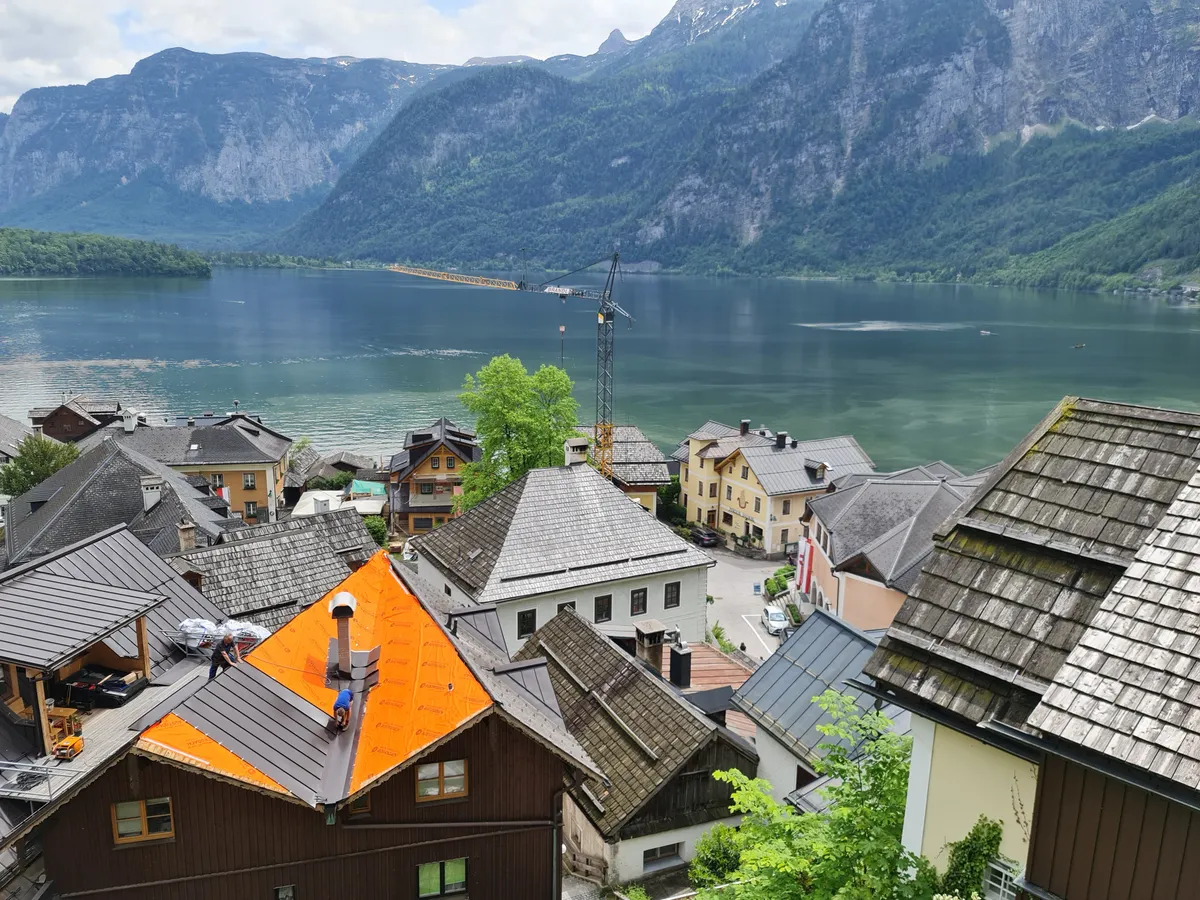
Hallstatt is the most photographed village in Austria — lakeside, mountain-backed, and genuinely as beautiful as the images suggest. From Linz: train to Attnang-Puchheim, then to Hallstatt station (across the lake), then ferry to the village. Total ~1.5h. Or drive via A1 and B145 (~80km).
Top things to do: Hallstatt Salt Mine (the world's oldest, €35 adult including the salt slide), Skywalk viewpoint (5-min taxi from village, free), old market square and church.
Advertisement
Salzburg (~1 hour by train)
Salzburg is one of the easiest day trips from Linz — hourly direct trains from Linz Hauptbahnhof, journey time ~1h, covered by Österreichcard or ~€25 return. Hohensalzburg Fortress, Getreidegasse, Mirabell Gardens, Mozart's birthplace.
Český Krumlov, Czech republic (~1.5h by car)
The most preserved medieval town in Central Europe, 80km north of Linz via the A7/Freistadt route. Drive only — no direct public transport. Krumlov Castle (€15–25 depending on tour), the old town peninsula, and rafting on the Vltava are the draws.
How to Get to Linz
From Vienna: Westbahn or ÖBB from Wien Westbahnhof → Linz Hauptbahnhof, ~1.5h, hourly. ~€25–35 return.
From Salzburg: ÖBB direct train, ~1h, runs every 30–60 min. ~€20–30 return.
From Munich: ~2h30 by EC train via Salzburg. ~€40–60 return.
From Frankfurt: ~5h by ICE/EC with one change (Passau or Munich). Or fly to Vienna and train. travel budget calculator travellers: FlixBus Frankfurt → Linz ~5–6h, ~€20–35.
City transport: Linz Linien trams and buses. Day ticket €6.30 — covers all trams including the Pöstlingbergbahn.
Best Time to Visit Linz
May–September is best for the Danube promenade, outdoor cafés, and Pöstlingberg. September is the peak cultural month:
- Ars Electronica Festival (early September) — the flagship annual festival; street installations, concerts, and exhibitions take over the city for 5 days
- Klangwolke ("Cloud of Sound") — outdoor symphony + fireworks on the Danube in early September; one of Austria's most spectacular free events
July: Pflasterspektakel street arts festival — international performers take over the old town for a weekend trip planner.
December: Christmas market on Hauptplatz — one of the better Austrian Christmas markets, less crowded than Vienna or Salzburg.
FAQ: Linz Austria Things to Do
Is Linz worth visiting?
Yes — especially for travellers who've already done Vienna and Salzburg. Linz has a genuinely world-class digital arts museum (Ars Electronica), excellent Baroque architecture, and direct train access to Hallstatt and Salzburg. It's also significantly cheaper than either city.
How many days do you need in Linz?
2 days is ideal. Day 1: Hauptplatz + old town + Ars Electronica Center + Lentos. Day 2: Pöstlingberg in the morning, Linz Castle, afternoon Danube walk; or a day trip to Hallstatt or Salzburg.
What is Linz famous for?
Linz is famous for the Ars Electronica Festival (one of Europe's most important technology and arts events), Linzer Torte (the world's oldest recorded cake recipe, a raspberry jam tart), and as the home city of composer Anton Bruckner. It was also the city where Hitler spent part of his childhood — Mauthausen concentration camp memorial is 25km east.
What is Linzer Torte?
Linzer Torte is a shortcrust pastry tart filled with redcurrant or raspberry jam, topped with a lattice of pastry strips. The first recorded recipe dates to 1653, making it one of the oldest named cakes in culinary history. Every bakery in Linz sells it; the best versions use local butter and whole hazelnuts in the pastry.
How do you get from Vienna to Linz?
Direct train from Wien Westbahnhof or Wien Hauptbahnhof to Linz Hauptbahnhof, ~1.5h, runs every 30–60 minutes. Westbahn (private) and ÖBB both operate the route; fares are ~€25–35 return if booked in advance.
Linz what to do when it rains?
Ars Electronica Center is the obvious rainy-day pick — plan a good two hours indoors. Add the Lentos art museum on the Danube bank and the arcades around the Hauptplatz, and keep the Pöstlingberg railway for clearer weather.
📍 Also see: Things to do in Vienna | Austria Travel Guide | Day trips from Frankfurt
City Passes — Where to Book
Save on attraction entry with official city passes, booked through Tiqets (instant e-ticket):
- Vienna: Book on Tiqets → · Full review →
- Salzburg: Book on Tiqets → · Full review →
Best Tours & Experiences
For guided tours and experiences, I recommend checking Viator — they have a huge selection with free cancellation on most bookings. You can also browse TripAdvisor Experiences for more local tours, day trips, and attraction tickets with real traveller reviews.
Save More
Save 5% on activities
Use code CHASINGWHEREABOUTS5 in the GetYourGuide app.
Book this exact experience in GetYourGuide appGet Travel Tips in Your Inbox
Join 5,000+ travelers. Get exclusive itineraries, honest reviews, and budget hacks once a week.
No spam. Only high-quality travel advice. Unsubscribe anytime.