Disclosure: Chasing Whereabouts is reader-supported. This guide contains affiliate links to partners like Tiqets, GetYourGuide, Viator and Headout. If you make a purchase through these links, we may earn a small commission at no extra cost to you. This helps us continue providing free, first-hand travel guides. Thank you for your support!
🇪🇺 This guide is part of our comprehensive Europe Travel Guide.
Europe's coastlines run for over 30,000 kilometres, passing through volcanic Greek islands, Portuguese sea-carved cliffs, Croatian old towns, and Italian clifftop villages. Not all beaches are equal — some are black sand, some are overrun in August, some you can only reach by boat.
This guide cuts through the noise. Below you'll find the best beach getaways in Europe, ranked by what makes each one worth the trip, with real detail on how to get there, the best time to go, and what to travel budget calculator.
Quick Comparison: Best European Beach Destinations
| Destination | Best For | Peak Season | Budget Level | How to Get There |
|---|---|---|---|---|
| Algarve, Portugal | Cliff scenery, surf | Jun–Sep | € Budget–Mid | Fly to Faro |
| Santorini, Greece | Sunsets, caldera views | Jul–Aug | €€€ Expensive | Fly to Thira or ferry from Athens |
| Dubrovnik, Croatia | History + swimming | Jun–Sep | €€ Mid | Fly to Dubrovnik Airport |
| Amalfi Coast, Italy | Romantic escapes | May–Jun, Sep | €€€ Expensive | Fly Naples, ferry or bus along coast |
| Mallorca, Spain | Family beaches, coves | May–Oct | €€ Mid | Fly to Palma |
| Cinque Terre, Italy | Hiking + villages | May–Jun, Sep | €€ Mid | Train to La Spezia, then local train |
| Costa Brava, Spain | Quiet coves, Dalí country | Jun–Sep | € Budget–Mid | Fly to Girona or Barcelona |
| Montenegro | Budget Adriatic | Jun–Sep | € Budget | Fly to Tivat or Podgorica |
| Hvar, Croatia | Party island, lavender | Jul–Aug | €€ Mid | Fly to Split, ferry to Hvar |
| Mykonos, Greece | Nightlife, wind | Jul–Aug | €€€ Expensive | Fly to Mykonos or ferry from Athens |
1. Algarve, Portugal — Best for Cliff Scenery and Surf
The Algarve is the most dramatically beautiful stretch of coastline in western Europe. The ochre limestone cliffs of Lagos, Praia da Marinha, and Ponta da Piedade are extraordinary — you need to see them from the sea, which means renting a kayak or joining a grottos boat tour from Lagos marina.
Best beaches: Praia da Marinha (grottos, rock arches, crystal water), Praia de Dona Ana (calm, sheltered, great for families), Praia do Amado (exposed, consistent swell for surfers near Carrapateira).
Advertisement
How to get there: Fly to Faro. The airport is 25 minutes from Albufeira, 1 hour from Lagos. Car hire is worth it — the western Algarve is spread out and buses are infrequent.
Best time to visit: May–June and September. July–August is hot, crowded, and pricy. The spring sea temperature is cooler but the cliffs are stunning and the crowds are thin.
Budget: Algarve is one of the most affordable beach destinations in western Europe. A decent hotel in Lagos costs €80–120/night in shoulder season.
What makes it unique: The soft cliff geology creates sea caves and grottos that don't exist anywhere else in Europe. The Ponta da Piedade arch formations near Lagos are genuinely world-class.
2. Santorini, Greece — Best for Dramatic Scenery
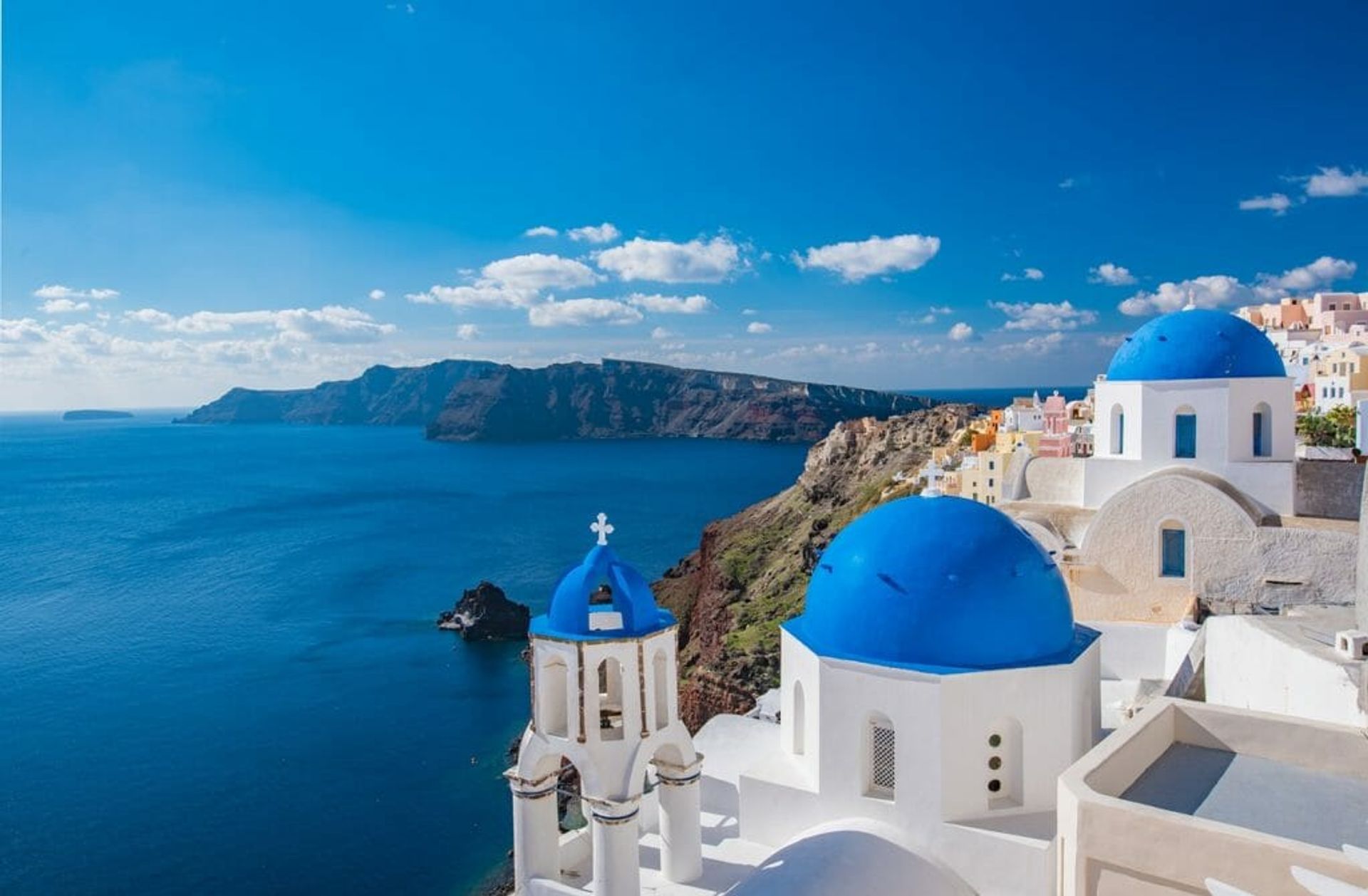
Santorini is the product of one of the largest volcanic eruptions in human history — the caldera that remains is what makes the island so visually arresting. The water inside the caldera is deep blue, the cliffs are 300 metres of compacted volcanic rock, and the white cube buildings of Oia stack up against a sunset sky that draws photographers from around the world.
Advertisement
Best beaches: Kamari Beach (black volcanic sand, blue flag, family-friendly strip of tavernas), Perissa Beach (long black sand, more local), Red Beach (dramatic red cliffs, reached via 10-minute walk — go early, it gets busy).
How to get there: Fly direct to Thira (Santorini Airport) from most major UK and European cities in summer. Alternatively take a high-speed ferry (4.5 hours) or slow ferry (8 hours) from Athens Piraeus — spectacular if you arrive at dawn.
Best time to visit: Late May–June or September–October. July–August is brutally hot and Oia gets genuinely overcrowded at sunset. Shoulder season has calmer weather, cheaper rooms, and you can actually walk around.
Budget: This is a pricey island. Mid-range hotel in Fira: €150–250/night. Expect to pay more for caldera views. Budget travellers can stay in Perissa or Kamari where prices are lower.
What makes it unique: The caldera itself — you can swim in the hot springs near the volcanic island of Nea Kameni on a boat tour, and the contrast between the volcanic black-sand beaches and the blue sea is unlike anything else in the Mediterranean.
Advertisement
3. Dubrovnik, Croatia — Best for History + Beach Combined
Dubrovnik is the only city on this list where you can walk medieval walls in the morning and swim from limestone rocks in the afternoon. The old town is a UNESCO World Heritage Site, and Game of Thrones filmed extensively here (Banje Beach appeared in the season 2 intro).
Best beaches: Banje Beach (pebble, just outside the Ploče Gate, stunning city wall views), Sveti Jakov Beach (quieter, 20-minute walk from the old town through pine forest), Lokrum Island (15-minute ferry from the old harbour, rocky coves, no cars, nudist beach on the far side).
How to get there: Fly direct to Dubrovnik Airport (DBV). July–August sees hundreds of flights weekly from across Europe and the UK.
Best time to visit: June or September. July–August brings cruise ship crowds — 8,000+ passengers per day in peak season swamp the old town. The beaches get quieter after 4pm when daytrippers leave.
Island day trips: The Elafiti Islands (Šipan, Lopud, Koločep) are 30–90 minutes by ferry and have sandy beaches — rare for Croatia — plus almost no crowds.
Advertisement
Budget: Mid-range. Accommodation in the old town is expensive (€150+/night). Stay in Lapad or Gruž neighbourhoods and get the bus in — €1.73 per journey.
4. Amalfi Coast, Italy — Best Romantic Beach Escape
The Amalfi Coast is 50 kilometres of vertical drama — lemon groves, pastel villages, and impossible hairpin roads cut into cliffs above a cobalt sea. It's genuinely one of the most beautiful stretches of coastline in the world and it is always busy in summer. The key is choosing the right base.
Best beaches: Spiaggia Grande in Positano (main beach, iconic, sunbeds tightly packed in July), Fornillo Beach (Positano's quieter beach, 10 minutes' walk around the headland), Marina di Praia (tiny cove between Praiano and Positano, far fewer tourists, excellent seafood restaurant right on the beach).
Best by boat: The Amalfi Coast is best experienced from the water. Rent a small motorboat from Amalfi, Positano, or Sorrento for the day — you'll discover coves and sea caves inaccessible from the road.
How to get there: Fly to Naples (NAP). From Naples Centrale take the Circumvesuviana train to Sorrento (65 minutes), then the ferry to Positano or Amalfi. Driving the coast road in summer is painful — ferries are faster and more scenic.
Advertisement
Best time to visit: May or September. June is ideal if you book accommodation months ahead. July–August is gridlocked, loud, and twice the price.
Budget: Expensive. Positano is particularly pricey — budget €200+/night for anything decent. Praiano is a quieter, cheaper alternative 5km east.
5. Mallorca, Spain — Best Family Beach Destination
Mallorca is Spain's most popular holiday island and for good reason — 550 kilometres of coastline, with everything from heaving resort beaches to secret coves accessible only by boat or a 45-minute hike. The south and east of the island is where to head if you want to escape the Magaluf crowd.
Best beaches: Cala d'Or (sheltered turquoise inlet, pine trees, family-perfect), Cala Mondragó (nature reserve, two coves, crystal clear water, no sunbed hire — bring your own towel), Es Trenc (long wild beach in the south, dunes, no development, clear shallow water).
How to get there: Fly direct to Palma de Mallorca (PMI) — one of Europe's busiest airports in summer with year-round connections. Car hire essential for reaching the best coves.
Best time to visit: May–June or September–October. July–August the island holds 2 million visitors and the coast roads are slow. Cala Mondragó fills up — arrive before 10am.
Budget: Mid-range overall. Palma has some excellent value accommodation and dining. Resort areas like Alcudia and Cala d'Or are more expensive in July–August.
6. Cinque Terre, Italy — Best for Hiking and Village Scenery
Five pastel-coloured fishing villages clinging to cliffs above the Ligurian Sea, connected by a UNESCO-protected hiking trail and a local train. Cinque Terre is small, car-free in the villages themselves, and increasingly popular — but it remains one of the most photogenic coastlines in Europe.
The five villages: Monterosso al Mare (the only proper sandy beach, most touristy), Vernazza (best harbour views, worth the crowds), Corniglia (highest, no beach, quietest), Manarola (most photographed at night), Riomaggiore (southernmost, popular, good swimming from rocks).
Swimming: Rocks and small coves rather than sandy beaches. Monterosso has the proper beach. The sea is clear and warm in summer.
How to get there: Train to La Spezia from Genoa (1hr) or Florence (2hrs) or Pisa (1hr). Then take the Cinque Terre Express local train — €5 for all-day travel between villages. The Cinque Terre Card (€7.50–16) covers train + hiking trails.
Best time to visit: May–June or September. July–August sees the trail between Vernazza and Monterosso closed by crowds at peak times.
Budget: Mid-range. Day trip from La Spezia is cheapest. Staying overnight in any of the villages is atmospheric but rooms book out months ahead for summer.
7. Costa Brava, Spain — Best for Escaping the Crowds
Costa Brava runs north from Barcelona up to the French border — rugged headlands, pine-fringed coves, and medieval towns. It's dramatically less crowded than the Costa del Sol and has far more character. Cadaqués, near the Cap de Creus nature reserve, is arguably the most beautiful small town on the Spanish coast.
Best beaches: Cala Montjoi (remote, beautiful, near Roses — access by boat or 45-minute walk), Platja de Castell (kept natural, no development, backed by pine forest), Sa Tuna (tiny cove near Begur, fishing boats, excellent seafood).
How to get there: Fly to Girona (GRO) for the northern Costa Brava — 20 minutes to the coast. Or fly to Barcelona and drive north (90 minutes to Cadaqués). Car hire is recommended.
Best time to visit: June or September. The region is far less saturated than high summer and you'll find restaurants and coves with actual breathing room.
Dalí connection: Cadaqués is where Salvador Dalí lived for most of his life. His house in nearby Port Lligat is now a museum — worth booking ahead.
8. Montenegro — Best Budget Adriatic Destination
Montenegro is the Adriatic's best-kept secret. The Bay of Kotor is an inland sea surrounded by mountains — dramatic in a way that Croatia's coast isn't. Budva has a compact medieval old town steps from a sandy beach, and prices are roughly 40% cheaper than Dubrovnik across the water.
Best beaches: Sveti Stefan (iconic island-hotel, but you can swim from the public beach nearby), Jaz Beach (long sandy beach near Budva, good waves), Trsteno Beach (pebble, quieter, south of Budva).
How to get there: Fly to Tivat (TIV) for the Bay of Kotor — 15 minutes to Kotor town. Or fly to Podgorica (TGD) and drive 90 minutes. The Montenegro coast is small enough to drive end-to-end in 90 minutes.
Best time to visit: June or September. July–August is hot and Budva gets busy with Serbian and Russian tourists. But it never reaches Dubrovnik-level overcrowding.
Budget: Genuinely affordable. Good hotel in Budva: €60–100/night in summer. Restaurant meals: €10–15. Still feels undiscovered relative to the Croatian coast.
9. Hvar, Croatia — Best Party Island with Scenery
Hvar is Croatia's most glamorous island — lavender fields in the interior, pine-forested coves, a handsome Renaissance town square, and a nightlife scene that peaks in July–August. It's not a budget destination but it's more characterful than Mykonos and less expensive than Santorini.
Best beaches: Dubovica (cove south of Hvar town, accessible by scooter or boat, crystal water), Mlini Beach (near Stari Grad, sheltered, family-friendly), Pakleni Islands (archipelago accessible by water taxi from Hvar town — multiple small beaches, snorkelling, restaurants).
How to get there: Fly to Split (SPU), then catamaran to Hvar town (1 hour) or car ferry to Stari Grad (2 hours, if you want to bring a car). Ferry booking is essential in July–August.
Best time to visit: Late June or September. July–August sees the yacht crowd and Hvar prices spike significantly. The lavender blooms in late June — one of the best times to visit.
Budget: Mid-range to expensive. Hvar town restaurants and bars are Croatian prices with a significant tourist premium. Stari Grad on the other side of the island is calmer and cheaper.
10. Mykonos, Greece — Best for Nightlife and White Cycladic Beauty
Mykonos is expensive, windy in summer, and absolutely not a quiet beach destination. It's also genuinely beautiful — the Kastro neighbourhood, the windmills above Little Venice, and the Cycladic architecture are photogenic in a way the Instagram saturation doesn't fully prepare you for. The beach clubs at Paradise and Super Paradise run from lunch until well past midnight.
Best beaches: Paradise Beach (legendary, beach clubs, loud), Super Paradise Beach (popular with LGBTQ+ crowd, equally lively), Elia Beach (longest on the island, calmer atmosphere, sunbeds and watersports).
How to get there: Fly direct to Mykonos (JMK) from most European hubs in summer. Ferry from Athens Piraeus — high-speed (2.5 hours) or slow ferry (5+ hours).
Best time to visit: July–August if you want the full scene. May–June and September for lower prices and actual availability of sunbeds.
Budget: Expensive. Budget €180–300+/night for hotel. Beach club sunbeds at Paradise run €30–50/person including minimum spend. Food and drink expensive throughout.
Best European Beach Destinations by Type
For cliff scenery: Algarve, Cinque Terre, Amalfi Coast For history combined with beaches: Dubrovnik, Hvar, Montenegro (Kotor) For families: Mallorca, Algarve, Montenegro For parties and nightlife: Mykonos, Hvar, Santorini On a budget: Montenegro, Algarve, Costa Brava Romantic escape: Amalfi Coast, Santorini, Cinque Terre Avoiding the crowds: Costa Brava, Montenegro, Mallorca's south coast
Best Time to Visit European Beaches
May–June: Best shoulder season. Warm enough for swimming (18–22°C sea temperature in Greece and Croatia, cooler in Portugal). Cheaper accommodation. Fewer crowds. Wildflowers still out. Best choice for Amalfi Coast and Cinque Terre.
July–August: Peak season. Water is warmest (25–28°C in the Adriatic). All beach clubs and ferry services running. Also most expensive, most crowded, most hotels fully booked 3+ months ahead. Greece and Croatia in particular get very busy.
September: Often the best month overall. Sea still warm from summer, crowds thinning by mid-September, prices dropping. Excellent for all destinations on this list. Dubrovnik in particular becomes significantly more manageable.
October: Quiet, cheap, but sea is cooling and weather less reliable. Worth it for the Algarve and Mallorca where autumn sun is still strong.
Frequently Asked Questions
What is the best beach destination in Europe overall? For a first-time European beach holiday, the Algarve in Portugal offers the best combination of dramatic scenery, affordable prices, good weather, and variety. Santorini is more iconic but far more expensive. If budget isn't a concern, the Amalfi Coast is the most romantic.
What is the best time to visit European beaches? Late May to mid-June and September are the sweet spots — warm sea temperatures, fewer crowds, and accommodation 20–40% cheaper than peak summer. July–August is warmest but most expensive and most crowded, particularly in Greece and Croatia.
Which European beach destination is best for families? Mallorca is the most family-friendly — calm sheltered coves, good infrastructure, direct flights from across Europe, and a mix of beaches from busy resorts to quiet natural parks. Algarve and Montenegro are also excellent family options with calmer water and lower prices.
Is Santorini worth the cost? Yes, if you visit outside of July–August. The caldera scenery is genuinely unique and the volcanic beaches unlike anywhere else in Europe. The cost issue is real — budget at least €200/night for accommodation and €60–80/day for food and activities. Visiting in June or September makes it far more enjoyable and roughly 30% cheaper.
Which is better: Croatia or Greece for beaches? Different experiences. Croatia (Dubrovnik, Hvar) has clearer water, more island-hopping options, and a mix of history and beaches. Greece (Santorini, Mykonos) has more dramatic island scenery and better sunset views. Croatia is generally more affordable. Both have excellent food.
What is the cheapest beach destination in Europe? Montenegro offers the best value on the Adriatic — similar scenery to Croatia and Greece, but 30–40% cheaper across accommodation, food, and activities. The Algarve in Portugal and Costa Brava in Spain are also excellent value relative to the quality of coastline.
Do I need to book beach clubs in advance? For Mykonos, Paradise Beach, and Super Paradise Beach in July–August: yes, book sunbeds at least 3–7 days ahead. For most other destinations on this list, you can generally show up, though popular beaches like Banje in Dubrovnik fill early in summer.
How do I get between Greek islands? Ferry is the main way. High-speed ferries connect Athens (Piraeus) to Santorini in 4.5 hours and Mykonos in 2.5 hours. Ferries also run between the islands directly. Book through Ferryscanner or directly with Seajets and Hellenic Seaways, especially for July–August sailings.
Planning Your European Beach Holiday
How far ahead to book:
- July–August: 3–5 months ahead for popular islands (Santorini, Mykonos, Hvar)
- June or September: 4–8 weeks is usually fine for most destinations
- Amalfi Coast: 3+ months ahead regardless of month
What to pack: Sea shoes or sandals for rocky Mediterranean beaches. Reef-destination safety index sunscreen. A lightweight cover-up for walking village streets (some churches require shoulders covered). Cash for smaller coves and local restaurants.
Getting around: Car hire is best for the Algarve, Mallorca, Costa Brava, and Montenegro. In Croatia and Greece, ferries are the primary way to move between destinations. The Amalfi Coast is best without a car — use ferries and local buses.
Europe has beach destinations for every budget and travel style. The Algarve and Costa Brava offer exceptional value. Santorini and Mykonos deliver on the iconic images but charge accordingly. Dubrovnik and Hvar combine culture with swimming in a way few places can. Montenegro remains underrated. Pick the one that fits your priorities, avoid peak August if you can, and book accommodation as early as possible for the best options.
City Passes — Where to Book
Save on attraction entry with official city passes, booked through Tiqets (instant e-ticket):
- Barcelona: Book on Tiqets → · Full review →
- Florence: Book on Tiqets → · Full review →
Best Tours & Experiences
For guided tours and experiences, I recommend checking Viator — they have a huge selection with free cancellation on most bookings. You can also browse TripAdvisor Experiences for more local tours, day trips, and attraction tickets with real traveller reviews.
Save More
Save 5% on activities
Use code CHASINGWHEREABOUTS5 in the GetYourGuide app.
Book this exact experience in GetYourGuide appGet Travel Tips in Your Inbox
Join 5,000+ travelers. Get exclusive itineraries, honest reviews, and budget hacks once a week.
No spam. Only high-quality travel advice. Unsubscribe anytime.