Disclosure: Chasing Whereabouts is reader-supported. This guide contains affiliate links to partners like Tiqets, GetYourGuide, Viator and Headout. If you make a purchase through these links, we may earn a small commission at no extra cost to you. This helps us continue providing free, first-hand travel guides. Thank you for your support!
🇦🇹 This guide is part of our comprehensive Austria Travel Guide.
Innsbruck is not in Switzerland but in Austria – a common misconception I often encounter when talking about this stunning Alpine city. In this comprehensive guide, I'm going to delve into why Innsbruck deserves a prime spot on your travel itinerary, highlight its unique Austrian charm, and clarify why its location often leads to confusion with its Swiss neighbour.
If you're living in Germany or anywhere in Europe, you'll know that Switzerland can be notoriously expensive. As a travel budget calculator traveler like me, options can feel limited there. That's precisely why exploring Austria, and particularly Innsbruck, becomes such an appealing alternative. Austria offers all the breathtaking Alpine scenery and cultural richness you might seek in Switzerland, but often at a significantly more accessible price point. Let's uncover the magic of Innsbruck, an authentic Austrian gem.
Location of Innsbruck
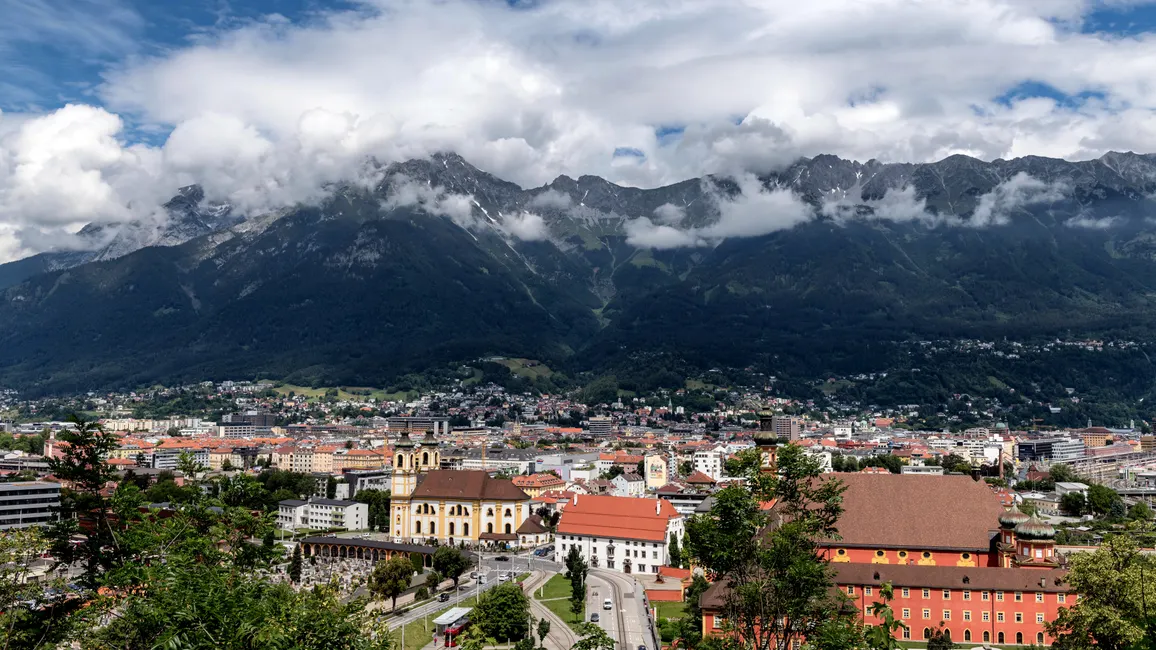
Innsbruck, the fifth-largest city in Austria, is the capital of the state of Tyrol. Situated in the Inn Valley and surrounded by picturesque mountains, it is a renowned destination for winter sports enthusiasts. However, despite its Alpine setting, Innsbruck is not located in Switzerland.
Getting to Innsbruck is surprisingly straightforward, especially if you're traveling from within Central Europe. The city is well-connected by train and road.
Advertisement
- From Munich, Germany: This is one of the most popular routes. Direct trains (ÖBB or Deutsche Bahn) run frequently, typically every 1-2 hours, with a journey time of approximately 1 hour 45 minutes to 2 hours. Fares can range from €19-€40 if booked in advance, or up to €60-€80 on the day. I often find booking through the ÖBB website yields the best deals for this route. /destinations/germany
- From Vienna, Austria: Direct trains (Railjet) connect Vienna to Innsbruck regularly, usually every hour. The scenic journey takes around 4 hours 15 minutes to 4 hours 30 minutes. Advance purchase tickets can start from €29.90, but expect to pay €60-€90 on short notice.
- From Zürich, Switzerland: While Innsbruck isn't in Switzerland, it's accessible from there too. Direct trains run approximately every 2 hours, taking about 3 hours 30 minutes to 4 hours. Prices vary significantly but can start from around CHF 40-60 (€40-€60) with advance booking.
- By Air: Innsbruck Airport (INN) serves several European destinations, particularly popular for winter charters. From the airport, a local F-bus runs to the main train station (Hauptbahnhof) every 15 minutes, costing around €3.10 and taking about 15-20 minutes.
Geographical Facts
Innsbruck is nestled in the western part of Austria, just a stone's throw away from the border with Germany. The city is located at a latitude of 47.26 degrees north and a longitude of 11.39 degrees east. It lies 574 meters above sea level, making it an ideal location for skiing, snowboarding, and other winter activities. The Inn River, which gives the city its name, flows directly through the urban area, adding to its picturesque charm. The surrounding mountain ranges, particularly the Nordkette to the north and Patscherkofel to the south, create a stunning natural amphitheater around the city.
Not in Switzerland
Now, let's address the common misconception that Innsbruck is in Switzerland. The confusion may arise from the fact that both Austria and Switzerland are neighboring countries in Central Europe and share similar cultural backgrounds, mountainous landscapes, and even similar-sounding place names. However, it is important to note that Innsbruck is entirely Austrian and falls within the jurisdiction of the Republic of Austria.
Switzerland, on the other hand, is an independent nation located to the west of Innsbruck, with its capital in Bern. While Switzerland is renowned for its majestic Alps and breathtaking landscapes, Innsbruck stands as a testament to Austria's own exceptional natural beauty. The cultural nuances, while subtle to an untrained eye, are distinctly Austrian in Innsbruck, from the dialect to the cuisine and architectural styles.
Distinct Austrian Identity
Despite its geographical proximity to Switzerland, Innsbruck embodies the unique Austrian culture, traditions, and architecture. The city's historic Old Town, with its charming pastel-colored houses and baroque buildings, showcases the rich heritage of Austria. Walking through the narrow cobblestone streets, you'll encounter traditional Tyrolean elements blended with imperial grandeur, a hallmark of Austrian history.
Furthermore, Innsbruck has played a significant role in Austrian history. As the former capital of the County of Tyrol and an important hub during the Habsburg monarchy, it has been a center of political, economic, and cultural influence in the region for centuries. This rich history is palpable in its museums, the Imperial Palace (Hofburg), and the Hofkirche (Court Church), where Emperor Maximilian I's cenotaph is guarded by 28 larger-than-life bronze figures. Austrian hospitality, known for its warmth and efficiency, is also a defining characteristic you'll experience in Innsbruck's cafes and guesthouses. Don't miss trying local specialties like Kaiserschmarrn (shredded pancake) or Tyrolean Gröstl (fried potato and meat dish) in a traditional Gasthaus.
Advertisement
Tourism in Innsbruck
Innsbruck's distinction as a world-class winter sports destination attracts millions of visitors each year. The city hosted the Winter Olympics in 1964 and 1976, solidifying its reputation as a premier skiing and snowboarding destination. Numerous ski resorts, such as Nordkette and Patscherkofel, surround Innsbruck, offering a diverse range of slopes suitable for all skill levels.
Besides winter sports, Innsbruck offers a plethora of attractions for tourists. The famous Golden Roof (Goldenes Dachl), a symbol of the city, is a marvel to behold. While you can admire its 2,657 fire-gilded copper tiles for free from the main square, there's also a small museum inside (Golden Roof Museum) detailing its history, with an entry fee of about €5-€7.
The Alpine Zoo (Alpenzoo), Europe's highest-altitude zoo, is another must-visit. It focuses exclusively on Alpine animals, offering a unique opportunity to see species like brown bears, lynx, and golden eagles. Admission is around €12-€15 for adults. You can reach it easily by the Hungerburgbahn funicular from the city centre.
Ambras Castle (Schloss Ambras), a beautiful Renaissance castle, houses impressive art and armour collections. Entry typically costs around €16-€18. It's a short bus ride from the city centre (Bus line C, stop "Aldrans Ambras").
The Bergisel Ski Jump, designed by Zaha Hadid, offers not just an impressive architectural feat but also panoramic views of the city and surrounding mountains. You can take a lift to the top of the tower. Entry is about €10-€12. It's a bit of a walk or a short tram ride (Tram 1, stop "Bergisel") from the centre.
Advertisement
For those eager to hit the slopes, the Nordkette cable car takes you directly from the city centre to over 2,000 meters in just 20 minutes, offering stunning views and access to ski slopes and hiking trails. A return ticket for the full ascent (Hafelekar) costs around €44, or you can opt for a ski pass. A day ski pass for the Nordkette area is typically €45-€55. Many other resorts, like Patscherkofel, Kühtai, and Axamer Lizum, are easily accessible by dedicated ski buses from Innsbruck.
Insider Tip: If you plan on visiting multiple attractions and using public transport extensively, I highly recommend purchasing the [/Innsbruck Card](/blog/Innsbruck Card). Available for 24, 48, or 72 hours (e.g., €59 for 48h), it includes free entry to most major sights, unlimited use of public transport, and one return trip on selected cable cars (like Nordkette and Patscherkofel). It's an excellent way to save money and simplify your visit.
Getting Around Innsbruck
Innsbruck is a very walkable city, especially its compact Old Town. However, to reach attractions further afield or to conserve energy, the public transport system is excellent.
- Walking: The best way to explore the Old Town, riverbanks, and many central sights.
- Trams & Buses: Innsbruck has an efficient network of trams and buses operated by IVB.
- Single Tickets: Cost around €3.10 if purchased from the driver, or slightly cheaper (€2.70) from a ticket machine or via the IVB app.
- Day Tickets: A 24-hour ticket (called a "24-Stunden-Ticket") costs around €5.80 and is great value if you plan multiple journeys.
- Weekly Tickets: If staying longer, a 7-day ticket is available for around €21.
- Innsbruck Card: As mentioned, this includes unlimited public transport, making it very convenient.
- Funiculars & Cable Cars: These are often attractions in themselves, like the Hungerburgbahn or Nordkettenbahnen, and are typically covered by the Innsbruck Card or require separate tickets.
- Cycling: Innsbruck is quite bike-friendly, with dedicated paths along the Inn River. Bike rentals are available in the city centre, with daily rates around €15-€25.
I personally find that a combination of walking and using the tram/bus is ideal. The IVB app is very helpful for real-time schedules and ticket purchases.
Where to Stay in Innsbruck
Innsbruck offers a range of accommodation options to suit every budget and travel style. Here are some of my top recommendations for neighbourhoods:
Advertisement
- Old Town (Altstadt):
- Vibe: Historic, charming, and right in the heart of the action. Perfect for first-time visitors who want to be close to major sights, restaurants, and shops.
- Hotel Types: Boutique hotels in historic buildings, guesthouses. Expect higher prices due to prime location.
- Recommendations: Look for places like Hotel Goldener Adler (mid-range luxury) or Hotel Weisses Rössl (mid-range).
- Mariahilf/St. Nikolaus (North of the Inn River):
- Vibe: A quieter, more local feel than the Old Town, but still very central and easily walkable. Offers great views of the Old Town across the river.
- Hotel Types: Mid-range hotels, some charming B&Bs.
- Recommendations: Hotel Zach (mid-range) or smaller, independent guesthouses.
- Wilten (South of the Train Station):
- Vibe: A residential area with a more local atmosphere, slightly further from the main tourist hustle but still well-connected by public transport. Good for budget travelers.
- Hotel Types: Budget hotels, hostels, guesthouses.
- Recommendations: Hostel Marmota (budget-friendly, social atmosphere), or various apartment rentals.
- Near Innsbruck Hauptbahnhof (Main Train Station):
- Vibe: Convenient for early departures or late arrivals, with easy access to public transport for exploring the city. Can be a bit less charming than the Old Town.
- Hotel Types: Modern chain hotels, budget hotels.
- Recommendations: Hotel Grauer Bär (upscale, with a rooftop pool) or Hotel Leipziger Hof (mid-range).
Booking in advance, especially during peak season (winter and summer), is always a good idea to secure better prices and preferred locations.
Budget Breakdown for Innsbruck
Here's a rough daily budget estimate for a solo traveler in Innsbruck, excluding international flights. These are average costs and can vary widely based on
Book Your Trip
Locking in your Innsbruck plans? Book tickets and experiences in advance through Viator — free cancellation on most bookings, so you can plan now and adjust later.
Save More
Save 5% on activities
Use code CHASINGWHEREABOUTS5 in the GetYourGuide app.
Book this exact experience in GetYourGuide appGet Travel Tips in Your Inbox
Join 5,000+ travelers. Get exclusive itineraries, honest reviews, and budget hacks once a week.
No spam. Only high-quality travel advice. Unsubscribe anytime.

