Disclosure: Chasing Whereabouts is reader-supported. This guide contains affiliate links to partners like Tiqets, GetYourGuide, Viator and Headout. If you make a purchase through these links, we may earn a small commission at no extra cost to you. This helps us continue providing free, first-hand travel guides. Thank you for your support!
🇪🇺 This guide is part of our comprehensive Europe Travel Guide.
Germany isn't just cities and castles. The country has over a dozen distinct mountain ranges — from the dramatic Bavarian Alps along the Austrian border to the ancient, forest-covered Harz and the volcanic peaks of the Rhön. This guide covers the best mountains in Germany worth visiting as a tourist, with practical info for each: how to get there, what it costs, and what you'll actually do.
Mountains of Germany — Quick Comparison
| Mountain / Range | Region | Height | Best For | Cable Car? |
|---|---|---|---|---|
| Zugspitze | Bavarian Alps | 2,962m | Summit views, skiing | ✅ ~€67 return |
| Watzmann | Berchtesgaden Alps | 2,713m | Alpine hiking | ❌ Hiking only |
| Brocken | Harz | 1,141m | Steam train, folklore | ✅ Brockenbahn |
| Feldberg | Black Forest | 1,493m | Skiing, hiking | ✅ Gondola |
| Großer Arber | Bavarian Forest | 1,456m | Skiing, family hiking | ✅ Gondola |
| Wasserkuppe | Rhön | 950m | Paragliding, easy hiking | ❌ |
| Fichtelberg | Ore Mountains | 1,215m | Skiing, Erzgebirge heritage | ✅ Gondola |
| Großer Feldberg | Taunus | 879m | Day trip from Frankfurt | ❌ |
| Jenner | Berchtesgaden | 1,874m | Königssee views | ✅ Gondola |
1. Zugspitze — Germany's Highest Mountain (2,962m)
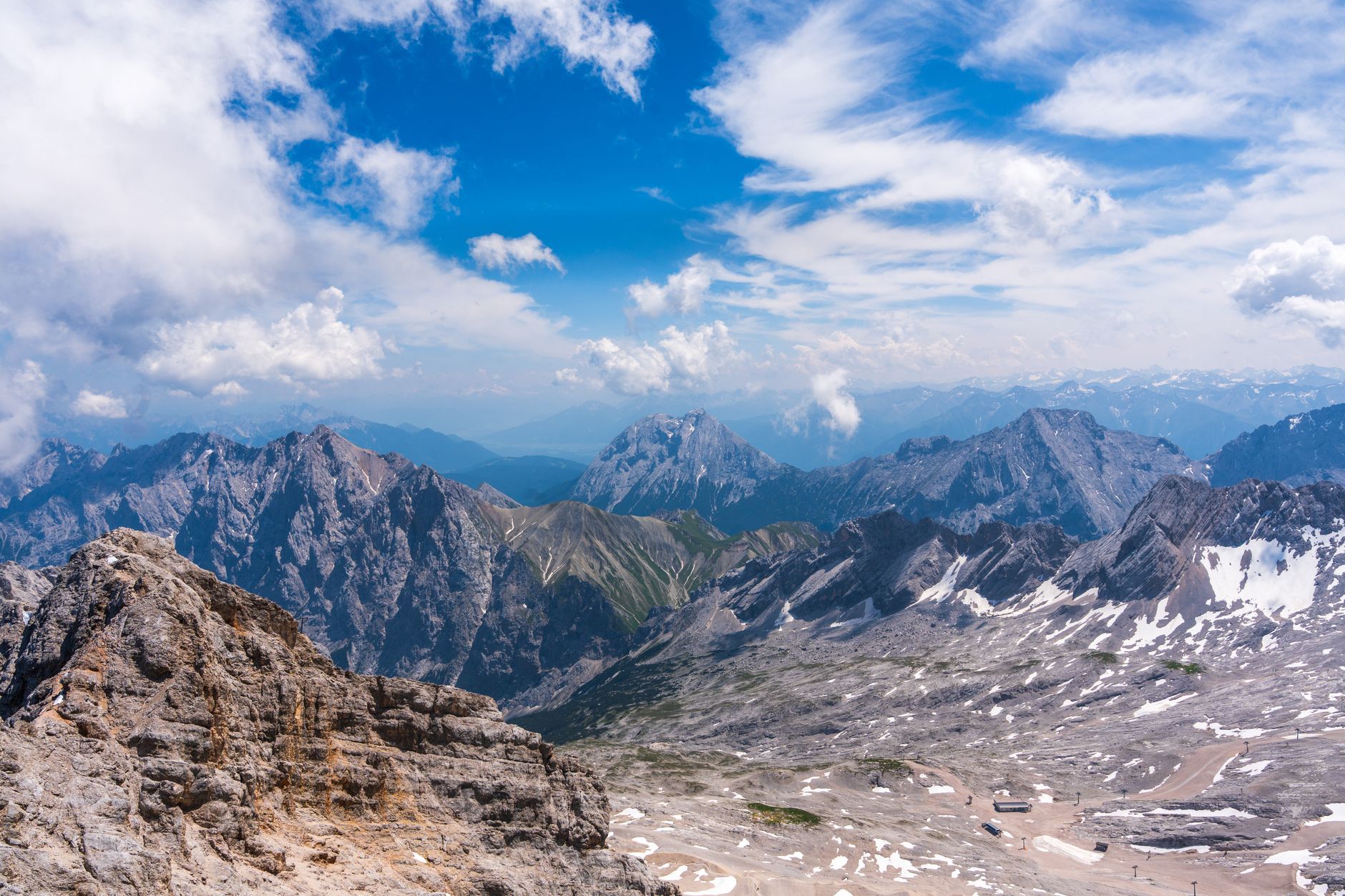
Region: Bavarian Alps, near Garmisch-Partenkirchen Best for: Summit panorama, skiing, glacier
Advertisement
The Zugspitze is the highest mountain in Germany and the most visited. The summit sits on the German-Austrian border and gives 360° views across four countries on a clear day.
How to get there:
- Cable car (Eibsee): Eibsee Cable Car from Eibsee station (near Grainau). ~15 min direct to summit. Most popular route.
- Cog railway (Bayerische Zugspitzbahn): Train from Garmisch-Partenkirchen station through the mountain. Slower but scenic.
- Garmisch-Partenkirchen is ~1.5h by train from Munich.
Cost (2026): Day ticket ~€67 adult (cable car up + cog railway down or vice versa). Book ahead in peak summer — sells out.
What to do:
- Summit platform with observation deck and cross
- Zugspitze glacier (Germany's last remaining glacier)
- Skiing at Zugspitz Arena (2,600–2,950m, reliable snow December–April)
- Eibsee lake at the base — turquoise water, great for swimming in summer
Best season: Year-round. Ski season December–April. Summer hiking July–September. Expect queues July–August — go early morning or book first cable car.
Advertisement
2. Watzmann — Best Alpine Hiking in Germany (2,713m)
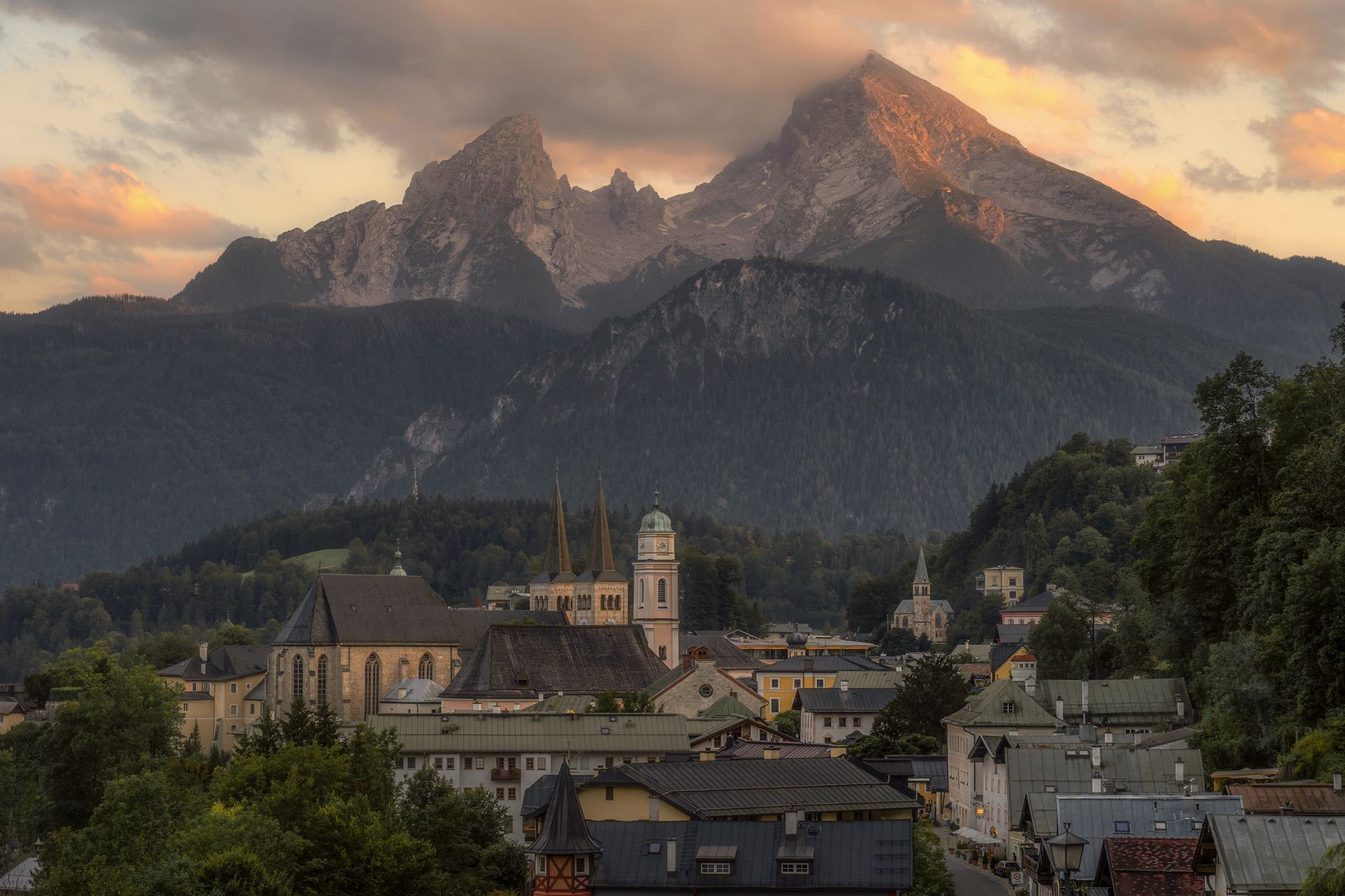
Region: Berchtesgaden National Park, Bavaria Best for: Serious alpine hiking, dramatic scenery
The Watzmann is Germany's second highest peak and the centerpiece of Berchtesgaden National Park. Its east face is the largest rock wall in the Eastern Alps. This is a mountain for hikers, not cable cars — there's no lift to the summit.
How to get there:
- Berchtesgaden town is the base. ~2.5h by train from Munich (via Salzburg or direct bus).
- From Berchtesgaden, hike from Watzmannhaus hut (overnight required for summit).
The hike:
Advertisement
- Watzmann Hocheck (2,651m) — the accessible northern summit. Day hike from Berchtesgaden. ~7–8h return. Demanding but non-technical.
- Watzmann Mittelspitze (2,713m) — the main summit. Multi-day, requires alpine experience. Via ferrata sections.
- For non-hikers: the valley views and Königssee lake below are spectacular from easy trails.
What else to do:
- Königssee — Bavaria's deepest lake, electric boat tours to St. Bartholomä church (~€20). Must-do.
- Eagle's Nest (Kehlsteinhaus) — Hitler's historic mountain retreat, now a restaurant at 1,834m. Bus from Documentation Centre (~€35 return, open mid-May to October).
- Berchtesgaden salt mines (Salzbergwerk) — underground lake, slides, history.
Best season: July–September for summit hiking. Königssee and Eagle's Nest accessible May–October.
3. Brocken — The Harz Witch Mountain (1,141m)
Region: Harz, Saxony-Anhalt Best for: Steam train, folklore, easy summit, day trip from northern Germany
The Brocken is the highest peak in northern Germany and one of the most atmospheric. Cloud and mist shroud it ~300 days a year, feeding centuries of witchcraft legends — Goethe set the Walpurgis Night scene from Faust here. It's the easiest major summit in Germany to reach without hiking.
How to get there:
Advertisement
- Brockenbahn steam train: The HSB narrow-gauge steam railway runs from Wernigerode to the Brocken summit. ~1h journey. Tickets ~€38 return from Wernigerode. Runs year-round.
- Wernigerode is 1.5h by train from Hanover or 2h from Berlin.
- You can also hike up from Schierke village (~3h one-way on well-marked trails).
What to do:
- Summit plateau with views across the Harz
- Brockenhaus museum (DDR border history, meteorology, Brocken folklore)
- Witches Trail (Hexenstieg) — 100km long-distance hike across the Harz
- Wernigerode itself: half-timbered medieval town, Wernigerode Castle — worth spending a night
Best season: Year-round. Winter is magical with snow and mist. Walpurgis Night (April 30) is a major festival in the Harz. Summer weekends get busy on the train.
4. Feldberg — Black Forest High Point (1,493m)
Region: Black Forest (Schwarzwald), Baden-Württemberg Best for: Skiing, summer hiking, easy access from Freiburg
The Feldberg is the highest peak in the Black Forest and outside the Alps, it's Germany's highest skiable mountain. Unlike the Bavarian Alps, the Black Forest is rounded and forested — less dramatic but easier, with well-marked trails for all levels.
How to get there:
Advertisement
- Closest city: Freiburg im Breisgau (~1h by bus/car). Direct bus from Freiburg's main station to Feldberg village.
- From Feldberg village, gondola (Feldbergbahn) to the summit plateau. ~€14 return.
What to do:
- Ski resort: 14 lifts, 29km pistes, 1,200–1,493m. Good for beginners and intermediates. Season December–March (snow-dependent below 1,200m).
- Summer: marked hiking trails across the plateau, Feldsee glacial lake, Todtnauer Wasserfall waterfall
- Bismarckdenkmal observation tower at the summit
- Titisee lake: 15km from Feldberg, popular resort, worth combining
Best season: December–March for skiing. June–September for hiking. Accessible year-round.
5. Großer Arber — Bavarian Forest (1,456m)
Region: Bavarian Forest, Lower Bavaria Best for: Family skiing, quieter hiking, Czech border region
The Großer Arber is the highest peak in the Bohemian/Bavarian Forest. Less famous than the Alps but popular with families for skiing and summer hiking. The area straddles the German-Czech border.
How to get there:
- Base town: Bodenmais (reached by bus from Deggendorf or Zwiesel, both on the Munich–Prague rail line).
- Gondola (Arberbahn) from Bodenmais to the summit area. ~€19 return.
What to do:
- Ski resort: 13 pistes, 600m vertical drop, well-suited for beginners and children
- Summer: summit hike (30 min from gondola top station), Arbersee lake at the base
- Bavarian Forest National Park nearby: wolf and lynx reintroduction programme, forest walks, Lusen and Rachel peaks
Best season: January–March for skiing. June–September for hiking.
6. Wasserkuppe — Highest Peak in Central Germany (950m)
Region: Rhön mountains, Hesse/Bavaria/Thuringia border Best for: Paragliding, easy hiking, family walks
The Wasserkuppe is Germany's highest point outside the Alps and Harz, and the highest mountain in the Rhön range. It's gentle and accessible — no technical hiking required. The Rhön has been a UNESCO Biosphere Reserve since 1991.
How to get there:
- Closest town: Gersfeld (Rhön). Reachable by bus from Fulda (~30 min), which is on the Frankfurt–Würzburg rail corridor.
- Road access directly to the summit area — you can drive to within 10 min walk of the top.
What to do:
- Summit observation point with views across Hesse, Bavaria, and Thuringia
- Rhön Gliding Museum — the Wasserkuppe is one of Europe's most famous gliding spots
- Tandem paragliding flights available (book locally)
- Crossing the Hochrhöner long-distance trail (300km total)
- Rhön sheep: the area's symbol — a distinctive black-headed breed you'll see everywhere
Best season: May–October. Summer weekends are busy. Windy year-round — ideal for paragliders.
7. Fichtelberg — Ore Mountains (1,215m)
Region: Erzgebirge (Ore Mountains), Saxony Best for: Skiing, Erzgebirge Christmas tradition, eastern Germany
The Fichtelberg is the highest mountain in eastern Germany (excluding the Harz) and the highest peak on the Saxon side of the Ore Mountains. The Ore Mountains region is famous for its Christmas craft tradition — wooden nutcrackers, smoker figures, and pyramids originated here.
How to get there:
- Base town: Oberwiesenthal — reached by bus from Annaberg-Buchholz, or direct bus from Chemnitz.
- Gondola (Fichtelbergbahn) from Oberwiesenthal. ~€13 return.
What to do:
- Ski resort: 5 lifts, 12 pistes, reliable snow at altitude (frequent snow from November–March)
- Cross-country skiing: the Ore Mountains are better known for cross-country than downhill
- Summit observation deck with views into Czech republic
- Annaberg-Buchholz: impressive late-Gothic church, Christmas markets in December
Best season: November–March for skiing/snow. June–September for hiking.
8. Großer Feldberg — Taunus (879m)
Region: Taunus, Hesse Best for: Day trip from Frankfurt, easy summit walk
The Großer Feldberg in the Taunus is the highest peak in the Rhenish Uplands and Germany's most accessible major summit for city visitors — it's 30km north of Frankfurt. There's no cable car, but you can drive to within easy walking distance of the top.
How to get there:
- From Frankfurt: ~45 min by car or ~1.5h by bus (S5 to Kronberg, then bus 57 to Schmitten, then bus 58 to Großer Feldberg). Car is far easier.
- Frankfurt Taunus Nature Park offers a free shuttle on weekends in summer.
What to do:
- Summit observation tower (Großer Feldbergturm) — views over the Rhine-Main region, Taunus hills, Frankfurt skyline on clear days
- Opel-Zoo nearby (large open-air zoo, popular with families)
- Taunus hiking trails — 15+ marked day-hike circuits from the summit area
- Hessenpark open-air museum (historical buildings from across Hesse)
Note: The Taunus Feldberg (879m) is often confused with the Black Forest Feldberg (1,493m). They're different mountains.
Best season: Year-round. Best visibility in spring and autumn. Avoid on foggy winter weekdays.
Mountain Ranges of Germany — Overview
Germany's mountains fall into two categories: the Alpine south and the low mountain ranges (Mittelgebirge) of central and northern Germany.
Bavarian Alps (south): The dramatic high-alpine zone. Zugspitze, Watzmann, Berchtesgaden Alps, Wetterstein. Highest peaks, most demanding hiking, Germany's only glacier.
Central mountain ranges (Mittelgebirge): Forested, rounded, lower altitude. Easier access from major cities. Key ranges:
- Harz — Brocken (1,141m), the north's highest peak. Famous steam railway.
- Black Forest — Feldberg (1,493m), skiing, thermal spas (Baden-Baden), Freiburg base.
- Bavarian Forest — Großer Arber (1,456m), national park, quieter than the Alps.
- Rhön — Wasserkuppe (950m), UNESCO Biosphere Reserve, paragliding.
- Taunus — Großer Feldberg (879m), easy day trip from Frankfurt.
- Ore Mountains (Erzgebirge) — Fichtelberg (1,215m), skiing, Christmas craft heritage.
- Eifel — Volcanic lakes (Maare), Nürburgring circuit, lower peaks but unique geology.
Best Time to Visit Mountains in Germany
| Activity | Best Months |
|---|---|
| Alpine hiking (Zugspitze, Watzmann) | July–September |
| Skiing (Zugspitze, Feldberg, Arber) | December–March |
| Low mountain hiking (Harz, Taunus, Black Forest) | May–October |
| Autumn foliage (Black Forest, Bavarian Forest) | October |
| Brockenbahn steam train | Year-round (most atmospheric in winter) |
| Berchtesgaden / Königssee / Eagle's Nest | Mid-May–October |
Snow reliability at lower elevations (below 1,000m) has decreased — the Schwarzwald and Harz now get reliable snow cover only at higher elevations. The Zugspitze glacier skiing and Fichtelberg ski resort above 1,200m remain the most consistent.
FAQs: Mountains of Germany
What is the highest mountain in Germany?
The Zugspitze at 2,962m is Germany's highest mountain, located in the Bavarian Alps on the Austrian border near Garmisch-Partenkirchen. Accessible by cable car from Eibsee or by cog railway from Garmisch-Partenkirchen. No other mountain of Germany breaks the 2,800-metre mark.
What are the main mountain ranges in Germany?
The main mountain ranges are: Bavarian Alps (highest, along Austrian border), Black Forest (Feldberg 1,493m), Harz (Brocken 1,141m), Bavarian Forest (Großer Arber 1,456m), Ore Mountains/Erzgebirge (Fichtelberg 1,215m), Rhön (Wasserkuppe 950m), and Taunus (Großer Feldberg 879m).
Does Germany have Alps?
Yes. The Bavarian Alps run along Germany's southern border with Austria. They include Zugspitze (2,962m), the Watzmann (2,713m), and the Berchtesgaden Alps. The German Alps are smaller in extent than the Austrian or Swiss Alps but equally dramatic where they exist.
What is the best mountain to visit in Germany as a tourist?
For first-time visitors: Zugspitze — Germany's highest, accessible by cable car, iconic. For day trips from Frankfurt: Großer Feldberg (Taunus). For a steam train experience: Brocken in the Harz. For alpine hiking: Berchtesgaden/Watzmann area. For skiing: Zugspitze glacier or Feldberg (Black Forest) for easier access from southwest Germany.
Is the Zugspitze worth visiting?
Yes. It's Germany's most dramatic summit experience and one of the few where you can reach 2,962m without hiking. Clear days give views into Austria, Switzerland, and Italy. Allow a full day. Cable car tickets ~€67 adult in 2026 — book in advance for July/August.
Are there mountains near Munich?
Yes. The Bavarian Alps are 1–2 hours from Munich by train. Garmisch-Partenkirchen (Zugspitze) is 1.5h. Berchtesgaden is ~2.5h. For a quick day hike, the Herzogstand (1,731m) above Walchensee is 1.5h from Munich with a cable car from Kochel am See.
Where are the mountains in Germany?
The German mountains come in two groups. The Alps run along the southern border with Austria — that's where you find the Zugspitze, the Watzmann, and the Berchtesgaden range. The rest are the Mittelgebirge, forested mid-height ranges spread across the country: the Black Forest in the southwest, the Harz in the north, the Bavarian Forest and Ore Mountains in the east, and the Rhön and Taunus in the centre. Whichever Germany mountains you shortlist, expect a train ride rather than an expedition.
📍 Also see: Best things to do in Frankfurt | Germany travel guide
City Passes — Where to Book
Save on attraction entry with official city passes, booked through Tiqets (instant e-ticket):
- Prague: Book on Tiqets → · Full review →
- Salzburg: Book on Tiqets → · Full review →
Best Tours & Experiences
For guided tours and experiences, I recommend checking Viator — they have a huge selection with free cancellation on most bookings. You can also browse TripAdvisor Experiences for more local tours, day trips, and attraction tickets with real traveller reviews.
Save More
Save 5% on activities
Use code CHASINGWHEREABOUTS5 in the GetYourGuide app.
Book this exact experience in GetYourGuide appGet Travel Tips in Your Inbox
Join 5,000+ travelers. Get exclusive itineraries, honest reviews, and budget hacks once a week.
No spam. Only high-quality travel advice. Unsubscribe anytime.