Disclosure: Chasing Whereabouts is reader-supported. This guide contains affiliate links to partners like Tiqets, GetYourGuide, Viator and Headout. If you make a purchase through these links, we may earn a small commission at no extra cost to you. This helps us continue providing free, first-hand travel guides. Thank you for your support!
🇭🇷 This guide is part of our comprehensive Croatia Travel Guide.
Croatia has over 1,200 islands and roughly 6,000 km of coastline — so "what are the best beaches in Croatia" is a real question. This guide cuts through the noise. Actual beaches, not towns. Real ferry prices in EUR, not vibes.
One thing to set expectations: most beaches in Croatia are pebble or rock, not sand. That's not a flaw. The water visibility is exceptional precisely because there's no sand stirring it up. The few sandy beaches (Sakarun, Šunj) are genuinely worth seeking out if sand matters to you.
Advertisement
Quick Comparison: Best Croatia Beaches
| Beach | Location | Type | Best For | Ferry/Transport |
|---|---|---|---|---|
| Zlatni Rat | Bol, Brač | Pebble | Iconic, windsurfing | €30-40 catamaran from Split |
| Stiniva | Vis island | Pebble/rock | Scenery, photos | Boat tour or 30-min hike |
| Sakarun | Dugi Otok | Sandy | Families, calm water | €15-20 ferry from Zadar |
| Punta Rata | Brela | Pebble | Day trip from Split | Bus €5, 45 min |
| Pakleni Islands | Hvar | Pebble/rock | Quiet coves, nudist | Water taxi €3-5 from Hvar |
| Banje Beach | Dubrovnik | Pebble | City beach, views | Walk from old town |
| Zrće | Pag island | Pebble | Party, EDM festivals | Bus from Novalja |
| Šunj | Lopud, near Dubrovnik | Sandy | Families, calm water | Ferry €6 from Gruž port |
Best Beaches Near Split
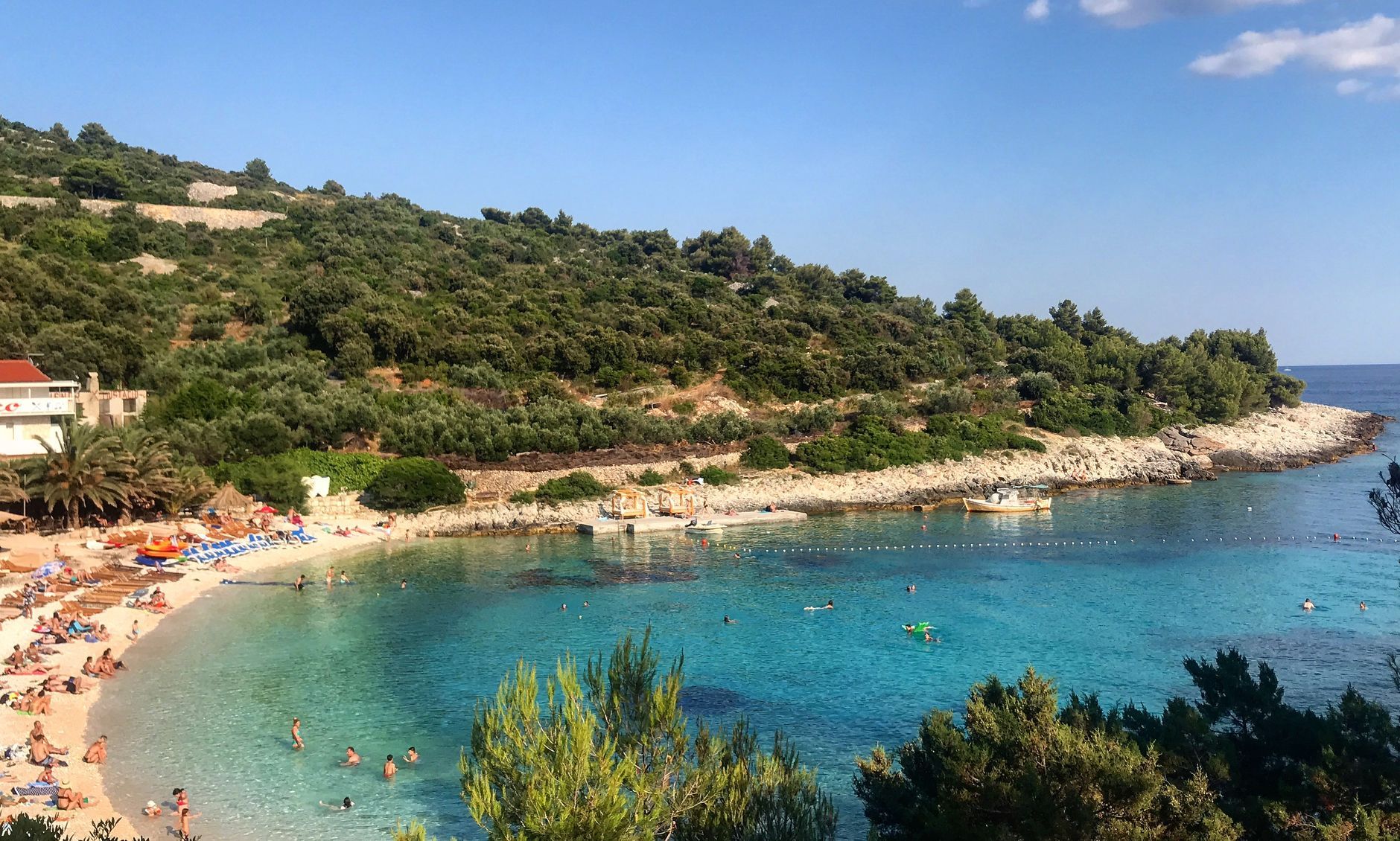
Split is the main ferry hub for Dalmatia. Most of the best beaches in Croatia are a ferry or bus ride away from here.
Zlatni Rat (Bol, Brač Island)
The most photographed beach in Croatia. Zlatni Rat is a pebble cape that extends into the sea, and its tip actually shifts direction depending on wind and currents — so the shape you see in photos changes slightly season to season. It's about 500m long.
- Type: Pebble
- How to get there: Catamaran from Split to Bol, €30-40 round trip,
50 min. Or ferry to Supetar (€8) then bus to Bol (~30 min, ~€3). Catamaran is faster and drops you closer. - Best time to arrive: Before 9am in Jul-Aug. By 11am in peak season, sunbeds are packed. Jun and Sep: arrive whenever.
- Facilities: Sunbeds for rent (~€10-15/day), showers, a few restaurants, windsurfing rental
- Water: Clear, pebble bottom, moderate depth. Good for swimming. Windsurfing conditions are strong here due to the Maestral wind.
Punta Rata (Brela)
Brela is a small town on the Makarska Riviera. Punta Rata is its main beach — pebble, backed by pine forest, with the iconic Brela Rock sitting just offshore. Less crowded than Zlatni Rat and easier to reach.
Advertisement
- Type: Pebble
- How to get there: Bus from Split bus station, ~€5, 45 min. Brela stop. Beach is walkable from there.
- Best time to arrive: Mornings. The pine trees provide some shade, which helps.
- Facilities: Showers, sunbeds (~€8-12/day), bars, restaurants along the promenade
- Water: Very calm, clear, EU Blue Flag
Makarska Riviera
If you're staying near Split and want easy beach access without ferries, the Makarska Riviera (Brela to Gradac) is 60km of pebble beaches. They're not as dramatic as island beaches, but zero hassle. Bus runs the whole coast.
Best Beaches on the Islands
The best beaches in Croatia are almost always on islands. More effort to reach, worth it.
Stiniva (Vis Island)
The most dramatic beach on this list. Stiniva is a small cove enclosed by two tall rock faces with a narrow sea arch entrance. You can only see the beach itself once you're through the arch. No facilities, no sunbed rentals, just pebbles and remarkable scenery.
- Type: Pebble/rock
- How to get there: Ferry Split → Vis,
€10-12 one way, 2 hours. Then either: join a boat tour from Vis town (€20-30, includes Stiniva and other coves) OR hike down — about 30 min from the road above, steep path. Most people take the boat. - Best time: Morning boat tours get there first. Go on an afternoon tour or hike down to avoid the main rush.
- Facilities: None. Bring water and snacks.
- Water: Deep, very clear. The rock walls create a sheltered cove.
Note: Vis island is less developed than Hvar or Brač, which is part of the appeal. Fewer tourists, more quiet.
Pakleni Islands (Hvar)
The Pakleni Islands are a chain of small islands just off Hvar town. The beaches here are small pebble and rock coves scattered through the archipelago. Several are clothing-optional. Palmižana cove is the most popular.
Advertisement
- Type: Pebble/rock
- How to get there: Water taxi from Hvar harbor, €3-5 one way. Boats run frequently in summer.
- Best time: Mid-morning. By noon the popular coves fill up.
- Facilities: Palmižana has restaurants and a beach bar. More remote coves have nothing.
- Water: Clear, warm, calm
Hvar itself has decent town beaches (Malo Misto, Pokonji Dol), but the Pakleni coves are better.
Sakarun (Dugi Otok)
One of the few genuinely sandy beaches in Croatia. Sakarun is in Telašćica Bay on Dugi Otok — shallow, calm, turquoise. The sandy bottom makes it noticeably different from every other beach on this list. Good for families and anyone who doesn't like pebbles.
- Type: Sandy
- How to get there: Ferry from Zadar to Brbinj or Sali (Dugi Otok), €15-20 return, ~1.5 hours. Then local bus or taxi to Sakarun (~10km).
- Best time: Jun or Sep. Jul-Aug it gets busy even here.
- Facilities: Showers, some sunbeds, small restaurant/kiosk
- Water: Shallow, very calm, protected bay. Good for children.
Best Beaches Near Dubrovnik
Banje Beach
The main town beach in Dubrovnik, right outside the Ploče gate (east side of old town). Pebble, with direct views of the city walls. The famous EastWest Beach Club operates here.
- Type: Pebble
- How to get there: 5-min walk from the Ploče gate of the old town
- Best time: Early morning or evening. Midday in summer is hot and crowded.
- Facilities: EastWest beach club (loungers €10-15/day), bar, showers. Public section also available.
- Water: Clear, but boats pass by regularly
Banje is convenient, not spectacular. If you're staying in Dubrovnik old town and want a quick swim, it works. For a quieter beach, take the ferry to Lopud.
Šunj Beach (Lopud Island)
The best sandy beach near Dubrovnik. Šunj is on the island of Lopud, a 30-min ferry ride from Gruž port. The island is car-free, the beach is sandy with shallow water, and it's calm. Perfect for families.
Advertisement
- Type: Sandy
- How to get there: Ferry from Gruž port (Dubrovnik) to Lopud, ~€6-8 return, 30-45 min. Šunj is a 30-min walk across the island (or rent a golf cart/donkey ride on the island).
- Best time: Ferries are less frequent — check the schedule. Day trip from Dubrovnik is easy.
- Facilities: Sunbeds, showers, a restaurant
- Water: Shallow, calm, sand bottom. Good for kids.
Best Beaches Near Zadar
Sakarun (see above)
Best sandy beach in the region. See the Dugi Otok section.
Zrće Beach (Pag Island)
Zrće is Croatia's party beach. It's on Pag island, about 1.5 hours from Zadar. Three open-air clubs (Papaya, Noa, Aquarius) run EDM events from June through September, with the biggest festivals in July. The beach itself is pebble, not impressive — the draw is the nightlife.
- Type: Pebble
- How to get there: Bus from Zadar to Novalja (~€8-10), then short bus or taxi to Zrće
- Best time: Evenings and nights. The clubs start proper around midnight.
- Facilities: Full club infrastructure — bars, restaurants, showers, sunbeds
- Note: If you want a quiet beach, avoid this one completely. If you want parties, this is the place.
Best Croatia Beaches: Families vs Party
Best for families:
- Sakarun (Dugi Otok) — sandy, shallow, calm
- Šunj (Lopud) — sandy, shallow, car-free island
- Punta Rata (Brela) — pebble but shade from pines, services nearby
- Bačvice (Split) — famous for picigin (local ball game), very shallow pebble/sand
Best for nightlife/party:
- Zrće (Pag) — EDM festivals, open-air clubs
- Hvar town beaches — beach bars, clubs nearby
- Dubrovnik — EastWest on Banje
When to Visit Croatia Beaches
June: Water is warm enough (around 22-24°C), beaches are 30-40% less crowded than July, prices are lower. Best overall timing. This is when to go if you have flexibility.
Advertisement
July–August: Peak season. Zlatni Rat will be packed by 10am. Ferries to popular islands (Vis, Hvar) are full. Book accommodation months ahead. The water is warmest (26-28°C). Festivals (Zrće, Ultra in Split) happen now.
September: Second-best month. Water still warm (24-26°C), crowds drop sharply after the first week of September. Cheaper accommodation. Most facilities still open.
May: Water is cold (17-19°C). Some facilities not yet open. Fine for hiking and sightseeing, not ideal for beach swimming.
Practical Notes on Croatia Beaches
Pebble beaches: Bring water shoes if you have sensitive feet. The pebbles can be sharp, especially at the waterline.
Water quality: Croatia beaches consistently rank among the cleanest in the EU. Adriatic water is low-nutrient, which is why it's so clear but also why there aren't many fish to see while snorkeling.
Nudist beaches: Common throughout Croatia. FKK signs indicate clothing-optional. The Pakleni Islands have several. Nobody will bother you.
Krka waterfalls swimming: Closed since 2021 for conservation. Not a beach, but a lot of tourists search for it expecting to swim there.
Sunbed prices: Range from €8-15/day depending on location. Peak-season Dubrovnik and Hvar are at the top end. More remote beaches often have no sunbeds at all.
FAQ: Best Beaches in Croatia
What is the most beautiful beach in Croatia? Stiniva on Vis is consistently named the most scenic — a narrow pebble cove accessed through a sea rock arch. Zlatni Rat on Brač is the most iconic and photographed. Both are worth it.
Does Croatia have sandy beaches? Mostly pebble. Sandy beaches are rare. The best options are Sakarun on Dugi Otok (near Zadar) and Šunj on Lopud island (near Dubrovnik). Both are worth the ferry ride if you want sand.
What is the best beach in Croatia for families? Sakarun (Dugi Otok) for sand and shallow water. Šunj (Lopud) is also good. Punta Rata in Brela works well too — easy to reach by bus from Split, shade from pine trees.
When is the best time to visit Croatia beaches? June and September. Same beaches, fewer people, lower prices, water still warm. July-August has the warmest water (26-28°C) but also the most crowds and highest prices.
How do I get to the best beaches in Croatia? Most top beaches require ferries from Split or Zadar. travel budget calculator €15-40 per round trip. Ferries run regularly in summer — check Jadrolinija (state ferry company) and Krilo/Kapetan Luka for catamarans. Book in advance for July-August.
What is Zlatni Rat beach like? Pebble cape that extends into the Adriatic and changes shape with the currents. Located near Bol on Brač island. Reached by catamaran from Split (€30-40 return, 50 min) or slower ferry + bus. Best beach in Croatia for windsurfing.
Is the water in Croatia beaches clean? Yes. Croatia consistently meets EU water quality standards. The Adriatic is low in particulates which makes it very clear.
Best Tours & Experiences
For guided tours and experiences, I recommend checking Viator — they have a huge selection with free cancellation on most bookings. You can also browse TripAdvisor Experiences for more local tours, day trips, and attraction tickets with real traveller reviews.
Book Your Trip
Locking in your Croatia plans? Book tickets and experiences in advance through Viator — free cancellation on most bookings, so you can plan now and adjust later.
Save More
Save 5% on activities
Use code CHASINGWHEREABOUTS5 in the GetYourGuide app.
Book this exact experience in GetYourGuide appGet Travel Tips in Your Inbox
Join 5,000+ travelers. Get exclusive itineraries, honest reviews, and budget hacks once a week.
No spam. Only high-quality travel advice. Unsubscribe anytime.