Disclosure: Chasing Whereabouts is reader-supported. This guide contains affiliate links to partners like Tiqets, GetYourGuide, Viator and Headout. If you make a purchase through these links, we may earn a small commission at no extra cost to you. This helps us continue providing free, first-hand travel guides. Thank you for your support!
🎒 This guide is part of our comprehensive Travel Gear & Tech Hub.
When it comes to choosing between the Sony ZV1 Mark II and the DJI Osmo Pocket 3 for vlogging, there are several key factors to consider.
Let's break down these areas to help you decide which camera would be better for your vlogging needs:
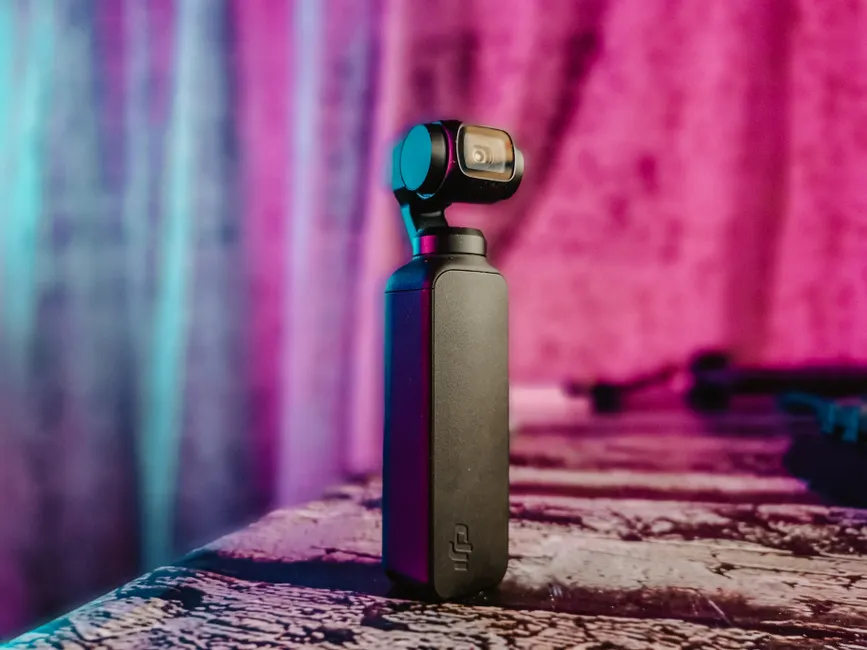
Osmo Pocket 3 VS Sony ZV-1 M2

Video Quality:
The Osmo Pocket 3 offers excellent video quality, while the ZV1 Mark II provides outstanding video quality as well. You won't be disappointed with either camera in this respect.
Advertisement
Color Profiles:
The ZV1 Mark II provides more options for color profiles, allowing you to manipulate the look of your footage during editing. On the other hand, the Osmo Pocket 3 allows you to add non-destructive filters in the Mimo app, providing greater flexibility with the desired look.
Color Grading:
Both cameras offer a log profile that produces flat footage, but the ZV1 Mark II's 8-bit color may make the color grading process slightly more rigid compared to the Osmo Pocket 3's 10-bit color. If you require more control over color grading, the Osmo Pocket 3 might be the better option.
Low-Light Performance:
The Osmo Pocket 3 has a low-light video mode that delivers great image quality in low-light conditions. Although the ZV1 Mark II lacks this specific feature, it still performs well in low-light situations. The Osmo Pocket 3 does a slightly better job and produces clearer footage due to its gimbal.
Stabilization:
The ZV1 Mark II offers active stabilization, but it falls short compared to the smoothness achieved with the Osmo Pocket 3's built-in gimbal. If stabilization is crucial for your vlogging, the Osmo Pocket 3 would be a better choice.
Focal Length and Zoom:
The ZV1 Mark II has the advantage of a focal length range from 18mm to 50mm, which maintains high-quality images throughout. The Osmo Pocket 3, on the other hand, only offers digital zoom capability, which may not provide the same level of quality as optical zoom.
Advertisement
Background Blur:
If having a blurry background in your footage is important to you, the Osmo Pocket 3 has a shallow depth of field capability that separates your subject from the background. The ZV1 Mark II allows you to control the amount of background blur through aperture adjustments.
Focus Modes:
The ZV1 Mark II has a useful Focus Mode called Product Showcase, which quickly focuses on objects even when your eyes are visible in the frame. The Osmo Pocket 3 offers single-shot focus mode.
Articulating Screen:
The Osmo Pocket 3 has an articulating screen that allows you to easily film yourself or what's in front of you without fully rotating the camera, making it convenient for solo vlogging. The ZV1 Mark II has a larger screen and unique features such as changing orientation and shooting in different aspect ratios.
Audio:
Both cameras have built-in microphones, but the ZV1 Mark II comes with a furry windshield for better audio quality in windy conditions. The Osmo Pocket 3 does not have a built-in wireless microphone but offers clean audio when you step away from the camera.
Battery Life:
The ZV1 Mark II has removable batteries, but its battery life is not as good as the Osmo Pocket 3's. The Osmo Pocket 3 also supports fast charging, allowing you to quickly charge up to 80% in just 18 minutes.
Advertisement
Price:
The Osmo Pocket 3 is significantly cheaper than the ZV1 Mark II, especially when considering the Creator Combo package, which includes additional accessories. In terms of value for money, the Osmo Pocket 3 is a clear winner.
Summary:
Consider this: the DJI Osmo Pocket 3 costs €679 for the Creator Combo. The Sony ZV-1 II runs €999. That €320 difference buys a lot of plane tickets. But price isn’t everything. The Sony gives you a zoom lens and an OLED screen – useful for framing shots in bright sunlight. The Osmo Pocket 3, however, fits in a jeans pocket and delivers buttery-smooth gimbal footage without extra gear. For travel vlogging, I grab the Pocket 3 every time. The ZV-1 stays home when I know I’ll be moving fast. If you need a point-and-shoot camera for both photos and video, the Sony might be more versatile. But if your priority is video – especially walking shots, cramped spaces, or quick transitions – the Osmo Pocket 3 is the better vlog camera. No contest.
Save More
Save 5% on activities
Use code CHASINGWHEREABOUTS5 in the GetYourGuide app.
Book this exact experience in GetYourGuide appGet Travel Tips in Your Inbox
Join 5,000+ travelers. Get exclusive itineraries, honest reviews, and budget hacks once a week.
No spam. Only high-quality travel advice. Unsubscribe anytime.