
Disclosure: Chasing Whereabouts is reader-supported. This guide contains affiliate links to partners like Tiqets, GetYourGuide, Viator and Headout. If you make a purchase through these links, we may earn a small commission at no extra cost to you. This helps us continue providing free, first-hand travel guides. Thank you for your support!
Living an hour from Cologne by ICE puts me in an unusually good position for Christmas market season. I've done my share of German Christmas markets — from Frankfurt's Römerberg to Hamburg's harbour market — and Cologne is legitimately among the best. Not because of hype, but because of one specific structural advantage: it runs six distinct markets simultaneously, each with its own character, theme, and atmosphere. You can spend a full day moving between them and they genuinely feel different.
The Cathedral market under the twin spires at night is one of the most photographed winter scenes in Europe. That's not tourism copy — it actually is. I'll be doing the markets this season (December 2026 will be my first proper Cologne Christmas market run), but this guide is built on thorough research plus my general familiarity with the city and German Christmas market culture. Where I've been cautious, I've said so.
Disclosure: This post contains affiliate links. If you book through these links, I may earn a small commission at no extra cost to you.
2026 Dates — When Do the Cologne Christmas Markets Open?
The Cologne Christmas markets typically run from late November to 24 December. The general opening falls around the fourth Monday before Christmas, which for 2026 puts the likely start date around 23–24 November 2026.
That said, exact dates are confirmed closer to the season. Check cologne-tourism.de for official 2026 dates before you plan your trip — I'll update this post as soon as dates are announced. Missing a pre-planned December trip because you trusted an outdated post would be annoying.
Advertisement
All six markets generally close on Christmas Eve (24 December), though some wind down earlier in the final days.
Why Cologne's Christmas Markets Are Among Germany's Best
Cologne has a genuine claim here, not a marketing one.
The Cathedral market setting is singular. No other German Christmas market has a UNESCO World Heritage gothic cathedral — the largest in Northern Europe — as its backdrop. At night, with the market stalls lit up and the twin spires rising behind them, the visual is unlike anything else in the country.
The six-market format is also a real differentiator. Compare this to Nuremberg — rightfully famous, very traditional, but essentially one big market that becomes crushingly crowded on weekends. Or Strasbourg, which is beautiful but requires crossing into France and is harder to access from most of Germany. Dresden is excellent and traditional. But Cologne's combination of variety, Cathedral backdrop, and raw accessibility (it's on one of Europe's busiest rail corridors) puts it near the top of any honest ranking.

Advertisement
All 6 Cologne Christmas Markets — What Each One Is Like
1. Cathedral Market (Dom-Weihnachtsmarkt) — Roncalliplatz
Theme: Medieval market Location: Roncalliplatz, directly in front of the Cathedral's south facade
The Cathedral market is the postcard image of Cologne at Christmas, and it earns it. Around 130 stalls fill Roncalliplatz with the Cathedral's twin spires rising 157 metres behind them. When the lights come on at dusk, the whole scene turns into something genuinely impressive.
The market leans medieval in its aesthetic — wooden stalls, warming winter foods, a slightly more curated feel. Prices reflect the location; you'll pay a little more for your Glühwein here than at Alter Markt. Honestly, most people are paying for the atmosphere, and the atmosphere delivers.
Best for: The photos, the spectacle, the once-in-trip moment Tip: Go at dusk for the lights, or arrive at 10am before the crowds arrive
2. Alter Markt (Old Market) — Altstadt
Theme: Traditional German Christmas market Location: Alter Markt in the Old Town (Altstadt)
Advertisement
Alter Markt is the largest market in Cologne by stall count and arguably the most local-feeling. This is where Cologne residents actually go — the crowds are a mix, the prices are reasonable, and the hütte-style seating means you can actually sit down with your Glühwein rather than hovering awkwardly.
It's a proper Christmas market: food, drink, some crafts, lots of atmosphere. Less curated than the Cathedral market, more lived-in. The Altstadt setting gives it a genuine historic backdrop even if it's not quite the Cathedral.
Best for: Food, drinks, mixing with locals, general Christmas market atmosphere Tip: This is where you eat — best selection of Reibekuchen (potato pancakes) and hot food stalls
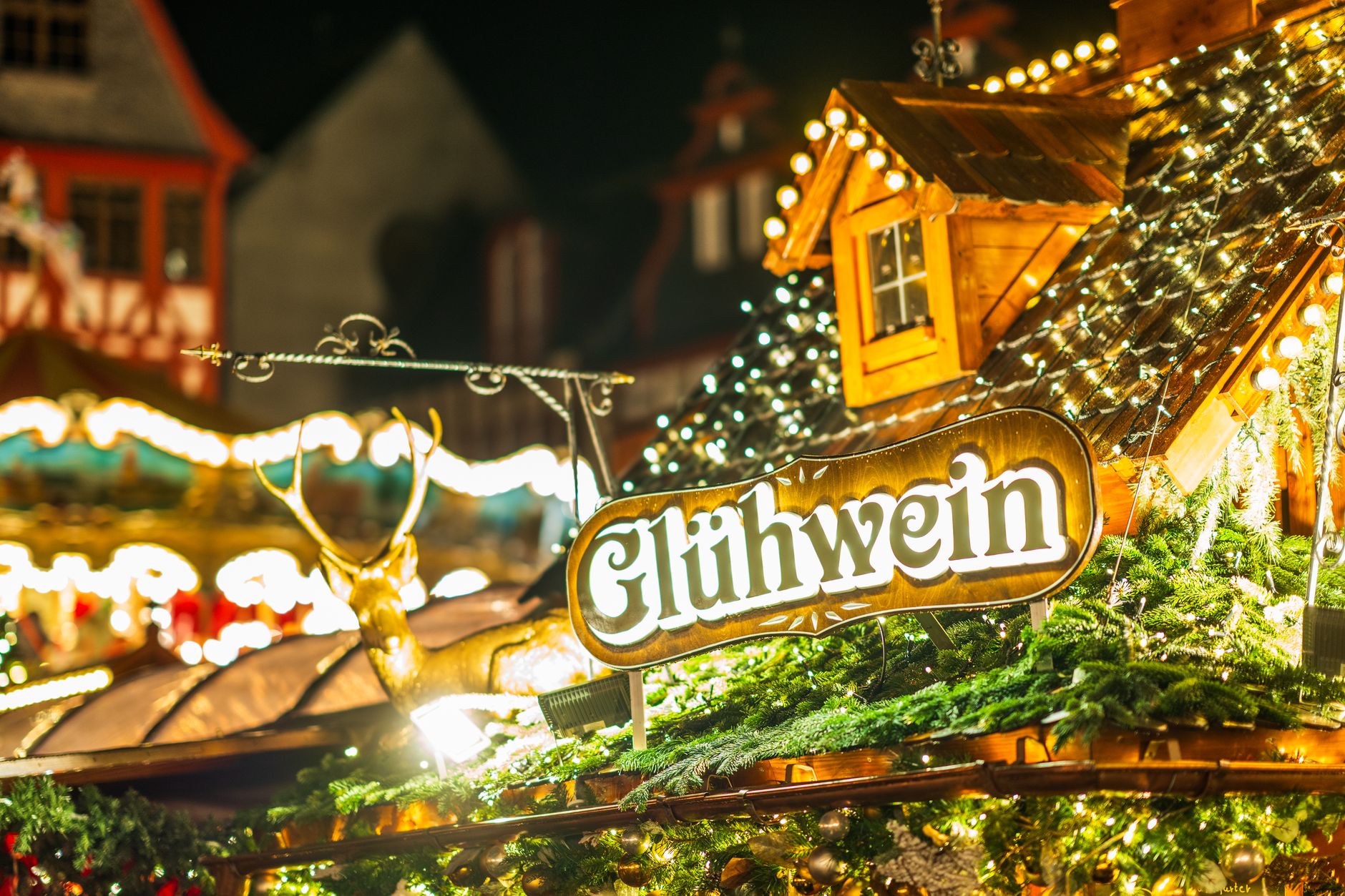
3. Heinzels Märchenwelt (Fairy-Tale Market) — Alter Markt
Theme: Fairy-tale / Cologne gnome legend (Heinzelmännchen) Location: Alter Markt (runs alongside the Old Market)
Heinzels Märchenwelt occupies the same square as Alter Markt but with a different aesthetic — fairy-tale themed, drawing on Cologne's legend of the Heinzelmännchen (helpful gnomes who supposedly did the city's work in secret). Characters from the legend appear throughout the market, and the whole thing skews younger and more whimsical.
Advertisement
It's particularly good for families with children. The theming is consistent and well-done, not the half-hearted gesture some markets make toward family programming.
Best for: Families, children, anyone who wants something different from the standard market aesthetic Tip: The two Alter Markt markets (Old Market + Fairy-Tale) are effectively continuous — visit both in one go
4. Harbour Christmas Market (Hafen-Weihnachtsmarkt) — Rheinauhafen
Theme: Nautical / harbour Location: Rheinauhafen, near the Chocolate Museum
The harbour market is the most distinctive of the six in terms of setting. Rheinauhafen is Cologne's former working harbour, now a sleek redevelopment district anchored by the three iconic Kranhäuser — crane-shaped residential buildings that look like upside-down Ls. At night, with the buildings lit and the market running along the waterfront, it's atmospheric in a way that's completely different from the Cathedral market.
Advertisement
The Hafen market has a food market emphasis and a slightly upscale, design-conscious feel. It tends to be less crowded than the Cathedral market, which makes it a good second stop if you want to actually enjoy your Glühwein without being nudged by strangers.
Best for: Adults looking for atmosphere without Cathedral-market crowds, good food, the Kranhäuser backdrop Tip: Combine with a visit to the Chocolate Museum (Lindt Schokoladenmuseum), which is right next door
5. Angels Market (Weihnachtsmarkt der Engel) — Neumarkt
Theme: Angels, white and gold aesthetic Location: Neumarkt
The Angels Market has the most distinctive visual identity of all six markets — white and golden throughout, angel-themed decorations, a coherent romantic aesthetic that sets it apart from the more traditional red-and-green German Christmas look. It's known for handmade crafts and upscale gift stalls, which makes it the place to shop if you're looking for something actually worth taking home.
The atmosphere is romantic rather than raucous. If you're in Cologne as a couple and want one market that feels genuinely special rather than just "busy Christmas market," this is it.
Best for: Shopping for quality crafts and gifts, couples, anyone who finds the Cathedral market too crowded Tip: Neumarkt is a central square with good transport links — easy to add to any market route
6. St. Nicholas Village (Nikolausdorf) — Various Location
Theme: St. Nicholas, children's Christmas Location: Varies year to year — check cologne-tourism.de for 2026 location
The St. Nicholas Village is the most explicitly family-focused of the six markets, oriented around St. Nicholas themes, rides, and activities for children. It doesn't have the visual drama of the Cathedral market or the food focus of Alter Markt, but it serves a clear purpose and does it well.
If you're travelling with young children, this one is likely more enjoyable for them than standing in Cathedral market queues.
Best for: Families with young children, Christmas activities for kids Tip: Confirm the exact 2026 location at cologne-tourism.de as it has shifted between years
What to Eat and Drink at Cologne's Christmas Markets
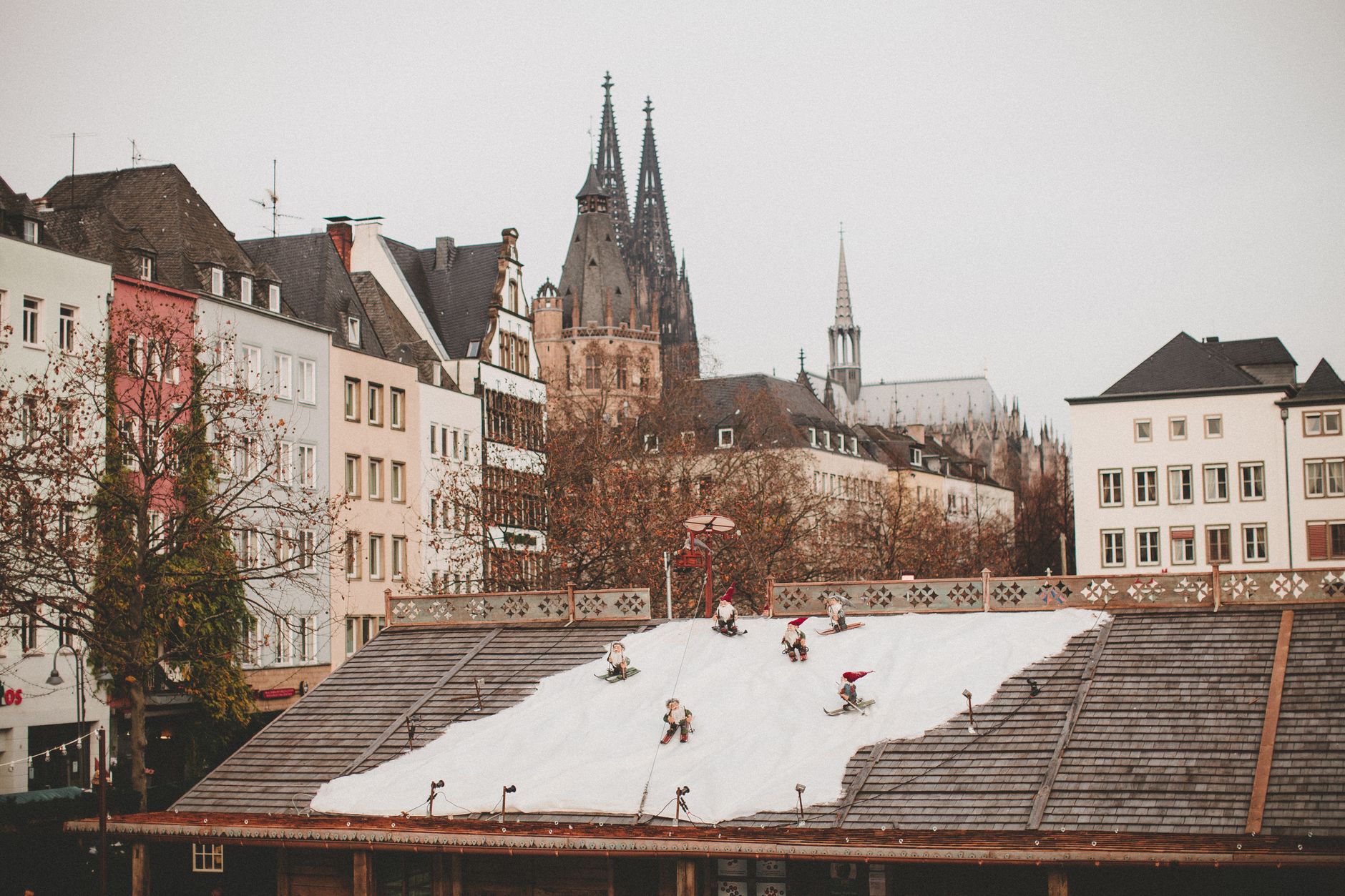
Glühwein
The entry point for any German Christmas market. Mulled wine, served hot, in a ceramic mug that you either return for your €3–5 deposit or keep as a souvenir. Cologne's markets each have their own branded mug design — the Cathedral market mug is particularly popular.
Expect to pay €4–6 per Glühwein depending on the market (Cathedral market tends toward the higher end). The deposit mug system means your first drink feels more expensive than it is. Either return the mug or commit to adding it to your collection at home.
Reibekuchen (Potato Pancakes)
The Cologne Christmas market speciality that most visitors from outside Germany don't know about. Reibekuchen are thick potato pancakes — crispy outside, soft inside — served with apple sauce. They're cheap, filling, and genuinely good. Alter Markt has the best selection of Reibekuchen stalls.
Bratwurst
The constant across every German Christmas market, and rightly so. A properly grilled Bratwurst in a Brötchen (bread roll) costs around €3–4 and is exactly what you want when you've been walking in cold December air for two hours.
Mandeln (Roasted Almonds)
The smell that finds you 30 metres away. Caramelised, roasted almonds — sold in paper cones, warm enough to hold in cold hands. A €3–5 cone is hard to walk past.
Stollen
The German Christmas cake. Dense, fruit-filled, dusted with icing sugar. Some markets have dedicated Stollen stalls where you can try before you buy. It's an acquired taste but the real Christmas market version is better than anything supermarket-packaged.
A note on Kölsch
Cologne's local beer — served only in Cologne, in small 0.2L glasses called Stangen. The Christmas markets are primarily Glühwein territory, but some stalls do serve Kölsch for those who prefer it. If you haven't had Kölsch in Cologne before, it's worth at least one glass. Just know that the waiter will keep bringing you another one until you put your beer mat on top of the glass to signal you're done.
Getting to Cologne for Christmas Markets
From Frankfurt
The ICE train is the obvious choice. Frankfurt Hauptbahnhof to Köln Hauptbahnhof: 55–65 minutes. Trains run roughly every 30 minutes throughout the day.
The December Frankfurt–Cologne corridor is one of the busiest leisure routes in Germany. Book early — Sparpreis tickets (from ~€19.90 one-way) sell out weeks ahead on December weekends. Last-minute flexible fares run €45–60 one-way.
Book on the Deutsche Bahn app or website. Set price alerts, or just book as soon as you've decided on dates.
One genuinely useful fact: Köln Hauptbahnhof sits directly beneath the Cathedral. You walk out of the station, turn left, and the Cathedral market is 200 metres ahead. It's one of the best train-station-to-destination arrivals in Europe.
Full guide: Frankfurt to Cologne by train
From Other Cities
- Düsseldorf: 20 minutes by train — very easy, no planning required
- Amsterdam: 2.5 hours by Thalys/Eurostar — viable for a day trip or weekend
- Brussels: 1h50 by Thalys — good weekend option
- Munich: 4.5 hours by ICE — better as an overnight trip
Getting Between the 6 Markets
The six markets spread across a roughly 3km stretch of the city. Some (Alter Markt, Heinzels Märchenwelt) are adjacent. Others (Hafen, Cathedral) require a 20-minute walk or short tram ride.
The KölnPass covers all public transport in Cologne including trams and the U-Bahn — buy it for the day and use it freely between markets. It also covers transport from the station to wherever you need to go. Full KölnPass review here.
Day Trip vs Overnight: Which Makes More Sense?
| Day Trip (arrive 11am, leave 7–8pm) | Overnight (1 night) | |
|---|---|---|
| Markets covered | Cathedral + Alter Markt + one other | All 6, at a relaxed pace |
| Evening Cathedral lights | Limited (leave early evening) | Full — Cathedral at 8pm is the highlight |
| Brauhaus dinner | Rushed or skipped | Proper sit-down Kölsch dinner |
| Cost | Train return + day costs | Add €80–150 for central hotel |
| Best for | First visit, tight schedule | Anyone who wants the full experience |
My honest position: the day trip works, but overnight is significantly better. The Cathedral market at night, after the tourist day-trippers have headed home and the evening crowds thin slightly, is a different experience from the midday rush. If you're coming from Frankfurt (55 minutes), the train cost is low enough that the only additional expense is the hotel.
If you're doing a day trip, arrive at 11am and leave no earlier than 7pm to catch the lights coming on. Don't do the mistake of arriving at 2pm and leaving at 5pm — you'll miss everything.
Practical Tips for Cologne Christmas Markets 2026
Go on a weekday if at all possible. The Cathedral market on a December Saturday afternoon is genuinely difficult — crowds that make it hard to appreciate the market rather than just survive it. A Tuesday or Wednesday is an entirely different experience.
Morning for calm, evening for atmosphere. Markets open around 11am. The first hour is relatively quiet. After 3pm, crowds build fast. After dark (4:30–5pm in December), the lights make everything more spectacular but the crowds are at their peak.
Bring cash. Many stalls prefer it. ATMs are plentiful in the Altstadt, but you'll waste time if you're hunting for one while carrying a warm Glühwein. Withdraw €50–80 before you start.
Dress properly for December. The Rhine runs through Cologne and creates a wind-chill effect that catches visitors off guard. Base layer, a proper insulated mid-layer, a wind-resistant outer layer, and a hat. This is not optional if you're spending several hours outside in December.
Book trains early. Frankfurt–Cologne in December is the same advice I'd give for any popular German Christmas market trip: Sparpreis tickets sell out weeks ahead on weekends. Book the moment you've confirmed dates.
Download an offline Cologne map. The six markets are spread across the city, and mobile data can be unreliable in very crowded outdoor spaces. Google Maps downloaded offline works fine.
Verify 2026 dates at cologne-tourism.de. Always cross-check before finalising travel plans.

Booking and Planning Links
- Train tickets: Deutsche Bahn — book Sparpreis as early as possible for December weekends
- KölnPass (transport + some attraction discounts): Book on Tiqets
- Hotels in Cologne: Search availability on Booking.com — central Cologne hotels in December book up; search early
Related: Things to Do in Cologne · Cologne Day Trip from Frankfurt · KölnPass Review · Best Christmas Markets in Germany
Save More
Save 5% on activities
Use code CHASINGWHEREABOUTS5 in the GetYourGuide app.
Book this exact experience in GetYourGuide appGet Travel Tips in Your Inbox
Join 5,000+ travelers. Get exclusive itineraries, honest reviews, and budget hacks once a week.
No spam. Only high-quality travel advice. Unsubscribe anytime.