Disclosure: Chasing Whereabouts is reader-supported. This guide contains affiliate links to partners like Tiqets, GetYourGuide, Viator and Headout. If you make a purchase through these links, we may earn a small commission at no extra cost to you. This helps us continue providing free, first-hand travel guides. Thank you for your support!
🇫🇷 This guide is part of our comprehensive France Travel Guide.
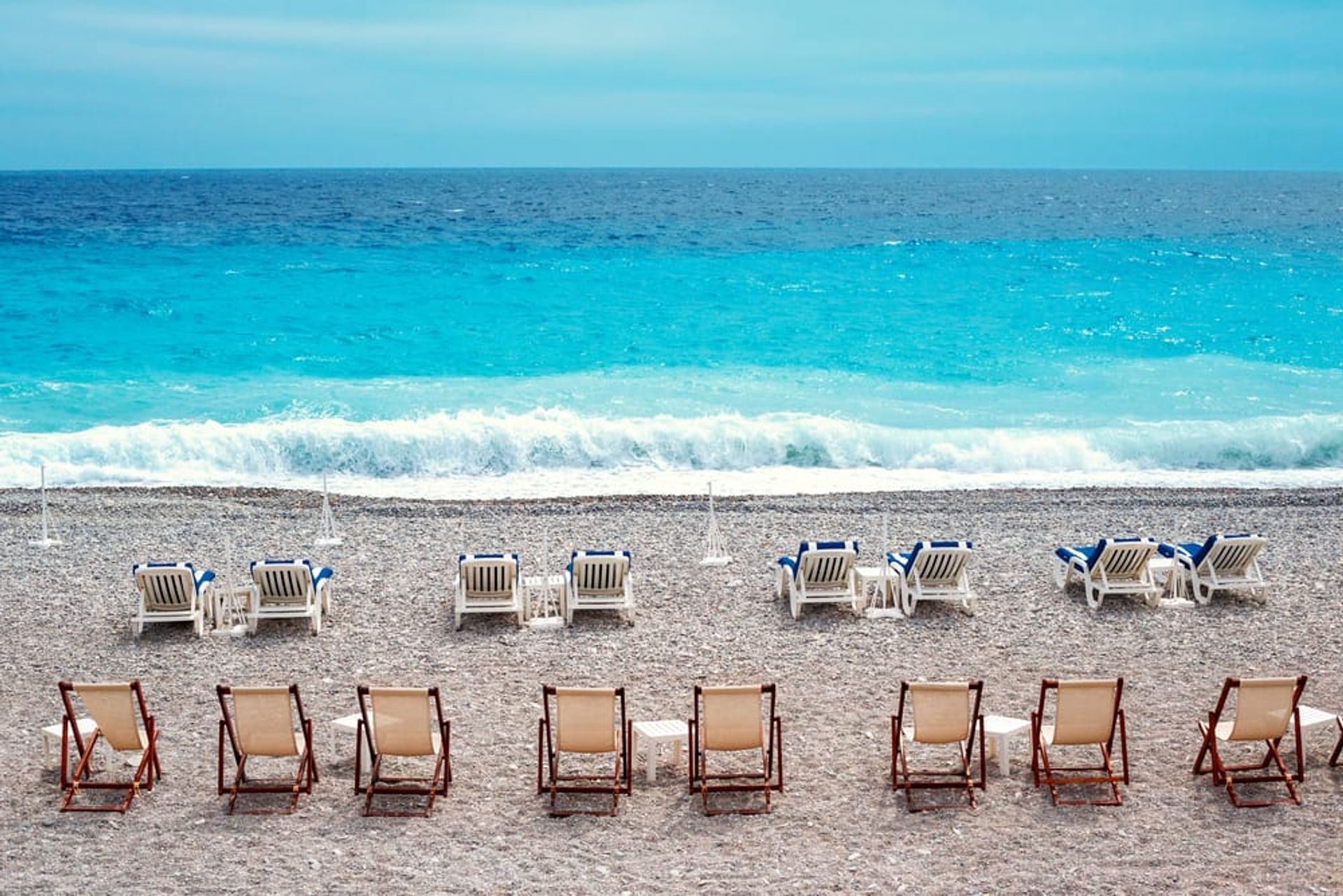
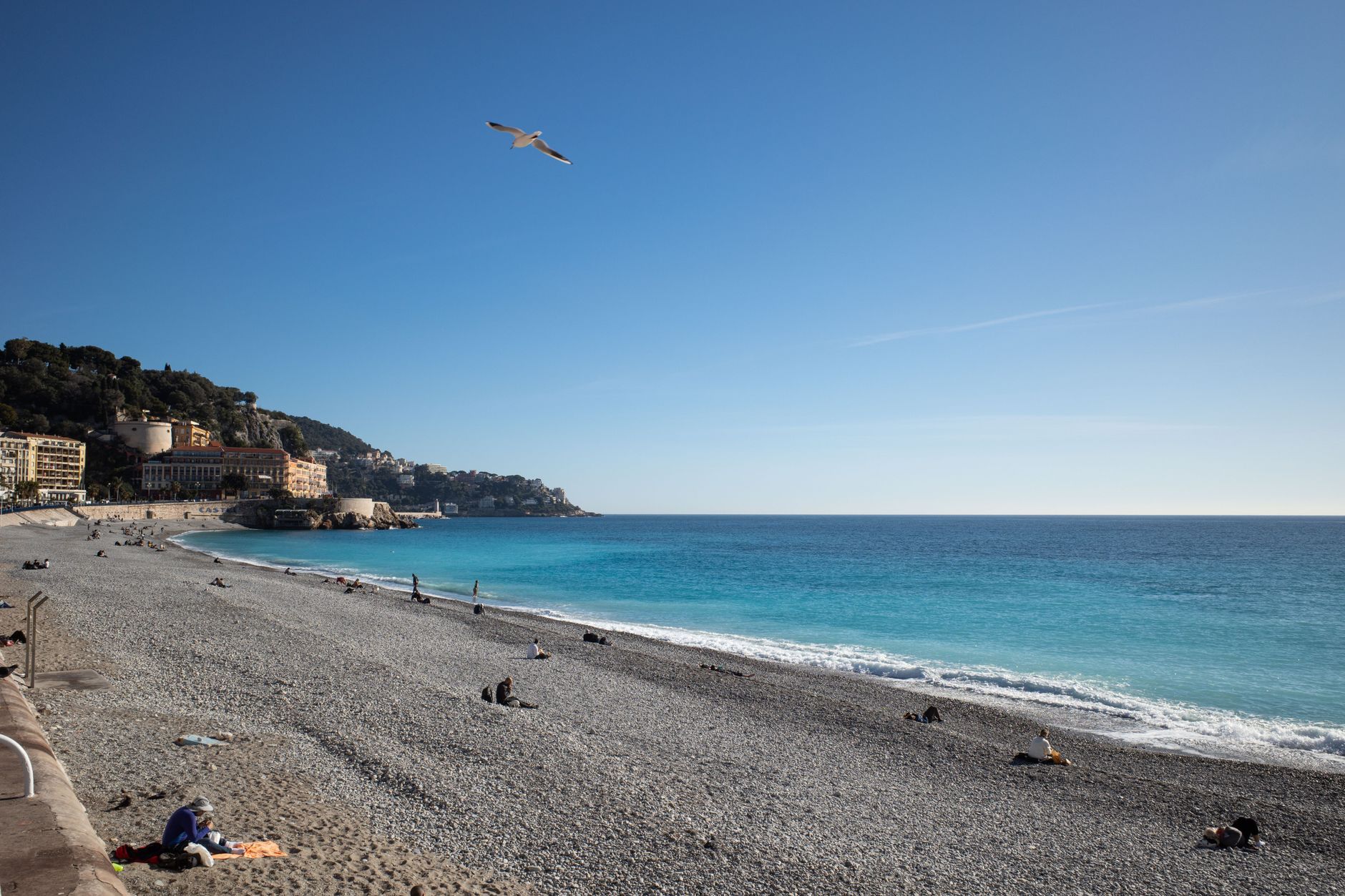
The first thing most visitors don't expect about beaches in Nice France: they're almost entirely pebble, not sand. It's not a deal-breaker — the Mediterranean is clear and warm — but it changes how you prepare. Water shoes make a significant difference. With that out of the way, here's what to know about each plage and how to reach them on the French Riviera.
Nice Beaches — Quick Overview
| Beach | Free or Paid | Best For | Tram Stop |
|---|---|---|---|
| Promenade des Anglais (public) | Free | Central, easy access | Masséna or Opéra-Vieille Ville (T1) |
| Beau Rivage | Private (~€25/day for lounger) | Lively, central | Opéra-Vieille Ville (T1) |
| Opera Plage | Private (~€22/day) | Old Town proximity | Opéra-Vieille Ville (T1) |
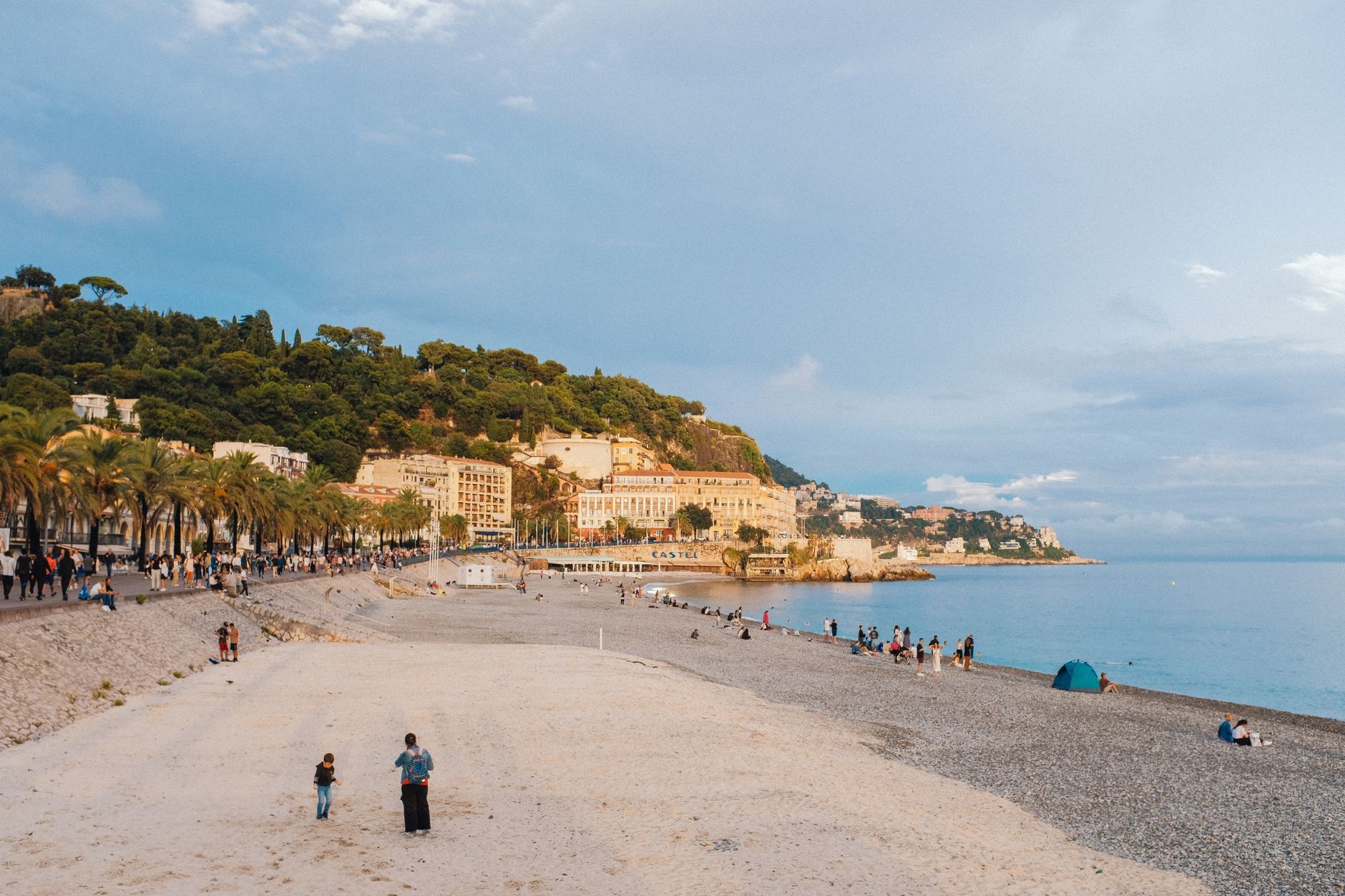
| Castel Plage | Private (~€28/day) | Scenic, under Castle Hill | Garibaldi (T1), then walk |
| Coco Beach | Free (mostly) | Snorkeling, clearer water | Promenade des Arts (T1) or walk |
| Plage de la Réserve | Free | Quieter, near the port | Garibaldi (T1) |
| Petite Afrique | Free | Calm, east of port | Walk from Garibaldi (T1) |
| Carras Beach | Free | Western Nice, locals | Carras (T2) |
Water temperature: 20–26°C July–August. Sea swimmable June–September.
Advertisement
1. Promenade des Anglais — The Central Public Beach
The Promenade des Anglais stretches 7km along Nice's waterfront. The plage alongside it is mostly public and free — no reservation, no fee, just find a spot on the pebbles. It gets crowded in July and August but the length means there's usually space.
The promenade itself is one of the most iconic walks on the French Riviera — wide, palm-lined, with views of the Baie des Anges. Best time to walk it: early morning before the heat arrives.
Best for: Free swimming, central location, combining with Old Town sightseeing
Tram: Masséna or Opéra-Vieille Ville (T1 yellow line) — both within walking distance
2. Beau Rivage — Best Private Beach Club
This is a famous private beach in Nice, located right off the Promenade des Anglais. If you want to skip the hard pebble surface of the public areas, you pay for the privilege here. A sun lounger costs around €25 to €30 per day, and a parasol is another €6. It gets packed by 11:00 AM in July, so book online a day ahead.
The restaurant serves decent Mediterranean food, but you are mostly paying for the location. The service can be slow when the deck is full. Walk down the steps from the Opéra tram stop (Line 1) and you are there in three minutes. It is the easiest way to experience a classic French Riviera beach day without traveling outside the city limits.
Advertisement
3. Castel Plage — Most Scenic Setting
This spot sits right under the shadow of Castle Hill, at the far eastern curve of the bay. The location means you get shade earlier in the afternoon than at other spots along the Promenade. It feels more secluded than Beau Rivage, even though it is just a short walk from the Old Town. Expect to pay about €30 for a front-row lounger.
The water here gets deep quickly, which makes it great for a proper swim. The rocks block some of the wind, making the water calmer on breezy days. Grab a spot on the public strip right next to it if you do not want to pay for a chair, but arrive early because that free patch of pebble fills up fast.
4. Coco Beach — Best for Snorkeling
Forget the wide flat stretches of the main promenade. This is a series of flat rocks and concrete platforms cut directly into the cliffs past the port. You will not find any sun loungers or soft spots here. Bring a thick towel or a yoga mat to cushion the hard ground.
The main draw is the water quality. Because there are no pebbles stirring up sediment, the water is incredibly clear. It is the best beach in Nice for snorkeling, with plenty of small fish around the rocky drop-offs. Take Bus 38 from the port and get off at Lympia, then walk five minutes along the coastal path.
5. Petite Afrique — Hidden Plage East of the Port
Technically located in Beaulieu-sur-Mer, this is one of the few sandy spots easily reachable from Nice. You can take the TER train from Nice-Ville to Beaulieu-sur-Mer (a 10-minute ride costing under €3), then walk 15 minutes to the beach. The bay is sheltered by massive limestone cliffs, which trap the heat and keep the wind down.
Advertisement
This cove is perfect if you are traveling with kids who hate the painful pebbles of the main Nice strip. There is a playground right behind the sand and plenty of shade from the pine trees. It feels a world away from the busy city center, making it one of the most beautiful beaches on this stretch of the riviera.
6. Plage de la Réserve — Quietest Near-Centre Option
Located just past the port, right next to the famous Le Plongeoir restaurant, this tiny cove is where locals go to escape the tourists. It is small, rocky, and has zero amenities. Do not expect toilets, showers, or lifeguards here.
You get a great view of the ferries coming and going from the harbor. Access to the water is via concrete steps or by scrambling over the rocks. To get here, take a 20-minute walk from the Port Lympia tram stop (Line 2). It is a raw, no-frills spot that shows the authentic side of the French Riviera.
7. Carras Beach — Local Western Option
This is the westernmost beach in Nice, located close to the airport. It is one of the few official pet-friendly beaches in the city, so expect to see locals walking their dogs. It also has wheelchair access with a dedicated ramp into the water.
The planes fly directly overhead here, which is either a cool spectacle or annoying noise depending on your perspective. Take Tram Line 2 to the Carras stop. Because it is further from the tourist center, the crowd is much more local and the public space is less cramped than the sections near the Old Town.
Advertisement
Nice Beach Practical Info
Pebble beaches — what to bring:
- Water shoes are essential (buy cheap ones or rent at beach clubs for ~€5)
- A thin beach mat or towel with some padding
- Sunscreen — the Mediterranean sun is intense June–September
Free vs private: The entire stretch of Promenade des Anglais has free public sections interspersed with private concessions. You're never forced to pay — just walk past the private plage section.
Water quality: Nice beaches have good water quality rated "Excellent" under the EU Bathing Water Directive.
Changing facilities: Most private beach clubs include showers and changing rooms in the rental price. Free sections have public showers along the promenade.
Season: June–September for swimming. July–August is peak season — arrive before 10am for a good spot.
Advertisement
Sandy Beaches Near Nice (Day Trips)
All beaches in Nice city are pebble. If you want sand, you need to leave Nice proper — here are the best options on the French Riviera:
Villefranche-sur-Mer (10 min by train from Nice Ville, every 30 min) — small sandy bay, beautifully sheltered, much quieter than Nice. One of the best easy day trips.
Saint-Jean-Cap-Ferrat (15 min by train to Beaulieu, then bus or walk) — Plage de Passable is a calm, partially sandy cove on the peninsula. Stunning setting, much less crowded than central Nice.
Beaulieu-sur-Mer (15 min by train) — good public beach, mix of sand and pebble, prettier town than most of the Riviera. Less hyped than Villefranche but worth it.
Antibes / Juan-les-Pins (25 min by train) — Juan-les-Pins has sandy beaches; Plage de la Gravette in Antibes is a pleasant free sandy option. Bus 200 from Nice or direct train.
Cannes (35 min by train) — Cannes beach itself is partly sandy, particularly the beach clubs along La Croisette. Further west, Plage du Midi is a long free public beach with sand.
Menton (35 min by train) — quieter than Nice, mix of pebble and sand, close to the Italian border.
FAQ: Beaches in Nice France
Does Nice France have a beach?
Yes, Nice has around 25 beaches stretching 5km along the Promenade des Anglais. However, all beaches in Nice are pebble, not sand. The pebbles are smooth but can be uncomfortable without water shoes. If you want sand, the nearest sandy beaches are in Villefranche-sur-Mer (10 min by train) or Antibes (25 min).
Are Nice beaches sandy or pebble?
All city beaches in Nice are pebble. The pebbles can be uncomfortable without water shoes, which you can rent at private beach clubs for ~€5. For sand, day trip to Villefranche-sur-Mer, Saint-Jean-Cap-Ferrat, or Juan-les-Pins — all under 30 minutes by train.
Is it warm enough to swim in Nice?
Yes — the Mediterranean around Nice is warm enough to swim from June through September. Water temperatures reach 20–22°C in June, 25–26°C in July–August, and stay above 20°C through September. Outside these months the water drops to 13–17°C — swimmable for the hardy but too cold for most.
What is the best beach in Nice for swimming?
Coco Beach (east of the port) has the clearest water and best swimming and snorkeling conditions. The main Promenade des Anglais beaches are fine for swimming but have more sediment from boat traffic. For a private beach club with quality facilities, Beau Rivage is the most established option.
Is it better to stay in Antibes or Nice?
For beaches specifically, Antibes gives easier access to sandy beaches (Juan-les-Pins, Plage de la Gravette). Nice wins for overall convenience — better train connections, more restaurants and nightlife, easy day trips to Monaco, Villefranche, and Cannes. Most visitors base themselves in Nice and take day trips.
How much does a sun lounger cost in Nice?
Sun lounger + parasol at private beach clubs along the Promenade des Anglais costs €20–30/day depending on the club and position. The public sections alongside private clubs are always free — you can walk past any private plage to the adjacent public beach.
Is nudism allowed on Nice beaches?
There is an informal nudist section at the eastern end of Coco Beach. This is not officially designated but well-established and tolerated. Topless sunbathing is completely normal on all Nice beaches.
📍 Also see: Things to do in Nice | Day trips from Nice | Beaches in Monaco | France Travel Guide
Save More
Save 5% on activities
Use code CHASINGWHEREABOUTS5 in the GetYourGuide app.
Book this exact experience in GetYourGuide appGet Travel Tips in Your Inbox
Join 5,000+ travelers. Get exclusive itineraries, honest reviews, and budget hacks once a week.
No spam. Only high-quality travel advice. Unsubscribe anytime.