Disclosure: Chasing Whereabouts is reader-supported. This guide contains affiliate links to partners like Tiqets, GetYourGuide, Viator and Headout. If you make a purchase through these links, we may earn a small commission at no extra cost to you. This helps us continue providing free, first-hand travel guides. Thank you for your support!
🇮🇹 Part of our Italy Travel Guide
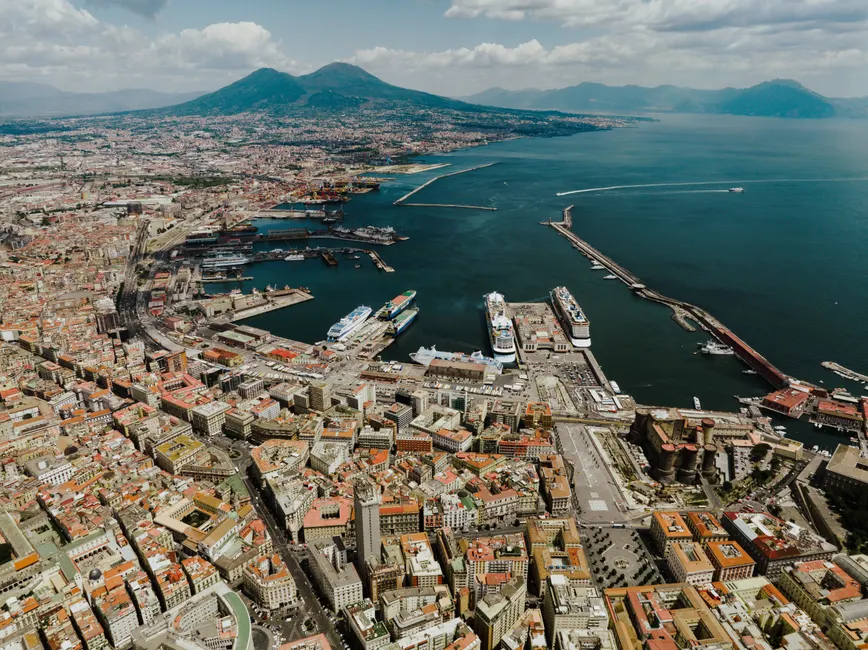
Naples divides opinions. Chaotic, loud, covered in graffiti in places, genuinely difficult to navigate on a first visit — and yet it has one of the most extraordinary concentrations of history, archaeology, street food, and raw energy of any city in Europe. The Bay of Naples frames the whole city against Vesuvius and the sea. Neapolitan pizza was invented here, and still tastes better here than anywhere else on earth.
I am going to be direct with this guide: Naples rewards preparation more than almost any Italian city. Know which neighbourhoods to walk, which train goes to Pompeii, and which pizza queue is worth joining. This guide covers all of that with specific prices, opening hours, and the kind of logistics that make the difference between a frustrating trip and one you come back from raving about.
Top Attractions in Naples: Quick Overview
| Attraction | Cost | Time Needed | Must-Book? |
|---|---|---|---|
| National Archaeological Museum | €15 | 2–3h | No |
| Pompeii (day trip) | €16 + €2.80 train | Half/full day | Yes (online) |
| Castel Nuovo | €6 | 1h | No |
| Castel dell'Ovo | Free | 45min | No |
| Castel Sant'Elmo | €5 | 1h | No |
| Capodimonte Museum | €10 | 2h | No |
| Santa Chiara Cloister | €6 | 45min | No |
| Underground Naples (Napoli Sotterranea) | €10 | 1.5h | Recommended |
| Pompeii + Vesuvius combo | €16 + €10 + bus | Full day | Yes |
| Herculaneum (day trip) | €13 + €2.80 train | Half day | Yes |
Advertisement
1. National Archaeological Museum (MANN)
The Museo Archeologico Nazionale di Napoli is the single best reason to visit Naples if you have any interest in ancient Rome. It holds the most important collection of Pompeii and Herculaneum artefacts in the world — everything removed from both sites over three centuries of excavation is here, not at the ruins themselves.
Highlights: the Farnese Hercules (a colossal 2nd-century marble), the Secret Room (Gabinetto Segreto) with erotic art from Pompeii, the stunning Alexander Mosaic (10 feet wide, depicting Alexander the Great defeating Darius III), and the Farnese Bull, the largest surviving ancient sculpture.
Entry: €15, under 18 free. Hours: Wed–Mon 09:00–19:30, closed Tuesday. travel budget calculator at least 2.5 hours — rushing it means missing the best pieces. The museum is close to Piazza Cavour metro station (Line 1).
2. Pompeii — The Essential Day Trip from Naples
Pompeii is not just a day trip from Naples — it is one of the most important archaeological sites in the world. The Roman city was buried under 4–6 metres of volcanic ash when Vesuvius erupted in 79 AD, preserving streets, bakeries, brothels, temples, and the plaster casts of residents caught in the disaster exactly as they were.
The site covers 44 hectares. You cannot see everything in one visit; focus on the Forum, the House of the Faun (where the Alexander Mosaic was found), the Lupanar (brothel), the Villa of the Mysteries, and the Street of Abundance.
Advertisement
Getting there: Circumvesuviana train from Naples Porta Nolana or Napoli Centrale to Pompei Scavi-Villa dei Misteri. Journey time: 35–40 minutes. Cost: €2.80 each way. Trains every 30 minutes from 06:00–21:30.
Entry: €16 adults, €2 for EU citizens 18–25, free for under 18. Hours: Daily 09:00–19:00 (last entry 17:30), Nov–Mar closes 17:00. Book tickets in advance at the official site to skip the queue — on summer weekends the line can be 45+ minutes.
Half day vs. full day: A focused 3-hour visit covers the main sites. A full day lets you explore the outlying villas and eat lunch inside the site.

3. Mount Vesuvius
The only active volcano on mainland Europe, Vesuvius dominates the Bay of Naples skyline from every angle. A visit to the crater rim is one of the most memorable things you can do in the Naples area.
Advertisement
You cannot drive to the summit — a shuttle bus (€12) runs from the lower car park at 1,000m to the crater rim at 1,281m, or you can walk the final section on foot (30 minutes each way on a well-maintained path). The national park entrance fee at the crater is €10.
Logistics: Take the Circumvesuviana to Ercolano Scavi (20 minutes from Naples, €1.30), then Vesuvio Express bus (€12 return) to the car park. Combined Pompeii + Vesuvius in one day is possible with an early start; leave Naples by 08:00 to do both properly.
Important: The summit is often windy and cold even in summer. Bring a layer regardless of the weather in Naples below.
4. Piazza del Plebiscito and the Royal Palace
Piazza del Plebiscito is one of the largest squares in Italy and the ceremonial heart of Naples. It is completely free to walk through. On one side: the neoclassical San Francesco di Paola church (modelled on the Pantheon in Rome, free entry). On the other: the Royal Palace of Naples (Palazzo Reale).
The Royal Palace was built in 1600 as a residence for Spanish viceroys and later the Bourbon kings of Naples. It contains 30 opulent state rooms with original furniture, tapestries, and paintings.
Advertisement
Royal Palace entry: €10. Hours: Thu–Tue 09:00–20:00, closed Wednesday.
5. Castel Nuovo (Maschio Angioino)
The city's most imposing castle, built in 1279 by Charles I of Anjou on the waterfront. The five cylindrical towers and the Renaissance triumphal arch squeezed between two of them (Arch of Alfonso, 1443) make this the most photographed building in Naples after Vesuvius itself.
Inside is the Civic Museum — medieval and Renaissance art, frescoes in the Barons' Hall, and city-related artefacts from Roman times forward.
Entry: €6. Hours: Mon–Sat 09:00–19:00, closed Sunday. 10-minute walk from Piazza del Plebiscito.
6. Castel dell'Ovo
Free to visit, the Egg Castle (named after a legendary egg buried under it by Virgil to hold up the foundations — a mediaeval story) sits on a small island connected to the Chiaia waterfront by a causeway. The current structure is mostly 16th-century.
Advertisement
Walk through the internal ramparts to the roof terrace: the view over the Bay of Naples to Vesuvius is the best free view in the city. Below the castle walls, the Borgo Marinaro harbour has seafood restaurants (touristy but pleasant for a beer overlooking the water).
Entry: Free. Hours: Mon–Sat 09:00–19:30, Sun 09:00–14:00.
7. Spaccanapoli: Walk the Historic Centre
Spaccanapoli (literally "Naples-splitter") is the long, straight street — actually a series of connected streets — that cuts through the entire historic centre from east to west. It follows the line of the ancient Greek decumanus maximus, laid down when the city was founded as Neapolis in the 5th century BC.
Walk it from Piazza del Gesù Nuovo eastward: you pass the Church of Gesù Nuovo, the Church of Santa Chiara, the Piazza San Domenico Maggiore, the Capella Sansevero (statuary including the extraordinary Veiled Christ), and eventually San Gregorio Armeno — the street of nativity scene artisans, open year-round.
The entire walk takes 1.5–2 hours at a relaxed pace with stops. The street gets progressively more local and less touristy as you head east.
Santa Chiara: The Gothic church itself is fine; what you pay for (€6) is the cloister — a 14th-century courtyard lined with benches and pillars covered in hand-painted 18th-century majolica tiles, vivid and pastoral, unlike anything else in Italy. Hours: Mon–Sat 09:30–17:30, Sun 10:00–14:30.
Cappella Sansevero: €8. The Veiled Christ (1753) alone is worth the price — a marble figure covered by a translucent veil so perfectly rendered that visitors regularly reach out to touch it. Book ahead; entry is timed and sells out. Hours: Wed–Mon 09:00–19:00.
8. Quartieri Spagnoli (Spanish Quarter)
The dense grid of alleyways west of Via Toledo was laid out in the 16th century to house the Spanish garrison. Today it is one of the most authentic residential neighbourhoods in Naples — washing lines between buildings, shrines on corners, small bars and trattorias with no tourist menus.
Walk Via Toledo then turn west into any of the narrow vicoli. The street art here is worth looking for: there are large-scale murals dedicated to Diego Maradona, who is still revered in Naples with genuine religious intensity. The mural outside Bar Nilo on Via San Biagio dei Librai includes a strand of Maradona's hair and a vial of his tears.
Free to walk, best explored in the morning or early evening.
9. Capodimonte Museum
In a royal palace on a hill 4km north of the centre, the Capodimonte holds one of the great painting collections in Italy — not as famous as the Uffizi but arguably as strong. Caravaggio's Flagellation of Christ, Titian's Danaë, Raphael's Portrait of a Young Man, El Greco's early work. The building itself is enormous; a full visit takes 2.5–3 hours.
Entry: €10, free first Sunday of each month. Hours: Thu–Tue 09:00–19:00, closed Wednesday. Take bus C63 or Capodimonte shuttle from Piazza Trieste e Trento.
10. Underground Naples (Napoli Sotterranea)
Naples is built on tufa volcanic rock, and 40 metres beneath the city is a network of tunnels, cisterns, and aqueducts carved from the 4th century BC by the Greeks and expanded by the Romans. During World War II they were used as air raid shelters — you can still see graffiti and wartime artefacts.
The main tour runs from Piazza San Gaetano (in the historic centre) and takes 80 minutes. Sections are narrow enough to walk single-file with a lantern.
Entry: €10. Hours: Tours run daily at 10:00, 12:00, 14:00, 16:00, 18:00 (extra tours in summer). Booking recommended, especially weekends.
Neapolitan Street Food: What to Eat in Naples
Naples has the most distinctive street food culture in Italy. Eat at street level — the best versions of everything are from small windows and market stalls, not restaurants:
- Pizza: The original Neapolitan pizza has a thick, charred, chewy crust with simple San Marzano tomato and buffalo mozzarella. Pizzeria da Michele (Via Cesare Sersale 1) serves only Margherita and Marinara, €5–7, queues out the door but worth 20 minutes. Sorbillo (Via dei Tribunali) is slightly more refined and does more variations.
- Frittatina di pasta: Deep-fried pasta cake with béchamel and ragù inside. €2 each from street windows in the historic centre.
- Cuoppo: A paper cone of mixed fried seafood — calamari, shrimp, small fish. €4–6 from the Pignasecca market area.
- Sfogliatella: A flaky, shell-shaped pastry filled with sweet ricotta and candied orange. Get it hot from a bakery — Pasticceria Attanasio near Napoli Centrale does them reliably.
- Caffè: Naples has its own distinct espresso culture, stronger and slightly sweeter than elsewhere. Bars charge €1–1.10 for espresso; drinking it standing at the bar is the local way.

Day Trips from Naples
Pompeii (see above): 35–40 min by Circumvesuviana, €2.80.
Herculaneum: Smaller than Pompeii, better preserved (wooden structures survived), and far less crowded. 20 min from Naples, same Circumvesuviana line to Ercolano Scavi. Entry €13. Allow 2–3 hours.
Amalfi Coast: Reachable by SITA bus from Sorrento (take Circumvesuviana to Sorrento first, 1 hour, €4.60) or by hydrofoil from Molo Beverello to Positano or Amalfi directly (€20–25, runs April–October). The coastal road is spectacular but the bus is slow — allow a full day. See our full Naples to Amalfi Coast guide.
Capri: Fast ferry from Molo Beverello, 50 minutes, €22–25 one way. Worth it for a day if you want the Blue Grotto (arrive before 10:00) and the views from Anacapri.
Sorrento: 1 hour by Circumvesuviana, €4.60. Pleasant cliff-top town, easier to navigate than Naples, good base for the Amalfi Coast if you prefer quieter accommodation.
Planning Your Trip to Naples: How Many Days Do You Need?
1 day in Naples: Possible but tight. Focus on Spaccanapoli (morning), the National Archaeological Museum (afternoon), one pizza lunch. You will leave wishing you had more time.
2 days in Naples: Comfortable for the city itself. Day 1: historic centre (Spaccanapoli, Santa Chiara, Cappella Sansevero, Castel Nuovo). Day 2: MANN in the morning, Castel dell'Ovo and Chiaia waterfront in the afternoon. Pizza and street food throughout.
3 days in Naples: The ideal minimum. Add a full day at Pompeii on day 3 — this is the single best day trip in Italy and deserves a full day, not a rushed half-day.
4–5 days: Add Herculaneum, a day on the Amalfi Coast, and possibly Capri or Ischia. This is the proper Naples-and-surrounds trip.
Neighbourhood to base yourself in: The historic centre (near Spaccanapoli) puts you walking distance from everything. Chiaia is more polished and quieter. Avoid the area immediately around Napoli Centrale station for accommodation — it is functional but grim.
Getting to Naples
Naples (Napoli Centrale) sits on the main Italian high-speed rail corridor:
- From Rome: 1h 10min by Frecciarossa, €15–45 depending on timing
- From Florence: 2h 55min by Frecciarossa, €30–70
- From Milan: 4h 20min by Frecciarossa, €45–90
For the Circumvesuviana trains to Pompeii, Herculaneum, and Sorrento, buy tickets at dedicated windows inside Napoli Centrale or at Porta Nolana station — they are not sold on Trenitalia's main app.
Naples International Airport (NAP, Capodichino): 7km north of the centre. Airport shuttle bus (Alibus) runs every 20 minutes, €5, to Piazza Garibaldi and Molo Beverello. Journey: 25–35 minutes. Ryanair, easyJet, and Vueling connect Naples well from across Europe.
Best Time to Visit Naples
| Season | Conditions | Verdict |
|---|---|---|
| April–May | 18–24°C, manageable crowds | Best overall |
| June–August | 28–35°C, peak crowds at Pompeii | Go early or avoid Aug |
| September–October | 22–28°C, lighter crowds | Excellent |
| November–March | 12–18°C, very quiet | Cheap, atmospheric, Pompeii uncrowded |
Pompeii in July–August is brutally hot with no shade and enormous tour groups. Visit in April, May, September, or October for the same ruins with significantly less heat and far fewer people.
Practical Tips for Naples
Safety: Naples' reputation is outdated for most tourist areas. The historic centre, Spaccanapoli, Chiaia, and Posillipo are destination safety index to walk during the day. At night, stick to lit streets, avoid displaying expensive equipment, and be aware of scooter traffic. The Quartieri Spagnoli is safe during the day; use common sense at night.
Transport within Naples: The metro (Line 1 and 2) is genuinely useful for getting between Piazza Garibaldi and the city centre. The funiculars (three lines, €1.50 each) connect the lower city to Vomero and Posillipo hills. Taxis are metered; agree on a price first or insist on the meter.
Budget: Naples is cheaper than Rome or Milan. A full pasta meal at a local trattoria: €10–16. Pizza at da Michele: €6. Espresso: €1. Daily budget for food, transport, and 2–3 paid attractions: €50–70.
Naples Welcome Card (€21/24h, €35/48h): Public transport + museum discounts. Worth it if you plan to use the metro frequently and visit multiple paid museums.
FAQs: Things to Do in Naples, Italy
What should I not miss in Naples, Italy? The National Archaeological Museum (the world's best Pompeii collection, €15), Pompeii itself (€16, 35-minute train), Spaccanapoli walk with the Cappella Sansevero (€8), and Castel dell'Ovo (free). Add one meal of proper Neapolitan pizza at da Michele — Margherita, €6, no substitutions.
What is Naples, Italy best known for? Pizza (invented here), Pompeii and Mount Vesuvius nearby, the National Archaeological Museum, and the historic centre's UNESCO-listed streetscape. Also Maradona — he played for Napoli from 1984–1991 and the city still treats him as a saint.
Is Naples worth visiting Italy? Yes, and it is consistently underrated in guidebooks relative to how good it actually is. It is raw and difficult in ways that Rome and Florence are not — but the food is better, it is significantly cheaper, and the archaeology (via Pompeii and the MANN) is world-class. Give it 3 days.
Is Amalfi a day trip from Naples? Yes, but it is a long one. Allow a full day — the SITA bus from Sorrento along the coastal road takes 1.5–2 hours each way. A direct hydrofoil from Naples to Positano or Amalfi (April–October, €20–25) is faster and more scenic. For a more relaxed experience, stay one night on the coast rather than doing it as a day trip. See our full Amalfi Coast guide from Naples.
📍 Also planning southern Italy? See our Naples Pass Review · Getting from Naples to the Amalfi Coast · 3 Days in Rome · Italy Travel Guide
Book Your Trip
Locking in your Naples plans? Book tickets and experiences in advance through Viator — free cancellation on most bookings, so you can plan now and adjust later.
Save More
Save 5% on activities
Use code CHASINGWHEREABOUTS5 in the GetYourGuide app.
Book this exact experience in GetYourGuide appGet Travel Tips in Your Inbox
Join 5,000+ travelers. Get exclusive itineraries, honest reviews, and budget hacks once a week.
No spam. Only high-quality travel advice. Unsubscribe anytime.