
Disclosure: Chasing Whereabouts is reader-supported. This guide contains affiliate links to partners like Tiqets, GetYourGuide, Viator and Headout. If you make a purchase through these links, we may earn a small commission at no extra cost to you. This helps us continue providing free, first-hand travel guides. Thank you for your support!
🇮🇹 Part of Italy Travel Guide
I've been to Florence twice — the second time because I rubbed the nose of the Porcellino bronze boar at Mercato Nuovo and, true to legend, felt compelled to return. Florence pulls you back. But Tuscany is bigger than Florence, and the smaller hill towns are where the region earns its reputation. San Gimignano at golden hour. The Val d'Orcia valley from the Pienza viewpoint. A glass of Brunello in Montalcino's main square. That's the real Tuscany.
Here's where to go, how long to spend, and what it actually costs.
Quick reference: best places in Tuscany
Advertisement
| Place | Type | Best For | From Florence | Entry Cost |
|---|---|---|---|---|
| Florence | City | Renaissance art, museums | Base | €0–20 |
| Siena | City | Gothic architecture, Palio | 1.5h bus/train | €0–8 |
| Lucca | Walled city | Walking/cycling the walls | 1.5h train | €0–4 |
| San Gimignano | Hill town | Medieval towers, wine | 1.5h bus | €6–10 |
| Pisa | City | Leaning Tower (day trip) | 1h train | €5–20 |
| Volterra | Hill town | Etruscan ruins, alabaster | 2h bus | €3–10 |
| Montepulciano | Wine town | Vino Nobile, hilltop views | 2h bus | €0–5 |
| Val d'Orcia | Landscape | Countryside, Pienza, Montalcino | 2.5h bus/car | €0–5 |
| Chianti | Wine region | Vineyards, scenic drives | 1h car | €10–20 wine tasting |
Florence: The Capital

Florence is Tuscany's capital and the densest concentration of Renaissance art on earth. The Uffizi alone could fill two days. But it rewards people who know where to avoid the lines and where to eat without paying tourist prices.
Key attractions:
- Uffizi Gallery — €20–25. Book online weeks ahead (July–August: 2–3 weeks). Botticelli's Birth of Venus, Caravaggio, Leonardo. 3–4 hours minimum.
- Florence Cathedral (Duomo) — free entry, but dome climb €18 (book online). Brunelleschi's dome is a feat of engineering you can fully appreciate by climbing inside it. ~450 steps. Book the same morning slot you plan to visit.
- Piazzale Michelangelo — free. Best panoramic view of Florence. Go at sunset (around 8–9pm in summer). 20-min walk uphill from city center or bus 13.
- Ponte Vecchio — free to walk. Jeweller shops built on the bridge since the 14th century. Busy during the day; beautiful at dawn.
- Porcellino Fountain (Mercato Nuovo) — free. Bronze boar. Rub the nose, throw a coin. Come back to Florence. It works.
Eat in Florence:
- Bistecca alla Fiorentina — €50–70 for a T-bone steak (sold by weight, ~€45/kg). Not a travel budget calculator meal but the benchmark dish. Trattoria Mario or Buca dell'Orafo for more affordable versions (€25–35).
- Lampredotto panino — €4–5. Tripe sandwich from street vendors. Nerbone inside the Mercato Centrale does a good one.
- Gelato — €2–3. Gelateria dei Neri or Gelateria Vivoli. Avoid anywhere with fluorescent-coloured mounded gelato (overprocessed).
- Aperitivo — €8–12 for a spritz or Negroni. Many bars include free snacks (cicchetti) 6–8pm.
How long: 2–3 days minimum. 4–5 days if you want museums at a relaxed pace and day trips.
Advertisement
Base here if: first trip to Tuscany, or primary interest is art/museums. Best transport connections.
Siena: The Medieval Rival
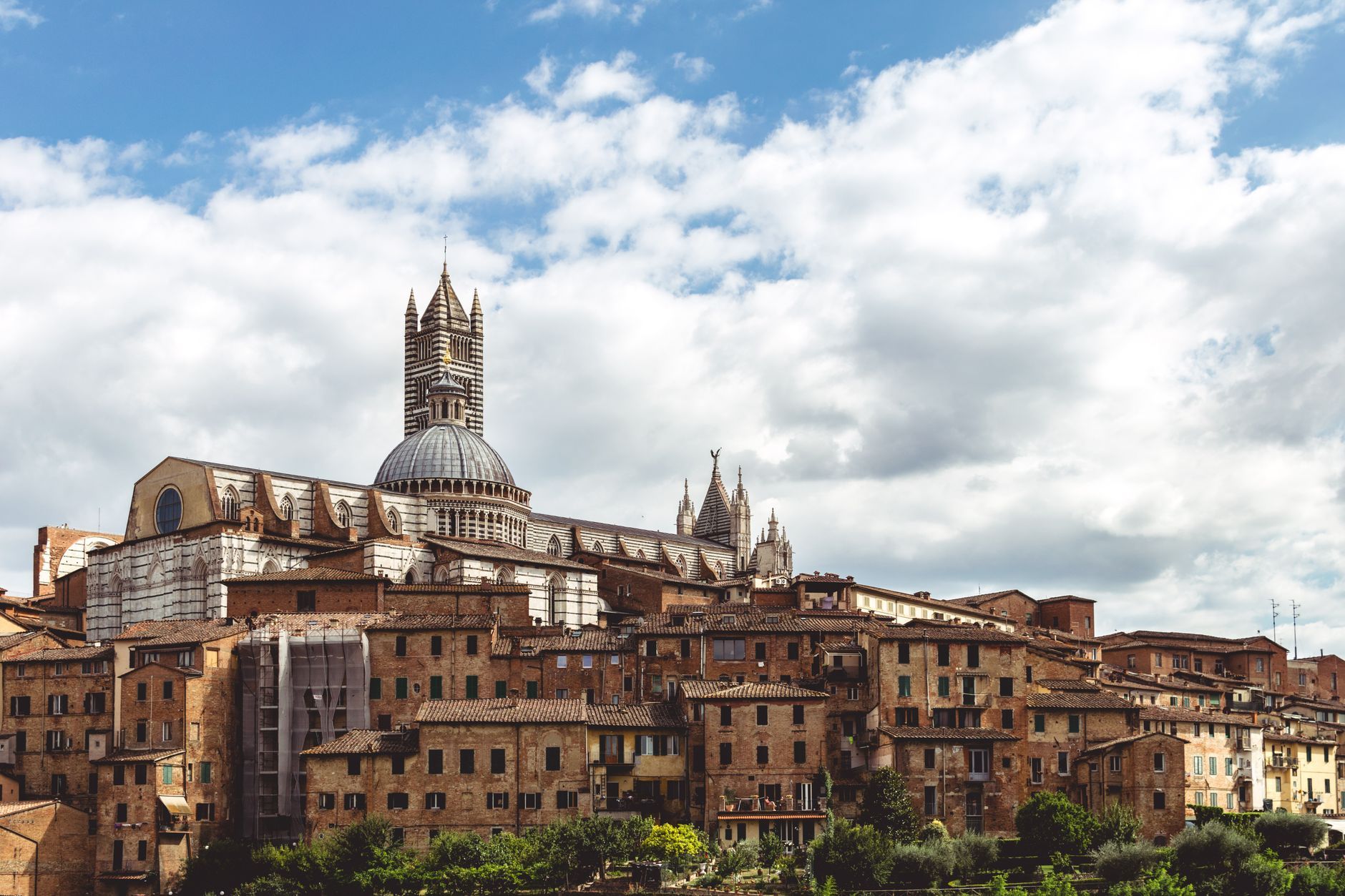
Florence and Siena were rivals for 300 years. Siena lost the banking wars but kept something Florence didn't: its medieval core completely intact. Walking into Piazza del Campo feels like stepping into the 14th century with better coffee.
Key attractions:
- Piazza del Campo — free. Shell-shaped piazza, one of Europe's finest medieval squares. Sit on the brickwork in the evening (after the crowds thin) and watch the city move. Twice a year (July 2, August 16), the Palio horse race fills it completely.
- Siena Cathedral (Duomo di Siena) — €8 basic entry, €15 OPA SI Pass (includes rooftop, crypt, baptistery). The inlaid marble floor is partially revealed October–January; rest of year covered for protection. Piccolomini Library inside: free with entry, extraordinary painted ceilings.
- Torre del Mangia — €10. 102m tower overlooking the Campo. 400+ steps, narrow staircase. Views worth it.
- Enoteca Italiana — free entry. National wine library inside a Medici fortress. Sample Tuscan wines by the glass, €3–8. Open afternoons.
Siena vs Florence:
Advertisement
Siena is smaller, quieter, and more liveable for a 2–3 day stay. Less museum overload. Better as a base for southern Tuscany (Val d'Orcia, Montepulciano) than Florence is. The food is also less touristy outside the Campo area.
How long: 1–2 days. Day trip from Florence possible (1.5h train/bus) but staying overnight reveals the quieter evening city.
Lucca: The Walled City
Lucca is one of Tuscany's best-kept secrets — or was, before it appeared on every "hidden gem" list. It's a Renaissance-era walled city where the walls themselves are wide enough for a tree-lined promenade. Rent a bike (€3/hr from shops near the gates) and do the full 4km circuit on top of the walls.
Key attractions:
- City Walls (Le Mura) — free to walk or cycle. 4km circuit on top of 16th-century walls, 12m wide, shaded by trees. Rent a bike at the gates for €3–5/hr. Allow 1–1.5 hours.
- Guinigi Tower — €4. Medieval tower with a rooftop garden of holm oak trees. Views over Lucca's rooftops. Narrow stairs.
- Piazza dell'Anfiteatro — free. Built over a Roman amphitheater, the oval shape preserved in the surrounding buildings. Cafés and aperitivo bars ring the square.
- San Martino Cathedral — €3. Houses the Volto Santo, a revered wooden crucifix. Gothic facade.
Lucca for day trips: Pisa is 30 minutes by train (€4). Easy to pair in a single day from Florence.
Advertisement
How long: half-day to 1 full day. Lucca day-trip from Florence is very doable.
San Gimignano: The Tower Town
San Gimignano is Tuscany's most photographed hill town — 14 medieval towers still standing from an original 72 (families competed by building taller). Best visited on a weekday to avoid weekend trip planner crowds. The Vernaccia di San Gimignano wine (Italy's first DOC white wine, 1966) is worth buying at a local enoteca.
Key attractions:
- Medieval Towers (Torre Grossa) — €9. Tallest surviving tower, excellent 360° views. Other towers visible from outside only.
- Collegiate Church (Duomo) — €4. Romanesque frescoes inside, completely covering the walls. 13th–15th century.
- Piazza della Cisterna — free. Central square with a 13th-century well. Most atmospheric in the evening after day-trippers leave.
- Wine tasting — €8–15 at local enotecas. Vernaccia is crisp and mineral — the right wine for warm Tuscan afternoons.
Getting there: No train to San Gimignano. Bus from Florence (1.5h, €6–8 return, change in Poggibonsi) or Siena (1h, €5–7). Car makes it much easier.
How long: half-day to 1 day. Stay overnight to experience the village after day-trippers leave — completely different atmosphere.
Advertisement
Pisa: Beyond the Tower
Most visitors do Pisa as a 3-hour day trip from Florence (1h by train, €10–15 return). That's the right call. The Leaning Tower is genuinely impressive up close; the rest of the city is a working university town with less tourist infrastructure than Florence or Siena.
Piazza dei Miracoli (Field of Miracles) — €5 entry (piazza only), €20 includes tower climb (book online — timed entry). Complex includes: Leaning Tower, Cathedral (Duomo, €5), Baptistery (€8), Camposanto cemetery (€8), or buy a combined ticket (€20–27).
Time needed: 2–3 hours for the whole complex. No need to overnight here.
Volterra: The Etruscan Hill Town
Volterra sits 550m above sea level, surrounded by eroded clay ravines (balze). Less visited than San Gimignano, more authentically Tuscan. Known for alabaster craftsmanship — the workshops have been here since Etruscan times.
Key attractions:
- Etruscan Museum (Museo Guarnacci) — €8. One of Italy's most important Etruscan collections. Bronze votive statue Ombra della Sera (Shadow of the Evening) is the standout piece.
- Piazza dei Priori — free. Medieval main square. Palazzo dei Priori (town hall) dates to 1208.
- Alabaster workshops — free to browse. Several along Via dei Sarti and Via Porta all'Arco. Unique locally-made souvenirs (€15–80 for pieces).
- Balze (clay ravines) — free. Walk to the edge of town for views of the eroded ravines swallowing the ancient Etruscan necropolis.
Getting there: 2h by bus from Florence (change in Colle di Val d'Elsa) or 1.5h from Siena. No train. Car much easier.
How long: half-day to 1 day.
Val d'Orcia: The Tuscan Countryside
The Val d'Orcia — the valley south of Siena — is the landscape from every Tuscany poster: rolling hills, lone cypress trees on ridgelines, medieval farmhouses, poppy fields in May. The whole valley is a UNESCO World Heritage Site (2004).
Key towns:
- Pienza — built to order by Pope Pius II in 1459 as a "perfect Renaissance city." One main street, beautiful views from the walls over the valley. Pecorino di Pienza cheese (aged in volcanic ash or walnut leaves) from the shops. Entry to walls free; Palazzo Piccolomini €7.
- Montalcino — hilltop town famous for Brunello di Montalcino, one of Italy's most prestigious red wines (€30–80/bottle retail, €6–15/glass at enotecas). Fortress (€4) overlooks the valley.
- Bagno Vignoni — tiny village with a thermal spa pool (15th-century) in the central piazza instead of a fountain. The pool itself is no longer swimmable (it's a monument) but thermal baths nearby: Posta Marcucci or Adler Terme (€25–40 for a day pass).
Getting around Val d'Orcia: Car strongly recommended. Bus connections exist but are infrequent (1–3/day). From Siena: Pienza 50km south (45 min car), Montalcino 40km south (40 min car).
Best time: May for wildflowers, September–October for harvest + golden light.
Chianti: The Wine Region
The Chianti Classico zone runs between Florence and Siena along the SS222 (Chiantigiana road) — one of Italy's most scenic drives. Sangiovese grapes, medieval villages, olive oil mills, wine estates with tastings.
Key stops:
- Greve in Chianti — market town, Piazza Matteotti (unusual triangular square), enoteca Falorni with 500+ Chianti wines. Wine tasting €10–20.
- Castellina in Chianti — small hill town with an Etruscan tunnel running under the main street. Wine estates nearby.
- Radda in Chianti — best preserved medieval village in the zone.
Wine estates open for tasting (book ahead):
- Badia a Coltibuono — tour + tasting €25–35
- Castello di Brolio (Ricasoli) — €15–20 tasting, estate open to walk around
- Antinori nel Chianti Classico — €20–30 tasting
Getting there: Car only for meaningful exploration. Greve accessible by SITA bus from Florence (1h, €5) but not ideal.
Best Time to Visit Tuscany
| Month | Weather | Crowds | Best For | Prices |
|---|---|---|---|---|
| Apr–May | 18–24°C, some rain | Moderate | Wildflowers, Val d'Orcia poppies | Mid |
| Jun | 25–28°C, sunny | Building | Long days, outdoor dining | Mid-high |
| Jul–Aug | 28–35°C, very hot | Peak | Palio (Jul 2, Aug 16), beach coast | High |
| Sep–Oct | 20–26°C, sunny | Moderate | Harvest, wine, golden light | Mid |
| Nov–Mar | 8–15°C, rainy | Low | Museums, truffle season (Oct–Dec), cheap | Low |
Best window: May–June and September–October. Warm, manageable crowds, full opening hours.
Getting Around Tuscany
Train: Florence–Siena (1.5h, €8–11), Florence–Lucca (1.5h, €7–10), Florence–Pisa (1h, €9–12). Trenitalia app for booking.
Bus (SITA/Tiemme): Florence–San Gimignano (1.5h, €6–8 via Poggibonsi), Florence–Volterra (2h, €8–12). For hill towns without train access.
Car: Essential for Val d'Orcia, Chianti, Volterra, and linking multiple hill towns in a day. €30–50/day from Florence or Siena airports. Driving in ZTL zones (restricted traffic) in historic centres will get you fined — check signs and park outside the walls.
Day trip feasibility from Florence:
- Siena: yes (1.5h each way)
- Lucca + Pisa: yes, both in one day (train, 1h each)
- San Gimignano: yes, but tight (3h round trip by bus)
- Volterra: possible but long day (4h round trip by bus)
- Val d'Orcia: needs a car or organised tour
FAQs: Tuscany
What is the most beautiful part of Tuscany? Val d'Orcia for landscapes — the cypress-lined ridge roads and Pienza viewpoint. For cities, Siena's Piazza del Campo rivals anything in Italy.
What not to miss in Tuscany? Florence Uffizi (pre-book), Siena's Piazza del Campo at dusk, cycling Lucca's walls, Vernaccia wine in San Gimignano, the Val d'Orcia from the Pienza viewpoint, Brunello tasting in Montalcino.
Where to go in Tuscany for the first time? Base in Florence (2–3 nights), take a day trip to Siena, another to Lucca + Pisa. If you have a fourth day, hire a car and drive Val d'Orcia or Chianti.
Siena or Florence — which is nicer? Depends what you want. Florence: world-class art, buzzing city, more international. Siena: medieval, slower, more authentically Italian. Both warrant 2+ nights. Don't choose — do both, 1.5h apart.
How many days do you need in Tuscany? 7–10 days to cover the highlights without rushing. 4–5 days covers Florence + 2–3 day trips. 3 days: Florence only with 1 day trip.
Is Tuscany expensive? Florence is mid-range Italy (meals €12–20, museums €10–25). Hill towns cheaper (meals €10–15). Car hire adds €30–50/day. Daily budget €80–130/person (mid-range).
Best base for southern Tuscany? Siena. Better positioned than Florence for Val d'Orcia, Montepulciano, Pienza, Montalcino (all within 1h by car).
📍 3 Days in Florence, Italy Travel Guide, Things to Do in Florence
Where to Buy the Florence Pass
Book the Florence city pass through Tiqets — instant confirmation, skip the queues:
- Book on Tiqets → — Best price, instant e-ticket
- Read my full Florence Pass review → — Is it worth it for your trip?
Book Your Trip
Locking in your Tuscany plans? Book tickets and experiences in advance through Viator — free cancellation on most bookings, so you can plan now and adjust later.
Save More
Save 5% on activities
Use code CHASINGWHEREABOUTS5 in the GetYourGuide app.
Book this exact experience in GetYourGuide appGet Travel Tips in Your Inbox
Join 5,000+ travelers. Get exclusive itineraries, honest reviews, and budget hacks once a week.
No spam. Only high-quality travel advice. Unsubscribe anytime.


