Disclosure: Chasing Whereabouts is reader-supported. This guide contains affiliate links to partners like Tiqets, GetYourGuide, Viator and Headout. If you make a purchase through these links, we may earn a small commission at no extra cost to you. This helps us continue providing free, first-hand travel guides. Thank you for your support!
Your camera's built-in microphone is sabotaging your travel vlogs. I learned this the hard way filming in a busy Frankfurt Christmas market — my Sony footage looked great but the audio was a disaster of wind noise and crowd roar. One external microphone changed that completely.
I've been testing vlogging microphones across European cities since 2022: markets in Prague, winding streets in Lisbon, windy viewpoints in Scotland. This guide covers what actually works for outdoor travel content — not studio podcasting, not desktop streaming — with real UK and US prices, connection types, and honest trade-offs between wireless and on-camera setups.
Quick Comparison: Best Microphones for Vlogging 2026
| Microphone | Type | Price (GBP) | Price (USD) | Battery Life | Best For |
|---|---|---|---|---|---|
| DJI Mic 2 (2-TX kit) | Wireless lavalier | ~£250 | ~$260 | 6h TX + 18h case | Travel vloggers, wireless freedom |
| Rode Wireless GO II | Wireless lavalier | ~£280 | ~$290 | 7h per unit | Reliable wireless, pro creators |
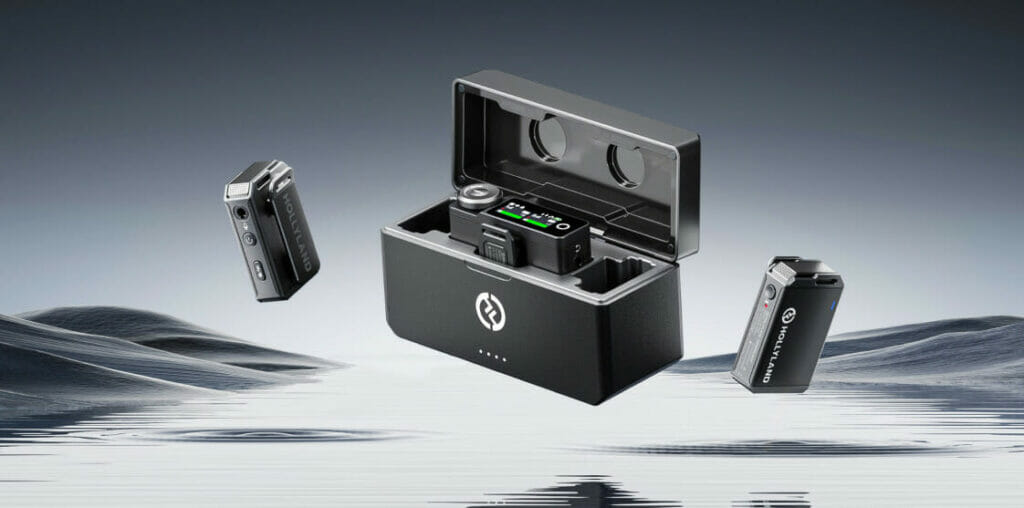
| Hollyland Lark M2 | Wireless lavalier | ~£150 | ~$160 | 8h TX | travel budget calculator wireless alternative |
| Rode VideoMic NTG | On-camera shotgun | ~£170 | ~$180 | USB rechargeable | Best hybrid on-camera |
| Sony ECM-B10 | On-camera shotgun | ~£120 | ~$130 | 8h | Best for Sony cameras |
| Rode VideoMicro II | On-camera shotgun | ~£70 | ~$80 | No battery needed | Budget travel, no-fuss setup |
| Sennheiser MKE 400 | On-camera shotgun | ~£170 | ~$180 | AA battery | Premium on-camera clarity |
Best Wireless Microphone for Vlogging: DJI Mic 2
Advertisement
Price: ~£250 / ~$260 (2-TX kit)
The DJI Mic 2 is the wireless microphone I use for my own travel content, and it's the one I recommend to anyone serious about outdoor vlogging.
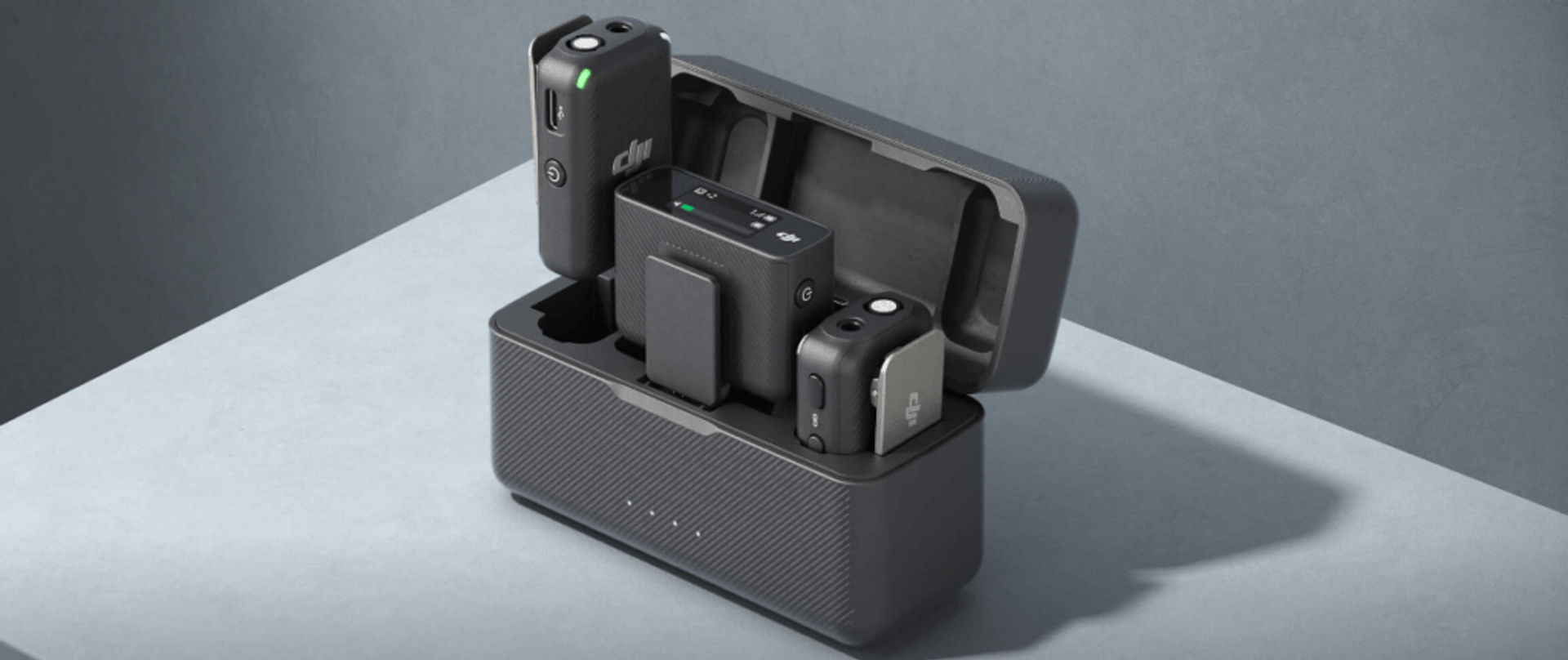
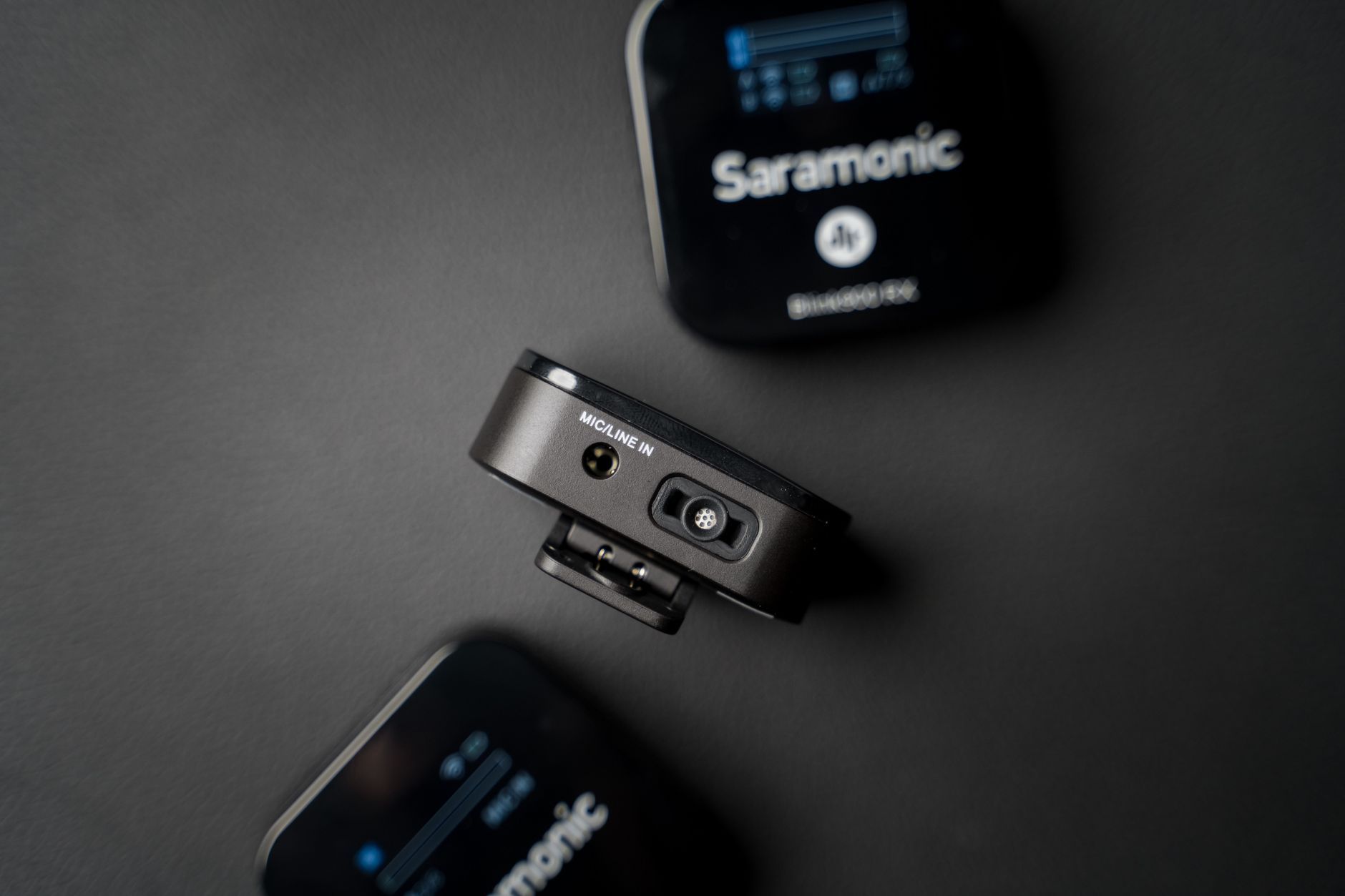
The transmitter clips magnetically to your clothing — no fumbling with pins, it just snaps on. Each transmitter records internally at 48-bit float, which means if your camera gain is off in a noisy environment, you have a backup recording that isn't clipping. The 250m wireless range covers any walking shot you'd need in a city.
The charging case gives you 18 hours of combined battery across multiple charges. That's three full shooting days without touching a wall outlet. The USB-C connector on the case means you can top it up from a power bank during a long travel day.
Connection options are thorough: USB-C, 3.5mm TRS, and Lightning — so it works with Sony/Canon/Fuji cameras, newer mirrorless bodies, iPhones, and Android phones. The receiver is compact enough to sit in a hot shoe or pocket.
Advertisement
Wind noise handling: the DJI Mic 2 comes with foam windshields for the transmitters. These handle light breeze, but you'll want the optional deadcat fur covers for anything windier — useful for coastal or hilltop shots.
What it doesn't have: no physical gain knob on the receiver (it's app-controlled), and the companion app is iOS/Android only, not desktop.
Verdict: The DJI Mic 2 is the best microphone for vlogging if your budget allows. The 2-TX kit lets you clip one on yourself and hand the second transmitter to an interview subject — genuinely useful for travel interview content.
Best Reliable Wireless Mic: Rode Wireless GO II
Price: ~£280 / ~$290
The Rode Wireless GO II has been the industry standard wireless clip-on system for several years, and for good reason — it's bulletproof.
Advertisement
The transmitters record internally to onboard storage. If the wireless signal drops near tall buildings (rare at 200m range, but it happens), you don't lose the take. The receiver shows signal strength in real-time. Seven hours of battery per transmitter is enough for most full shooting days.
The Wireless GO II connects to cameras via 3.5mm cable, and Rode sells adapters for Lightning and USB-C. Transmitters can also be used without a receiver for pure internal recording — useful for clip-on lavalier situations where you're far from your camera.
Rode vs DJI Mic 2: the Rode is slightly bulkier, lacks the charging case (you charge each unit separately), and doesn't have 48-bit float. But the Rode ecosystem (accessories, deadcat covers, extension cables) is extensive and well-supported. If you already have Rode gear, the GO II fits seamlessly.
For new buyers in 2026, the DJI Mic 2 offers better value at a slightly lower UK price. The Rode Wireless GO II is the better choice if you need proven reliability for professional or commercial shoots where consistency matters more than convenience.
Best Budget Wireless Mic: Hollyland Lark M2
Price: ~£150 / ~$160
Advertisement
The Hollyland Lark M2 is the wireless lavalier I'd recommend to travel vloggers who want wireless freedom without the DJI or Rode price tag.
It's a dual-channel wireless system with 8 hours of transmitter battery and a clean, compact receiver that sits in the hot shoe. Sound quality is solid for YouTube-level travel content. The transmitters have a built-in omnidirectional condenser capsule and a basic windscreen — adequate for light outdoor use.
What it lacks compared to DJI Mic 2: no internal recording backup, no 48-bit float, and the ecosystem (deadcats, accessories) is smaller. The companion app is functional but less polished than DJI's.
Who it's for: budget-conscious travel vloggers who want wireless clip-on audio and don't need the redundancy features of the DJI or Rode systems.
Best On-Camera Shotgun Mic: Rode VideoMic NTG
Price: ~£170 / ~$180
Advertisement
The Rode VideoMic NTG is the best hybrid on-camera shotgun microphone for vlogging — it works with cameras via 3.5mm hot shoe mount AND connects via USB-C directly to computers, making it a dual-purpose travel tool.
USB rechargeable battery eliminates the need to carry AA batteries. It has a high-pass filter, pad, and gain controls built in, plus a safety channel that records a -20dB backup signal. The supercardioid polar pattern rejects side and rear noise effectively.
At ~£170 / $180, it sits in a price bracket where you could alternatively choose wireless. But if you prefer on-camera audio — for reliability, simplicity, or aesthetic reasons — the VideoMic NTG is the most versatile shotgun in this category.
Best On-Camera Mic for Sony Shooters: Sony ECM-B10
Price: ~£120 / ~$130
The Sony ECM-B10 is the on-camera shotgun I'd recommend specifically for Sony camera users. It sits in the Multi-Interface Shoe of Sony bodies (a7C, ZV-E10, FX30, ZV-E1), draws power directly from the camera, and integrates seamlessly — no cables, no separate battery.
It's a beamforming microphone with five capsules that can be switched between multiple directional modes: wide, standard, narrow, and manual. The narrow setting works well for isolating your voice in noisy environments. Eight hours of battery via the camera shoe.
Compared to the Sony ECM-M1 (~£349), the ECM-B10 gives you 80% of the performance at a third of the price. For Sony shooters who don't need full mid-side spatial audio, it's the smarter buy.
Note: the ECM-B10 is Sony-specific. If you shoot Canon, Fuji, or Panasonic, look at the Rode VideoMicro II or VideoMic NTG instead.
Best Budget On-Camera Mic: Rode VideoMicro II
Price: ~£70 / ~$80
The Rode VideoMicro II is the mic I'd put in a beginner's kit alongside a Sony ZV-E10 or Canon M50. No batteries, no wireless setup — plug the 3.5mm TRS cable into your camera's mic input and it works immediately from bus power.
It's supercardioid, which means ambient noise from the sides and rear is significantly reduced. Walking through a crowded city market with this mic mounted on a hot shoe, your voice stays cleaner than any built-in camera mic can manage.
The VideoMicro II replaced the original VideoMicro with a Rycote Lyre shock mount built in, reducing handling noise from camera grips and stabilizer vibration — that matters for handheld travel shooting.
Limitations: no internal recording backup, no wireless freedom, and no deadcat included in the box. Spend £10-15 on a third-party deadcat fur cover if you're shooting in wind.
For the full Sony ZV-E10 and ZV-1 mic pairing guide, see my Sony ZV-1 and ZV-E10 microphone recommendations.
Best Premium On-Camera Option: Sennheiser MKE 400
Price: ~£170 / ~$180
The Sennheiser MKE 400 Mobile Kit is the best on-camera shotgun microphone for vloggers who prioritize audio clarity above all else. Sennheiser's supercardioid capsule design delivers noticeably cleaner audio than most competitors at this price — it's the mic audio engineers tend to recommend for on-camera work.
It runs on a single AA battery (included), has a built-in shock mount, and includes a foam windscreen and deadcat cover in the box. The tight pickup pattern is excellent for isolating your voice in busy environments.
The MKE 400 works with cameras via 3.5mm and includes a TRS-to-TRRS cable for smartphones. At the same price as the VideoMic NTG, the choice comes down to audio quality (MKE 400 wins) versus flexibility (VideoMic NTG's USB mode wins).
Best Microphones for Travel Vlogging Specifically
Travel vlogging has unique audio requirements that differ from indoor or studio vlogging:
Wind noise is constant. Cities, coastal locations, mountain viewpoints — real travel means outdoor audio with variable wind. Any microphone you choose needs either fur windshield coverage or the option to add one.
Compact size matters. You're carrying a camera bag across airports and city streets. Mics that add significant bulk or require carrying separate battery packs become friction.
Wireless freedom is a genuine advantage. Walking shots, filming yourself entering a location, turning to face a view — these all work better with a clip-on transmitter than a cable-dependent on-camera mic.
Recommended travel vlogging microphones by priority:
- DJI Mic 2 (~£250/$260) — best overall for travel. Magnetic clip, 18h charging case, 250m range, 48-bit float backup. Add DJI's deadcat covers before outdoor shoots.
- Hollyland Lark M2 (~£150/$160) — budget wireless for travel. Lighter ecosystem but solid core performance.
- Rode VideoMicro II (~£70/$80) — best travel on-camera shotgun. No batteries to manage, compact, reliable.
- Sony ECM-B10 (~£120/$130) — for Sony shooters. Draws power from the shoe, no cables, beamforming modes for noisy streets.
What to avoid for travel vlogging: large side-address USB microphones (Blue Yeti, Shure MV7), non-rechargeable mics without AA alternatives, and clip-on systems with short wireless range below 50m.
Wireless vs On-Camera: Which Microphone Type Should You Choose?
Wireless lavalier (clip-on): Best for walking-and-talking content where you're the subject on camera. The transmitter clips to your shirt or jacket, you move freely, and the audio follows you without depending on camera-to-mouth distance. Main risk: wind noise hits lavaliers directly at chest level. Always use deadcat windshields outdoors.
On-camera shotgun: Best for sit-down content, point-of-view shots, and situations where you don't want to deal with transmitter pairing. The mic points at you from the camera hotshoe. Works well for controlled environments. Less ideal for handheld walking shots where camera distance to your mouth changes constantly.
On-camera USB (Blue Yeti, Shure MV7): Desktop-only. Not travel gear. Excellent for desk-based vlogging, podcasting, and voiceover recording but they require a tripod desk setup to function properly.
For outdoor travel vlogging, wireless wins. You can film yourself walking into frame, talking to locals, or using a selfie stick without worrying about a cable. The DJI Mic 2 is the travel-first choice.
Microphone Polar Patterns Explained
Understanding polar patterns helps you choose the right mic for different shooting environments:
- Supercardioid (Rode VideoMicro II, Rode VideoMic NTG, Sennheiser MKE 400): Tight directional pickup from the front, rejects sides and rear. Best for noisy outdoor environments — isolates your voice well in busy streets and markets.
- Cardioid (most lavalier capsules): Wider pickup from the front, some rear rejection. Works well for on-body clip-on use where you're always facing the capsule.
- Omnidirectional (many lavalier mics): Picks up equally from all directions. Used in broadcast lavaliers where the mic is hidden under clothing — the clothing acts as a natural windscreen. Less useful for exposed outdoor positions.
- Beamforming (Sony ECM-B10): Multiple capsules working together to create a digitally controlled directional pattern. Can be switched between wide and narrow pickup depending on the environment.
For travel vlogging in noisy outdoor environments, supercardioid or switchable beamforming patterns give you the best voice isolation.
Connection Types: What Works With Your Camera
Getting the connection type wrong is the most common beginner mistake when buying a vlogging microphone:
- 3.5mm TRS: Works with most cameras — Sony, Canon, Fuji, Panasonic. The Rode VideoMicro II, VideoMic NTG, and Sennheiser MKE 400 use this natively. Wireless systems include a 3.5mm receiver cable.
- USB-C: For smartphones and newer cameras like the Sony ZV-1 II. DJI Mic 2 supports USB-C on the receiver.
- Lightning: iPhones. DJI Mic 2 includes a Lightning adapter.
- Multi-Interface Shoe (Sony): Sony's proprietary hot shoe passes digital audio and power. The Sony ECM-B10 uses this — no cable needed on compatible Sony bodies.
- USB-C direct to laptop: The Rode VideoMic NTG doubles as a USB microphone for voiceover recording at a desk.
Check your camera's inputs before buying. Most mirrorless bodies (Sony ZV-E10, Canon R50, Fuji X-T5, Panasonic G9) have a 3.5mm mic input — most wireless systems and on-camera mics support this. If your camera lacks a 3.5mm jack, check for USB-C audio support or Multi-Interface Shoe.
Wind Noise: The Biggest Problem for Outdoor Vlogging
Wind noise is the number one audio problem for travel vloggers shooting outdoors. Cities are windier than you expect — even light breezes at ground level cause mic distortion.
Wireless lavalier: Hide the transmitter under your outer layer. The fabric acts as a windscreen. For exposed clip positions, buy the deadcat covers specific to your system (DJI's covers cost ~£12-15, Rode's around £18).
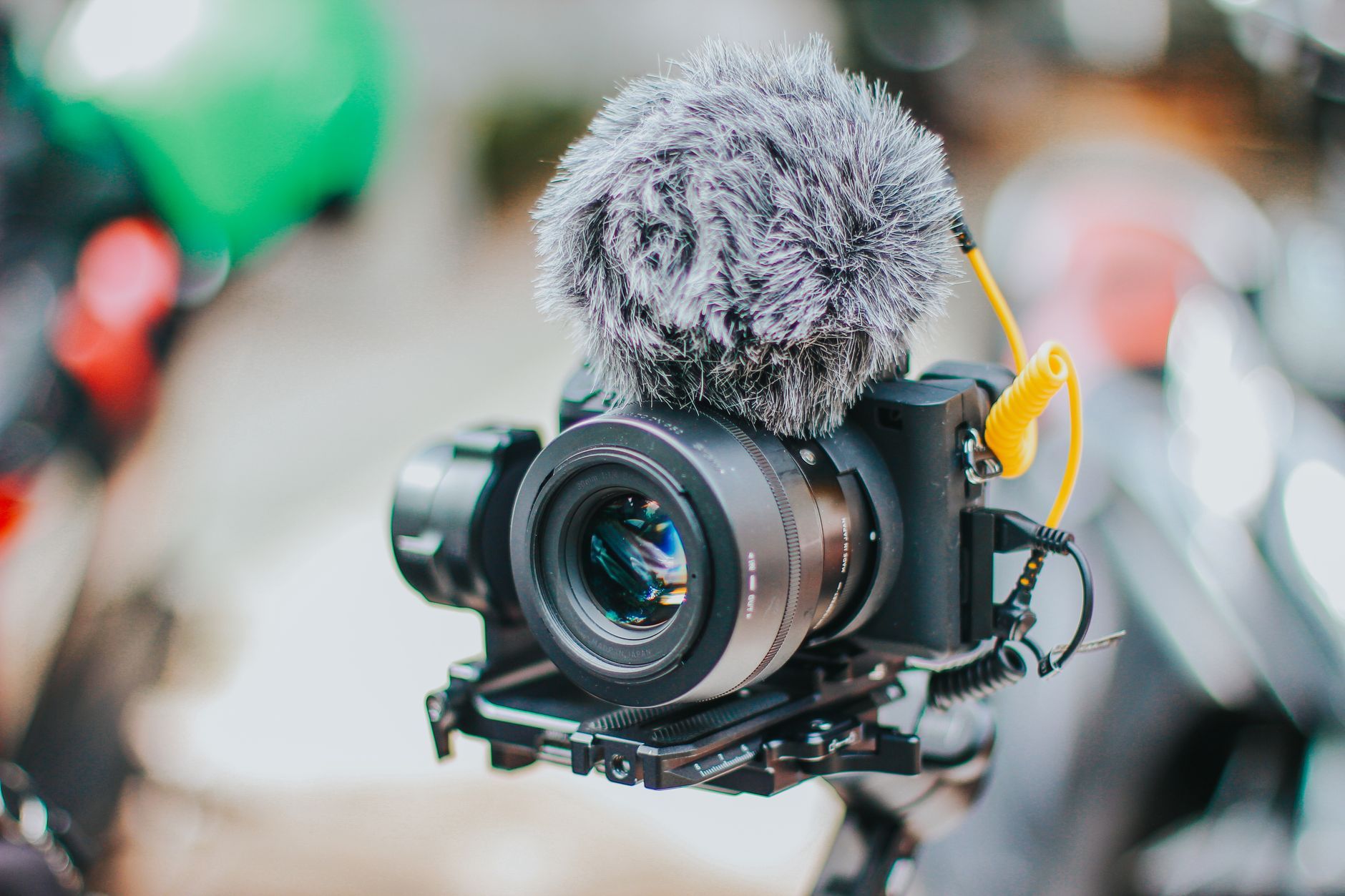
On-camera shotgun: Foam windshields (included with most mics) handle light breeze. For real wind — coastal cliffs, mountain passes, open plazas — buy a furry deadcat for your specific mic model.
Test before key shoots. At a windy location, run 30 seconds of audio and listen back through headphones or earphones. If you hear consistent low rumble or rushing noise, you need more wind protection. This is a quick check worth doing before any outdoor travel shoot.
Recording tip: many cameras have a built-in low-cut filter (also called a wind filter or wind noise reduction). Enable this in your camera's audio menu as a secondary layer on top of physical wind protection — it rolls off low-frequency wind rumble in post.
What Microphones Do Professional Vloggers and YouTubers Use?
Most serious travel YouTubers use wireless lavalier systems, not on-camera shotguns.
The Rode Wireless GO II was standard kit for years. The DJI Mic series (Mic, Mic 2, Mic Mini) has taken significant market share since 2022 due to the magnetic clip, 48-bit float recording, and charging case. For sit-down YouTube content, the Shure MV7 and Blue Yeti are popular USB mics — but these are studio/desk setups, not travel gear.
The typical professional travel vlogging audio setup in 2026 is: wireless clip-on (DJI Mic 2 or Rode Wireless GO II) for walking content, on-camera shotgun for A-roll interview setups, USB mic for voiceover narration at a desk.
Budget creators starting out often begin with the Rode VideoMicro II or similar on-camera shotgun, then upgrade to wireless once they're committed to the format.
Do Vlogging Mics Work With Smartphones?
Yes, but check the connection:
- DJI Mic 2: USB-C and Lightning adapters included in the box. Works with iPhones (Lightning and USB-C models) and Android phones with USB-C ports.
- Rode Wireless GO II: Ships with 3.5mm TRS cable. Works with Android phones with 3.5mm input. For iPhones, you need Apple's Lightning to 3.5mm adapter.
- Hollyland Lark M2: 3.5mm and USB-C connections. Works with Android phones directly and newer USB-C iPhones.
- Sennheiser MKE 400: Includes a TRS-to-TRRS cable for smartphone use.
If you're filming primarily on a smartphone, the DJI Mic 2's all-in-one adapter kit is the most convenient setup. The magnetic clip also works well on smartphone cases and rig handles.
Best Microphone for Vlogging: Recommendation by Budget
Under £80 / Under $80: Rode VideoMicro II. On-camera shotgun, no batteries, clean directional audio. Not wireless, but reliable and simple for on-camera travel content.
Under £160 / Under $160: Hollyland Lark M2. Wireless dual-channel system with 8h battery. The jump from on-camera to wireless is significant for walking vlog content.
£150-£200 / $160-$200: Rode VideoMic NTG. Best hybrid on-camera mic — shotgun plus USB audio for desk voiceover. Great for creators who want one mic for both travel and studio work.
£250+ / $260+: DJI Mic 2 (2-TX kit). For serious travel content creators, this is the 2026 pick — 48-bit float, charging case, magnetic clip, and 250m range make it the most convenient wireless travel mic available.
For gimbal pairings (since a stabilized shot is what makes wireless walking content look professional), see my best gimbal guide and the smartphone gimbals roundup.
FAQs: Best Microphones for Vlogging
What is the best vlogging microphone?
For most travel vloggers, the best vlogging microphone is the DJI Mic 2 (£250/$260) — it's wireless, clips on in seconds, and its 48-bit float recording means a botched gain setting on your camera doesn't ruin the take. If £250 is too much, the Rode VideoMicro II (£70/$80) is the best budget pick: no batteries, no pairing, just plug it into your camera's 3.5mm port. I use both depending on the shoot — DJI Mic 2 for walking content, VideoMicro II when I want a lighter kit.
What's a good vlogging microphone if I'm just starting out? The Rode VideoMicro II is the good vlogging microphone to start with. At ~£70/$80 it's cheap enough that a beginner mistake doesn't sting, it's bus-powered so there's nothing to charge, and the supercardioid pattern cuts enough ambient noise to sound professional on YouTube. Once you're shooting daily and walking-and-talking content becomes the norm, that's when the jump to a wireless system like the Hollyland Lark M2 or DJI Mic 2 pays off.
What are good microphones for vlogging on different budgets? It splits into three tiers. Under £80: Rode VideoMicro II, on-camera, no batteries. Around £150-£160: Hollyland Lark M2, wireless dual-channel. £250+: DJI Mic 2, the best vlog microphone if you want 48-bit float and a charging case. I'd skip the £150-£200 middle tier (Rode VideoMic NTG, Sennheiser MKE 400) unless you specifically need the USB hybrid mode or the cleanest possible on-camera audio.
What's a good mic for vlogging outdoors specifically? Outdoors, wind is the real enemy, not just background noise. A good mic for vlogging outside needs either a lavalier you can hide under a jacket (DJI Mic 2, Rode Wireless GO II) or a shotgun with a proper deadcat cover, not just the stock foam windshield. I've had the DJI Mic 2 handle a windy Scottish viewpoint fine with its fur cover on — the same shot with just foam produced unusable rumble.
What's the best microphone for a vlog camera versus a smartphone? For a dedicated vlog camera (Sony ZV-E10, Canon R50, Fuji X-T5), any mic with a 3.5mm TRS connection works — that covers the Rode VideoMicro II, VideoMic NTG, Sennheiser MKE 400, and the receivers on DJI Mic 2 and Rode Wireless GO II. Sony shooters get an extra option: the Sony ECM-B10 mounts straight into the Multi-Interface Shoe with no cable. If you're filming on a phone instead, skip the shotguns and go wireless — DJI Mic 2's USB-C/Lightning adapters make it the simplest microphone for vlog camera-to-smartphone switching.
What mic do most vloggers use? Most travel vloggers use wireless clip-on (lavalier) systems, primarily the DJI Mic 2 or Rode Wireless GO II. For budget creators starting out, on-camera shotgun mics like the Rode VideoMicro II are the entry point at ~£70/$80. USB mics (Blue Yeti, Shure MV7) are popular for studio YouTubers but aren't travel gear — they require a desk setup.
What is the best microphone for TikTok? For TikTok shot on a smartphone, the DJI Mic 2 is the best option — it clips to your shirt, connects via USB-C or Lightning, and gives you clear audio even in noisy outdoor environments. At ~£250/$260 for the 2-TX kit it's the premium pick. For budget smartphone TikTok audio, the Hollyland Lark M2 at ~£150/$160 delivers wireless clip-on audio at a lower price.
What is the best cheap microphone for vlogging? The Rode VideoMicro II (~£70/$80) is the best cheap microphone for vlogging. It's bus-powered via 3.5mm (no batteries), has a supercardioid polar pattern that rejects side and rear noise, and includes a Rycote Lyre shock mount to reduce handling vibration. For ultra-budget wireless, the Hollyland Lark M2 at ~£150/$160 is the cheapest wireless system worth recommending.
Can I use a wireless mic with a DSLR or mirrorless camera? Yes. The DJI Mic 2 and Rode Wireless GO II both have receivers that plug into a camera's 3.5mm mic input, which most DSLRs and mirrorless bodies include (Sony a7C, Canon R50, Fuji X-T5, Panasonic G9). Check your camera body's inputs. If it has a 3.5mm mic port, any wireless system in this guide will work.
What is the 3:1 rule for mics? The 3:1 rule applies when using multiple microphones simultaneously — each mic should be positioned at least three times further from the other mics than from its own sound source. This prevents phase cancellation when mixing two audio sources. For vlogging (typically one mic), it doesn't apply directly, but it's relevant if you're filming interviews with two lavaliers or mixing a camera mic with a clip-on.
Do wireless microphones work with Sony cameras? Yes. The DJI Mic 2 and Rode Wireless GO II both connect to Sony cameras via the 3.5mm TRS mic input on most Sony mirrorless bodies. Sony cameras with Multi-Interface Shoe (a7C, ZV-E1, FX30, ZV-E10) also support the Sony ECM-B10 (~£120/$130) for full digital integration with no cables needed. For specific Sony model pairing, see my mic guide for Sony ZV-1 and ZV-E10.
What's the difference between a lavalier and shotgun microphone for vlogging? A lavalier (clip-on) attaches to your clothing and records from chest level — ideal for wireless walking content since it moves with you. A shotgun mic mounts on your camera and points at you from wherever the camera is — better for sit-down setups or controlled environments. Outdoor travel vlogging favours wireless lavaliers. In-studio or desk-based vlogging favours shotguns or USB mics.
Is battery life important for travel vlogging microphones? Yes, especially for full-day shooting. The DJI Mic 2 transmitters run 6 hours individually, plus 18 hours total with the charging case — enough for multi-day trips with top-up charges from a power bank. The Rode Wireless GO II gives 7 hours per unit. The Hollyland Lark M2 gives 8 hours per transmitter. On-camera shotguns like the Rode VideoMicro II require no battery at all (bus-powered via 3.5mm). Bring a small power bank if you're on an all-day shoot.
What microphone should I buy for YouTube travel videos?
For YouTube travel videos, the DJI Mic 2 (£250/$260 for 2-TX kit) is the best all-around choice in 2026 — it handles walking shots, interviews, and noisy outdoor environments well. If budget is tight, start with the Rode VideoMicro II (£70/$80) for on-camera audio, then upgrade to wireless when you're ready to level up your production quality.
How do I reduce wind noise when vlogging outdoors? Use a furry deadcat windscreen over your microphone — foam windshields alone don't handle real outdoor wind. For wireless lavaliers, clip the transmitter under your outer layer so clothing acts as a natural windscreen. Enable your camera's built-in low-cut filter (wind noise reduction) in audio settings for an additional layer of wind rumble reduction.
City Passes — Where to Book
Save on attraction entry with official city passes, booked through Tiqets (instant e-ticket):
- Lisbon: Book on Tiqets → · Full review →
- Prague: Book on Tiqets → · Full review →
Save More
Save 5% on activities
Use code CHASINGWHEREABOUTS5 in the GetYourGuide app.
Book this exact experience in GetYourGuide appGet Travel Tips in Your Inbox
Join 5,000+ travelers. Get exclusive itineraries, honest reviews, and budget hacks once a week.
No spam. Only high-quality travel advice. Unsubscribe anytime.