Disclosure: Chasing Whereabouts is reader-supported. This guide contains affiliate links to partners like Tiqets, GetYourGuide, Viator and Headout. If you make a purchase through these links, we may earn a small commission at no extra cost to you. This helps us continue providing free, first-hand travel guides. Thank you for your support!
🇪🇺 This guide is part of our comprehensive Europe Travel Guide.
Athens is one of the most historically dense cities on earth. Within a 2km radius of Syntagma Square you can walk through 3,000 years of continuous human civilisation — Classical Greek temples, Roman forums, Byzantine churches, Ottoman mosques, and 19th-century neoclassical architecture, all layered on top of each other.
I stood on the Acropolis in August. It was 37°C by 10am and the exposed limestone path was already wall-to-wall people from the cruise ships. The heat was brutal, the crowds real. I also thought it was one of the most extraordinary places I'd ever been. That's the honest framing for Athens's tourist attractions: most of them are genuinely world-class, and most of them need some navigation to get right.
This Athens guide covers the best things to see at the monuments and archaeological sites — the ancient ruins, museums, and landmarks that define ancient Athens for first-time visitors. For broader activities (food tours, neighbourhoods, day trips), see the Best Things to Do in Athens.
Advertisement
Combo ticket note: The €30 Athens Archaeological Combo covers 7 sites — Acropolis, Ancient Agora, Roman Agora, Temple of Olympian Zeus, Kerameikos, Hadrian's Library, and Lykeion. Buy it at any included site. Valid 5 days from first use.
Athens Tourist Attractions: Quick Reference
| Attraction | Neighbourhood | Entry | Time Needed | Book Ahead? |
|---|---|---|---|---|
| Acropolis | Acropolis / Plaka | €20 / combo | 2–3h | Yes (summer) |
| Acropolis Museum | Makriyianni | €15 | 1.5–2h | No |
| Ancient Agora | Thissio | €10 / combo | 1.5–2h | No |
| National Archaeological Museum | Exarchia | €15 | 2–3h | No |
| Temple of Olympian Zeus | Mets | €6 / combo | 30–45min | No |
| Roman Agora & Tower of the Winds | Monastiraki | €6 / combo | 30–45min | No |
| Panathenaic Stadium | Pangrati | €10 | 45min | No |
| Kerameikos | Kerameikos | €8 / combo | 1h | No |
| Syntagma & Changing of the Guard | Syntagma | Free | 20–30min | No |
| Hadrian's Library | Monastiraki | combo only | 20min | No |
| National Garden | Syntagma | Free | 45min | No |
1. The Acropolis
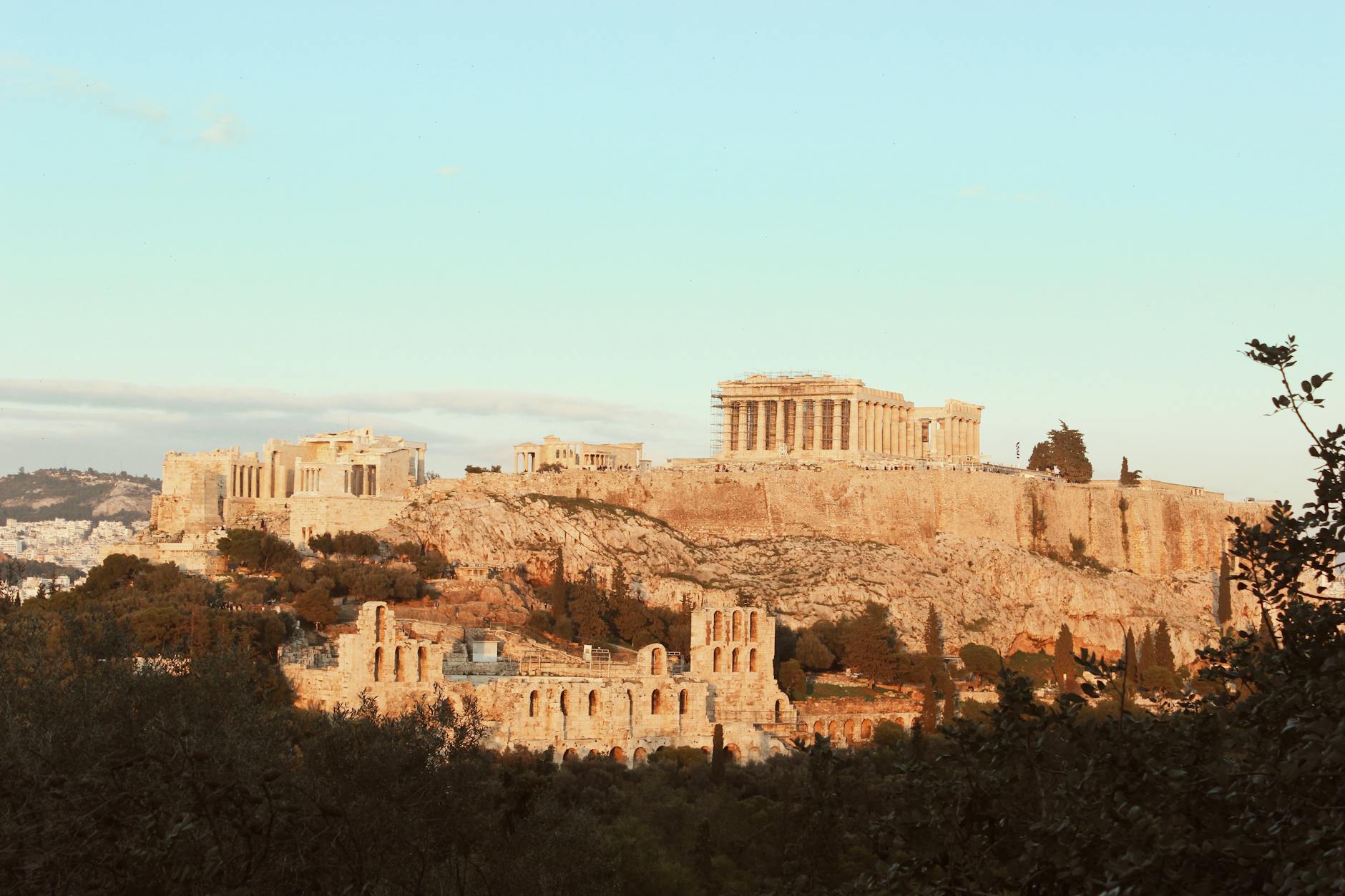
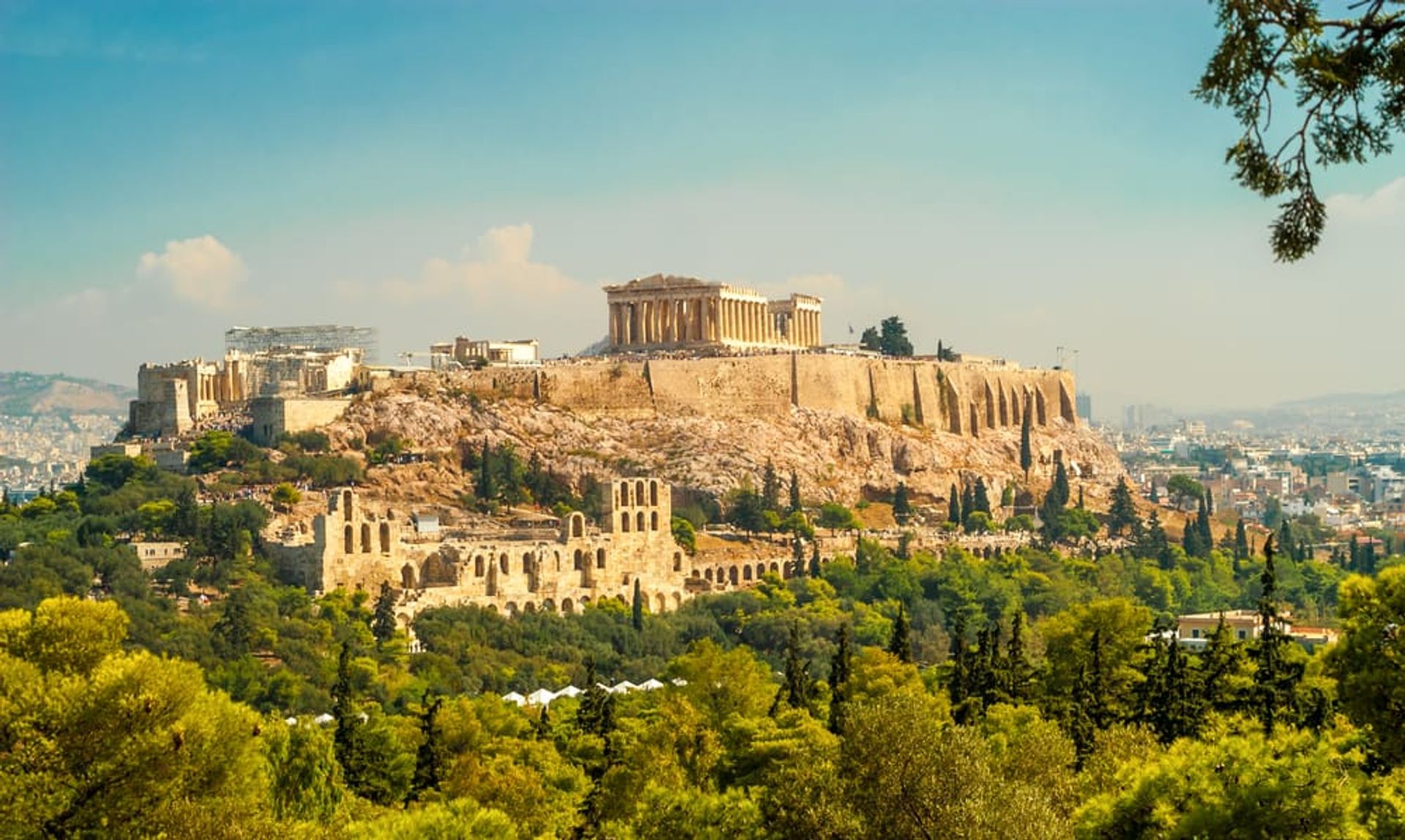
The Acropolis is Athens. Every other tourist attraction exists in its shadow — literally. The flat-topped limestone hill holds five distinct ancient structures dating from the 5th century BC, and the views from the summit take in the full sprawl of Athens down to Piraeus and the Saronic Gulf.
The main structures on the hill:
- Parthenon (447–432 BC): The most photographed ruin in the world, currently under ongoing restoration — expect scaffolding on the east end, but the scale is still overwhelming.
- Erechtheion (421–406 BC): The temple with the famous Porch of the Maidens (caryatids). The figures you see are casts — originals are in the Acropolis Museum.
- Temple of Athena Nike (420 BC): Compact Ionic temple on the southwest bastion, one of the best-preserved structures on the hill.
- Propylaea: The monumental gateway entrance to the hill, flanked by wings that once held a picture gallery.
- Odeon of Herodes Atticus: Roman-era concert hall at the base of the south slope, still used for performances during the Athens Festival (June–October). Exterior visible from the path.
Entry: €20 adult. Winter (Nov–Mar): €10. Included in the €30 combo.
Hours: 8am–8pm (Apr–Oct); 8am–5pm (Nov–Mar).
Metro: Line 2 (Red) → Acropolis station. 10-minute uphill walk from the exit.
Tip: Arrive at 8am — cruise passengers don't arrive until 10am and the heat is manageable. In summer, avoid 10am–4pm on the exposed hill entirely.
2. Acropolis Museum
Opened in 2009, one of the finest purpose-built archaeology museums in the world. The building is designed to show what was found on the Acropolis hill — and to remind you constantly of what's missing. The top-floor Parthenon gallery is aligned precisely with the temple on the hill 300 metres away, with deliberate empty spaces where the Elgin Marbles would sit.
Advertisement
The ground floor gallery is built over excavated ancient ruins, visible through glass panels underfoot. The entrance level has Archaic kouros and kore statues from before the Persian destruction of Athens in 480 BC. The first floor has the caryatid statues from the Erechtheion — 5 of 6 originals are here, the 6th is in the British Museum.
Entry: €15 adult. Free on the first Sunday of each month (Nov–Mar only).
Hours: Tue–Sun 9am–8pm (Fri until 10pm); closed Monday.
Metro: Line 2 → Acropolis, 5-minute walk southeast on Dionysiou Areopagitou.
3. Ancient Agora of Athens
The Agora was the commercial and civic heart of ancient Athens for over a thousand years — where Socrates taught, where citizens voted, and where Athenian democracy functioned. Today it's the second most important archaeological site in Athens and significantly less crowded than the Acropolis.
Temple of Hephaestus: On the northwest rise, this is the best-preserved ancient temple in Greece — more complete than the Parthenon, with most of the roof intact. Most visitors walk past it without appreciating how unusual that is.
Stoa of Attalos: A full-length reconstructed ancient shopping arcade (2nd century AD, rebuilt in the 1950s) that now serves as a museum. Artefacts inside — voting tokens, terracotta figurines, bronze coins — give the site human scale.
Advertisement
Entry: €10 individual / included in €30 combo.
Hours: 8am–8pm (summer); 8am–5pm (winter).
Metro: Line 1 (Green) → Thissio, 5-minute walk east.
4. National Archaeological Museum
One of the most important museums in the world — the most comprehensive collection of ancient Greek artefacts in existence. The building is an 1866 neoclassical structure north of the city centre, consistently undervisited relative to its importance.
Three things you must see:
- Mask of Agamemnon (Room 4): Gold death mask from Mycenae, 16th century BC. Schliemann believed it was Agamemnon's. Almost certainly not. Still extraordinary.
- Antikythera Mechanism (Room 38): Recovered from a 1st-century BC shipwreck. An ancient analogue computer that calculated astronomical positions. No one has fully explained how ancient Greeks built it.
- Bronze Statue of Zeus or Poseidon (Room 15): 2-metre bronze figure, 450 BC, arm raised to throw a thunderbolt or trident. Whether it depicts Zeus or Poseidon remains unsettled.
Entry: €15 adult. €8 Nov–Mar. Free on the first Sunday of each month.
Hours: Tue–Sun 9am–4pm (check for extended summer hours); Mon 1pm–8pm.
Metro: Line 2 (Red) → Victoria station, 10-minute walk south.
5. Temple of Olympian Zeus
Construction started in 515 BC under the tyrant Peisistratos and wasn't finished for 638 years — completed by Roman Emperor Hadrian in 131 AD. When complete, it had 104 Corinthian columns, each 17 metres high. Fifteen remain standing. One column fell in an 1852 storm and lies exactly where it landed.
Advertisement
Hadrian's Arch — the Roman triumphal gateway built to mark the boundary between ancient Greek Athens and Hadrian's new Roman city — stands immediately adjacent. Free to view from the street.
Entry: €6 individual / included in €30 combo.
Hours: 8am–8pm (summer); 8am–5pm (winter).
Metro: Line 2 → Acropolis, 10-minute walk east. Often combined with the Panathenaic Stadium (10 minutes further).
6. Roman Agora and Tower of the Winds
The Roman Agora was built between 19–11 BC, funded by Julius Caesar and Augustus. The main structure is the Gate of Athena Archegetis (intact). Inside, the Tower of the Winds (Horologion of Andronikos Kyrrhestes) is the most important.
The Tower of the Winds is a 1st-century BC octagonal marble clocktower — the world's first meteorological station. It served simultaneously as a sundial, water clock, and weather vane, with relief carvings of the eight wind deities on each face. It's remarkably intact and most visitors spend only 10 minutes here.
Entry: €6 individual / included in €30 combo.
Hours: 8am–8pm (summer); 8am–5pm (winter).
Metro: Line 1/2 → Monastiraki, 3-minute walk east.
Advertisement
7. Panathenaic Stadium (Kallimarmaro)
The world's only stadium built entirely from white Pentelic marble, seating 50,000 people. The original structure dates to 330 BC; rebuilt for the first modern Olympic Games in 1896 and served as the marathon finish line for the 2004 Athens Olympics.
You can run on the track and stand in the starting blocks. The view from the upper tiers takes in the Acropolis and the National Garden.
Entry: €10 adult. Includes audio guide and Olympic Museum access.
Hours: 8am–7pm (Mar–Oct); 8am–5pm (Nov–Feb).
Metro: Line 3 (Blue) → Evangelismos, 15-minute walk south.
8. Plaka, Anafiotika, and Views of the Acropolis
Plaka is the oldest residential neighbourhood in Athens — built over the ancient city on the north and east slopes of the Acropolis. It's the most tourist-dense neighbourhood in the city, which hasn't completely killed its character. The main streets are packed with souvenir shops and tourist tavernas, but go one block off the main drag and you hit quieter lanes with local cafes and genuinely good Greek food.
Anafiotika is the part worth finding. It's a whitewashed Cycladic enclave built into the Acropolis's northeast slope by workers from the island of Anafi in the 1840s. Narrow paths, tiny houses, a chapel. It looks nothing like the rest of Athens and most visitors miss it entirely.
The streets around Plaka and Monastiraki are also the best area for a food tour — several operators run 2–3 hour walking tours of the neighbourhood tavernas, street food stalls, and covered markets (typcally €50–65). Psaras and Thanassis are the reliable souvlaki spots near Monastiraki Square; the cafes along Adrianou and Kydathinaion serve Greek coffee at half the Syntagma price.
Areopagus Rock (Mars Hill) is a 5-minute scramble up bare rock just northwest of the Acropolis entrance — free, takes 15 minutes, and gives you arguably the best views of the Acropolis from ground level. Far fewer people than the Acropolis itself. Worth doing at sunset.
Insider tip: Bag storage available at Stasher locations near Monastiraki — useful if you're arriving or departing and need to explore without luggage.
Entry: Free.
Metro: Line 2 → Acropolis or Monastiraki.
9. Syntagma Square and Changing of the Guard
Syntagma (Constitution) Square is the centre of modern Athens. The Greek Parliament building closes the northern end; the Tomb of the Unknown Soldier occupies the forecourt. Evzone guards perform a ceremonial changing of the guard every hour on the hour.
The Sunday ceremony at 11am is the full version — presidential guard band, the works. Crowds form by 10:30am. Position yourself on the parliament steps.
The Evzone uniform — white fustanella kilt, red-tipped shoes with pompoms, embroidered jacket — is a working military uniform, not a costume.
Entry: Free.
Metro: Line 1/2/3 → Syntagma.
10. Kerameikos Archaeological Site
Ancient Athens's main cemetery, in use from the 12th century BC to the 6th century AD. It's consistently one of the most atmospheric and least crowded archaeological sites in Athens — a genuine surprise after the Acropolis crowds.
The Sacred Way (the road that ran from Athens to Eleusis) begins here. The on-site museum holds carved grave monuments and artefacts found during excavations.
Entry: €8 individual / included in €30 combo.
Hours: 8am–8pm (summer); 8am–5pm (winter).
Metro: Line 3 → Kerameikos station, 2-minute walk.
11. National Garden
The 15-hectare royal garden immediately behind the Parliament building — an underrated retreat in the middle of the city. Shaded paths, a small zoo, a cafe, and the Zappeion exhibition hall at the southern end. In summer, it's one of the few places in central Athens with actual shade.
Entry: Free.
Hours: Sunrise to sunset daily.
Metro: Line 1/2/3 → Syntagma, entrance through the parliament gates or Amalias Avenue.
12. Hadrian's Library
Built by Roman Emperor Hadrian in 132 AD, adjacent to the Roman Agora. The main structure was a vast rectangular complex around a courtyard with a pool — more cultural centre than library, holding 100 rooms for reading, lectures, and storing papyrus scrolls. The preserved north wall and entrance propylon are the most impressive remains.
Included in the €30 combo but not available as individual entry.
Metro: Line 1/2 → Monastiraki.
Athens Archaeological Combo: Is It Worth It?
The €30 combo covers: Acropolis, Ancient Agora, Roman Agora, Temple of Olympian Zeus, Kerameikos, Hadrian's Library, and Lykeion.
Worth it if: you're visiting 3+ combo sites. The Acropolis alone is €20, so you're saving €10+ with just the Acropolis + one other site.
Not included: Acropolis Museum (€15 separate), National Archaeological Museum (€15 separate), Panathenaic Stadium (€10 separate).
Valid: 5 days from first use. Buy at any included site.
Best Time to Visit Athens Attractions
April–May and September–October are the best months: 18–26°C, outdoor sites fully open, crowds manageable.
July–August: 35–40°C regularly. Every outdoor visit needs to start before 9am. The Acropolis path is fully exposed — no shade, brutal by 10am.
November–March: Quiet and cheap. Some sites reduce hours to 8am–5pm. A few smaller sites close on Mondays. National Archaeological Museum and Benaki are fully operational year-round.
Getting around the city center: The main archaeological circuit — Acropolis, Ancient Agora, Roman Agora, Monastiraki, Plaka — is all walkable within 20 minutes. Metro Line 2 (Red) connects the airport to the city center at Syntagma in 40 minutes (€11.50). A day metro pass costs €4.50 and covers all lines including buses.
FAQs: Tourist Attractions in Athens
What should I not miss in Athens, Greece? The Acropolis and Acropolis Museum together make the single best day in Athens — plan a full morning for the hill (arrive at 8am) and the afternoon for the museum. Add the Ancient Agora (30-minute walk from the Acropolis) and you've seen the most important ancient ruins. The National Archaeological Museum is essential on a second day.
What are the big tourist attractions in Athens? The Acropolis is the centrepiece. The Ancient Agora, Temple of Olympian Zeus, and Acropolis Museum round out the ancient ruins circuit. The National Archaeological Museum holds the world's best collection of ancient Greek artefacts. Monastiraki and Plaka are the neighbourhood attractions. The Panathenaic Stadium and Syntagma's changing of the guard are worth an hour each.
What are the top three tourist attractions in Greece overall? Athens's Acropolis is the single most visited ancient site in Greece. Santorini (specifically the caldera views from Oia and Fira) is the most-photographed island destination. The Palace of Knossos in Crete (Minoan civilisation, 1700 BC) is third in historical importance. If you're in Athens for 4+ days, a day trip to Delphi or Cape Sounion's Temple of Poseidon is worth adding before or after island time.
How much does it cost to visit Athens attractions? travel budget calculator €50–70 for the main archaeological sites: €20 Acropolis + €15 Acropolis Museum + €15 National Archaeological Museum. The €30 combo covers 7 additional sites. Free attractions — Areopagus Rock, Syntagma guard change, Plaka, Monastiraki, National Garden — are genuinely worthwhile and save money.
What can I do in Athens on a budget? The Areopagus Rock (free, better Acropolis views than the Acropolis itself), Syntagma changing of the guard (free, hourly), Plaka and Anafiotika (free, genuinely interesting), and the National Garden (free, shaded) are all free. The National Archaeological Museum is free the first Sunday of each month. Combine with €3 souvlaki from Monastiraki for a €10 day.
How can I get cheap Athens attraction tickets? Buy the €30 archaeological combo at your first site — it pays for itself after the Acropolis (€20) plus one more paid site. The National Archaeological Museum is free the first Sunday of each month. Students and EU citizens under 25 get free or discounted entry at state-run sites. Avoid third-party resellers; the official e-ticketing site (etickets.tap.gr) has no markup.
Is Athens expensive for tourists? The archaeological sites add up fast: €20 Acropolis + €15 Acropolis Museum + €15 National Museum = €50 before lunch. But accommodation and food are cheaper than Western Europe. A full meal with Greek food (souvlaki, mezze, wine) in Monastiraki runs €15–20 per person. Budget €80–120/day including a mid-range hotel.
How many days do you need to see Athens's main attractions? 3 full days covers everything on this list without rushing. Day 1: Acropolis + Acropolis Museum. Day 2: Ancient Agora, Monastiraki, Plaka, Syntagma. Day 3: National Archaeological Museum, Lycabettus Hill, Kerameikos.
📍 More Athens planning: Best Things to Do in Athens · Athens Pass Review · Day Trips from Athens · Athens Public Transport Guide
Best Tours & Experiences
For guided tours and experiences, I recommend checking Viator — they have a huge selection with free cancellation on most bookings. You can also browse TripAdvisor Experiences for more local tours, day trips, and attraction tickets with real traveller reviews.
Save More
Save 5% on activities
Use code CHASINGWHEREABOUTS5 in the GetYourGuide app.
Book this exact experience in GetYourGuide appGet Travel Tips in Your Inbox
Join 5,000+ travelers. Get exclusive itineraries, honest reviews, and budget hacks once a week.
No spam. Only high-quality travel advice. Unsubscribe anytime.