
Disclosure: Chasing Whereabouts is reader-supported. This guide contains affiliate links to partners like Tiqets, GetYourGuide, Viator and Headout. If you make a purchase through these links, we may earn a small commission at no extra cost to you. This helps us continue providing free, first-hand travel guides. Thank you for your support!
🇪🇺 This guide is part of our comprehensive Europe Travel Guide.
I visited Dublin on a long weekend trip planner from Frankfurt — two days, one carry-on, no plan beyond "Trinity College and a pint." That's a bad strategy. Dublin is compact enough that you can cover a lot on foot, but the city rewards having an actual itinerary. The hills catch you off guard, the queues at Guinness Storehouse are real, and Kilmainham Gaol books out weeks in advance if you don't plan ahead.
This guide covers the best things to do in Dublin Ireland that are actually worth your time — with real prices, transport options, and a day-by-day structure if you need it. Dublin punches above its weight as a city break: it has the Irish history, the pub culture, the coast, and a couple of world-class free museums all in the heart of Dublin, genuinely walkable. Here's how to use it.
Advertisement
Quick Reference: Dublin Attractions at a Glance
| Attraction | Entry | Area | Time Needed |
|---|---|---|---|
| Trinity College + Book of Kells | €18 | City Centre | 1.5–2 hrs |
| Guinness Storehouse | €26–€32 | Liberties | 2–3 hrs |
| Kilmainham Gaol | €8 | Kilmainham | 1.5 hrs |
| Dublin Castle | €8 | City Centre | 1–1.5 hrs |
| National Museum of Ireland | Free | Kildare St | 1.5–2 hrs |
| Chester Beatty Library | Free | Dublin Castle grounds | 1 hr |
| Phoenix Park | Free | West Dublin | Half/full day |
| St. Patrick's Cathedral | €8 | Liberties | 45 min |
| Christ Church Cathedral | €8 | City Centre | 45 min |
| Howth Cliff Walk | Free | DART: 35 min | Half day |
| Glendalough | Free entry (parking fee) | 1.5 hrs by car | Full day |
Things to Do in Dublin: Day 1 Itinerary
Trinity College and the Book of Kells
Start here. Trinity College Dublin is the oldest university in Ireland — founded 1592 — and the campus alone is worth walking through even without a ticket. But you want to go inside for the Book of Kells and the Long Room.
The Book of Kells is an illuminated manuscript from around 800 AD, created by Irish monks. It's genuinely extraordinary up close — the detail is impossible to explain until you see it. The Long Room is what most people photograph: a 65-metre barrel-vaulted library lined with 200,000 ancient books. Star Wars used it as design inspiration for the Jedi Archives and it shows.
Practical: Tickets cost €18, book online to skip the queue. Arrive when it opens (9:00 on weekdays, 9:30 on weekends). Peak summer queues without a ticket can be 45 minutes. The exhibition itself takes around 90 minutes if you read the interpretive panels properly — it's worth it.
Kilmainham Gaol
One of the must-see things to do in Dublin, full stop — and one of the most overlooked by people who only want to drink. Kilmainham Gaol was a working prison from 1796 to 1924 and held many of the leaders of Irish independence. The guided tour covers the prison's brutal history, the 1916 Easter Rising executions, and the physical conditions inside the Victorian-era cells. It's sobering in the best way.
This is where Irish history becomes tangible rather than abstract. Standing in the execution yard where the Rising leaders were shot in May 1916 — including James Connolly, too badly wounded to stand, tied to a chair — is something that stays with you. It's the single most powerful historical site in the city.
Advertisement
Practical: Tickets are €8, guided tours only, and they sell out weeks in advance online. Don't try to walk up. The jail is a 25-minute walk from the heart of Dublin or a short bus ride (routes 13, 40, 68, 69, 79 from the quays).
Dublin Castle
Not a castle in the dramatic sense — more an 18th-century government complex built on 13th-century foundations. It served as the seat of British administration in Ireland for 700 years and sits right in the Dublin city centre. The State Apartments are the main draw: guided tours (€8, ~50 minutes) take you through the ceremonial rooms used for state visits and presidential inaugurations. The Chester Beatty Library is located on the castle grounds and is free — it holds one of the world's finest collections of manuscripts, prints and rare books from across Asia, the Middle East and Europe. Don't skip it.
Free Things to Do in Dublin
Dublin has more free attractions than most European capitals of its size. These are genuinely worthwhile, not second-tier consolation prizes.
National Museum of Ireland — Archaeology (Kildare Street): Free entry, no booking needed. The Viking Age exhibits are excellent, and the bog bodies — preserved for 2,000+ years in Irish peatlands — are genuinely arresting. Budget 90 minutes. This is one of the best free museums in Europe and almost no one mentions it.
Chester Beatty Library: Free, closed Mondays. The exhibition covers 9th-century Qur'anic manuscripts, Japanese woodblock prints, and papyrus fragments from ancient Egypt. Underrated and usually quiet — a genuine must-see for anyone interested in the history of writing and printing.
Advertisement
Phoenix Park: 1,750 acres of parkland 4km west of the city centre, open 24 hours. One of the largest enclosed public parks in any European capital — larger than Central Park and Hyde Park combined. Deer roam freely through the grassland (Fallow deer, about 600 of them). The park also contains the Irish President's residence (Áras an Uachtaráin), the US Ambassador's residence, and the Wellington Monument. Dublin Zoo is inside the park — one of Europe's oldest, tickets €18–23 for adults, €13–18 for children, good for a half-day. Bring a picnic for the park itself. Take the 37, 39 or 70 bus from the city centre, or walk the quays west along the Liffey.
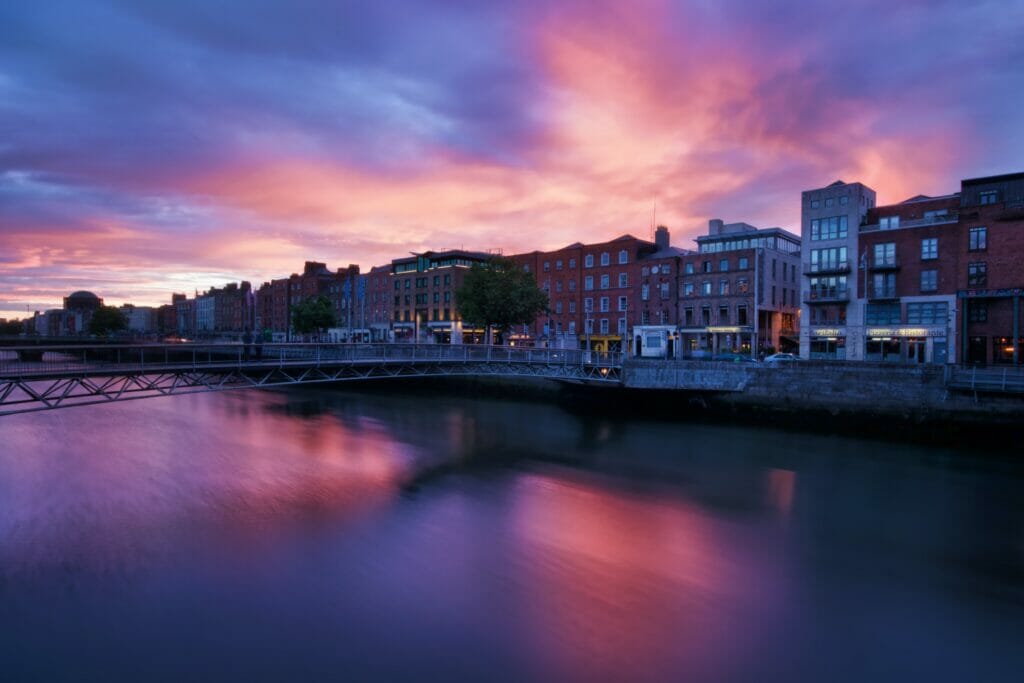
Ha'penny Bridge and the River Liffey: The 1816 pedestrian bridge across the river is free to cross. Named for the halfpenny toll once charged. Good photo spot, especially at dusk. The quays running east and west from here are the spine of Dublin city.
St. Stephen's Green: A formal Victorian park at the top of Grafton Street, free to enter. Good for a break mid-city — it fills up with Dubliners at lunchtime on any half-decent day.
The Doors of Dublin: The Georgian townhouses around Merrion Square and Fitzwilliam Square have famously colourful front doors — this started as a way for residents to distinguish their identical terraced houses. Worth a short walk through the area, particularly Merrion Square on a Sunday when local artists sell work along the park railings.
Guinness Storehouse: What You Actually Get
The Guinness Storehouse at St. James's Gate is Ireland's most visited paid attraction. It's housed in the original fermentation plant, now converted into a seven-storey visitor experience built in the shape of a giant pint glass.
Advertisement
You move floor by floor through the history of Arthur Guinness, the brewing process, the advertising archive (genuinely impressive — it spans 80+ years of campaigns), and the ingredients bar where you can smell hops and barley. The top floor is the Gravity Bar — a 360-degree glass-walled room with views across Dublin city — where your ticket includes one free pint.
Ticket options:
- Standard: €26 — self-guided, one pint at the Gravity Bar
- Connoisseur: €32 — includes a private tasting with four Guinness varieties and a tutored session
- Book online; queues on summer weekends are long
The Gravity Bar pint is the experience. On a clear day you can see the Dublin Mountains to the south. Arrive late afternoon if you want the view in good light.
Dublin Pubs and Nightlife: Temple Bar vs. Local Spots
Temple Bar is the tourist district along the south bank of the Liffey — cobblestoned streets, red-painted pubs, live music spilling onto the pavement. I'll be direct: it's expensive and the pints in the most famous pubs (The Temple Bar pub itself, Oliver St. John Gogarty) cost €7–8. Locals rarely drink there. That said, it's worth walking through at least once — the atmosphere around 9pm on a Friday is genuinely alive.
For actual locals' pubs with better prices and more character:
Advertisement
- Mulligan's (Poolbeg Street): One of the oldest pubs in Dublin, founded 1782. The Guinness is regularly cited as among the best in the city. Dark wood, no frills.
- The Long Hall (South Great George's Street): Victorian interior, proper quiet. Good for an afternoon pint.
- Kehoe's (South Anne Street): Mid-19th century fittings still intact, snugs you can actually sit in.
- The Stag's Head (Dame Court): Stunning Victorian bar — stained glass, marble, taxidermy. Off a side alley so easy to miss. Worth finding.
Where can I find live music in Dublin pubs? Mulligan's and The Cobblestone (Smithfield) are the most reliable for traditional sessions. Temple Bar pubs have live music nightly but it's more performance than session.
Irish Whiskey: Jameson and Beyond
Perhaps rather than pulling pints, you're interested in a tipple of Irish whiskey? The Jameson Old Jameson Distillery at Smithfield Square does guided whiskey tours with tastings — the distillery was operational until the early 1970s and the tour covers both the history and process, ending with a comparative tasting of Irish, Scotch and bourbon.
Irish whiskey is triple-distilled and typically smoother and lighter than Scotch. The distillery tour costs around €25 and is a solid alternative to the Guinness Storehouse if you'd rather skip the stout experience. The Smithfield area around it has become a proper neighbourhood — quieter than Temple Bar and better value for food and drink.
Day Trips Around Dublin
Howth
The best easy day trip from Dublin. Howth is a fishing village on a headland 35 minutes from the city centre by DART (the coastal commuter rail). The cliff walk — a loop around the headland — takes 2–3 hours and has genuine sea views. The harbour is full of seafood restaurants; Beshoff Bros is reliable for fish and chips. Cost: the DART fare with a Leap Card. No planning required.
Glendalough
An early medieval monastic site in the Wicklow Mountains, about 1.5 hours south of Dublin by car or organised tour. Two glacial lakes, a round tower built around 1000 AD, ruined churches and a valley walk. The lake walk takes 2–3 hours. Entry to the monastic site is free; parking has a fee. Bus Éireann runs a seasonal service from Dublin city centre, or you can join a half-day tour from St. Stephen's Green.
Cliffs of Moher
A longer day trip from Dublin — around 3–3.5 hours each way to the west coast — but the Cliffs of Moher are one of Ireland's most iconic landscapes: 214-metre-high sea cliffs stretching 14km along the County Clare coast. The most practical option is an organised day tour from Dublin (around €35–50, departs from central Dublin, includes a Burren stop). Entry to the cliffs themselves costs €8. This is a long day — you're looking at 12 hours door to door — but worth it if you can only do one coastal trip.
Wicklow Mountains
The Wicklow Mountains National Park is about an hour from Dublin. Powerscourt Estate and waterfall (€9) is a popular first stop — the formal gardens are well-maintained and the waterfall walk is easy. The Sugar Loaf mountain near Enniskerry is a straightforward hike with good views back towards the coast.
Things to Do in Dublin on a Rainy Day
Dublin gets around 150 rain days per year. This is not something you plan around — it's something you pack for. But the city is genuinely well-suited to rainy days:
- Chester Beatty Library: Free, warm, extraordinary. Two hours minimum.
- National Museum of Ireland (Archaeology): Free, no booking needed, genuinely world-class Irish history and Viking-era artefacts.
- Guinness Storehouse: Indoor from start to finish — perfect rainy day activity. Book ahead.
- National Gallery of Ireland (Merrion Square): Free entry, extensive collection of Irish and European art including Caravaggio and Vermeer.
- Epic The Irish Emigration Museum: Paid (€17), but genuinely well-designed interactive exhibition on the Irish diaspora. Located in the docklands.
A rainy afternoon in a good pub with a Guinness is also a completely valid answer.
Getting Around Dublin: Transport Guide
Dublin is walkable for the main city centre attractions but has reliable public transport for everything further out.
DART (Dublin Area Rapid Transit): The coastal rail line running north to Howth and south to Greystones. Covers the city centre stations (Tara Street, Pearse Street) and all coastal villages. Essential for Howth. Runs every 10–30 minutes.
Luas: Two tram lines — Red Line (Saggart to The Point, covering Heuston Station and the Guinness Storehouse area) and Green Line (south to Bride's Glen, covering Grafton Street and the south suburbs). Frequency: every 7–15 minutes on weekdays.
Dublin Bus: Extensive network, slower than Luas/DART but covers everywhere. Route 13/68/69 covers Kilmainham. The 37/39/70 reaches Phoenix Park.
Leap Card: Contactless travel card that works on DART, Luas, Dublin Bus and commuter rail. Cheaper than cash fares — around 30% savings. Get one at any newsagent, convenience store or Dublin Airport. Tap on, tap off. Is credit card accepted in Dublin Ireland? Yes, widely — but the Leap Card still saves money on every journey.
Taxi/Uber: FreeNow and Uber both operate in Dublin. A taxi from the airport to the city centre costs around €20–30. Taxis within the centre are fine for late nights.
Walking: The city centre — from Trinity College to Temple Bar to Kilmainham — is roughly 3km end to end. Flat along the quays, hilly in places south of St. Stephen's Green.
Best Time to Visit Dublin Ireland
May to September is the main travel window. Longer daylight hours (Dublin gets light until 10pm in June), better chances of dry weather, all attractions at full capacity. July and August are the busiest — accommodation prices rise sharply and Guinness Storehouse queues are at their worst.
April and October are solid shoulder months — prices lower, weather mild (cool, variable), manageable crowds. St. Patrick's Day (March 17) is popular if you want the festival atmosphere, but the city is very busy and accommodation books out months in advance.
November to February is off-peak — cold, short days, some attractions have reduced hours, but prices are lowest and the city is less crowded. Dublin's pub culture means it's never dull. A winter weekend in Dublin centred around good food and pubs is genuinely enjoyable.
Travel Tips for Dublin
- Book Kilmainham Gaol immediately once you know your dates. It sells out weeks ahead and there is no walk-up option.
- Dublin is expensive. Budget €60–80 per day excluding accommodation for food, entry fees, and transport.
- Accommodation in the city centre runs €100–200+ per night for a decent hotel. South Dublin (Portobello, Rathmines) is 20 minutes walk away and cheaper with good Luas access.
- Hostels are a serious option: Isaacs, Generator, and Kinlay House are well-run at €25–40 per dorm bed.
- A waterproof layer is not optional — pack one regardless of forecast.
- If you're planning an adventure in Dublin and want to combine city with coast, Howth is the easiest add-on: DART from Connolly, no pre-booking, done in half a day.
FAQs: Things to Do in Dublin Ireland
What should you not miss in Dublin? Kilmainham Gaol (book ahead — it's the most powerful historical experience in the city), the Book of Kells at Trinity College, and the Chester Beatty Library (free and almost always quiet). The Guinness Storehouse is the obvious one — worth doing once. Phoenix Park and Howth are the best free experiences.
What are the top five things to do in Dublin, Ireland? Trinity College + Book of Kells, Guinness Storehouse, Kilmainham Gaol, Chester Beatty Library (free), and Howth cliff walk. That's a solid 2-day itinerary. If you have three days, add the National Museum of Ireland and a proper pub evening in the Liberties or Portobello.
How many days should I spend in Dublin Ireland? Two days is enough for the main attractions without rushing. Three days gives you time for one day trip (Howth or Glendalough) and a slower pace. Four days if you want to combine Dublin with the Wicklow Mountains and coast. More than that and you're really doing an Ireland trip, not a Dublin trip.
Is visiting Dublin Ireland worth it? Yes. Dublin has a higher concentration of genuinely good things to do in a small area than most European cities its size. The Irish history is accessible and moving, the pub culture is real (not just a performance), the coastline is within 35 minutes, and the free museums are excellent. It's expensive, but so is most of Western Europe.
Is 2 days enough to visit Dublin? Yes for the highlights. Trinity College, Guinness Storehouse, Kilmainham Gaol, Temple Bar area, and one free museum fits comfortably in two full days if you book ahead. A third day is better if you don't want to feel like you're racing.
Is Dublin a walkable city? Yes — the city centre is very walkable. Most attractions from Trinity College to Temple Bar to Dublin Castle sit within a 1–2km radius. Kilmainham is a 25-minute walk west. Phoenix Park is 4km from the centre — take the bus unless you're doing a long walk. The hills south of St. Stephen's Green are steeper than the flat quayside, which catches people out.
📍 Also useful: Dublin City Pass — Is It Worth It? | Day Trips from Dublin | Europe Travel Guide
Best Tours & Experiences
For guided tours and experiences, I recommend checking Viator — they have a huge selection with free cancellation on most bookings. You can also browse TripAdvisor Experiences for more local tours, day trips, and attraction tickets with real traveller reviews.
Save More
Save 5% on activities
Use code CHASINGWHEREABOUTS5 in the GetYourGuide app.
Book this exact experience in GetYourGuide appGet Travel Tips in Your Inbox
Join 5,000+ travelers. Get exclusive itineraries, honest reviews, and budget hacks once a week.
No spam. Only high-quality travel advice. Unsubscribe anytime.