
Disclosure: Chasing Whereabouts is reader-supported. This guide contains affiliate links to partners like Tiqets, GetYourGuide and Viator. If you make a purchase through these links, we may earn a small commission at no extra cost to you. This helps us continue providing free, first-hand travel guides. Thank you for your support!
🇵🇹 We spent nine days in the Algarve — three in Lagos, three in Albufeira, a day in Faro, and day trips to Sagres and Silves — as part of our 2 Weeks in Portugal. This guide is built from that first-hand experience.
Algarve Portugal is the country's most-visited region — 270km of Atlantic coastline from the Spanish border to Cape St. Vincent, with sea-carved limestone cliffs, golden sand beaches, and a climate that gets 300+ days of sun per year. It's why Portugal became Europe's top summer destination, and why the south of portugal draws more tourists than Porto and Lisbon combined in July and August.
| Region | Best for | Key places |
|---|---|---|
| Western Algarve | Dramatic cliffs, surf, authentic towns | Lagos, Sagres, Aljezur |
| Central Algarve | Beach variety, nightlife, easy access | Albufeira, Portimão, Carvoeiro |
| Eastern Algarve | Quiet lagoons, barrier islands, authentic Portugal | Faro, Tavira, Olhão |
Where to Stay in Algarve Portugal

Lagos — Best overall base
Lagos is the best starting point for most visitors to algarve portugal. The old town is genuinely beautiful — whitewashed lanes, Roman walls, the 15th-century Church of Santa Maria — and you're a 15-minute walk from Praia Dona Ana and 30 minutes from Ponta da Piedade. Good restaurants, a lively bar scene without full package-holiday territory, and excellent transport links west toward Sagres and east toward Albufeira.
Advertisement
Best for: First-timers, cliff beach lovers, walkers, couples, backpackers and young crowd
Not ideal for: Those who want a resort pool scene
Typical costs: Hostel dorm €25–35/night, mid-range guesthouse €80–130/night, July–August prices run 40–60% higher.
Albufeira — Best for families and beach variety
Albufeira is the most developed resort town in the Algarve — strip bars and nightclubs in the Old Town, but genuinely excellent beaches (Falésia is one of the best in Europe) and good central access to both Lagos and Faro. Package holidays dominate the summer market here. Vilamoura marina, 15km east, is a more upmarket alternative with golf courses and superyacht berths.
Best for: Families, beach variety, nightlife, central access
Not ideal for: Authentic Portugal
Vilamoura — Upscale marina
Vilamoura sits just east of Albufeira and operates in a different register entirely — golf resorts, a 1,000-berth marina, four-star hotels, and casino. Praia de Vilamoura and the Falésia beach to the east are both excellent. More expensive than the rest of algarve portugal, but quieter and better maintained.
Advertisement
Best for: Golf, families with bigger budgets, marina dining
Not ideal for: Budget travellers
Tavira — Most beautiful town
Tavira is the gem of the eastern Algarve. Roman bridge, azulejo-tiled churches, a market by the river, and ferry access to Ilha de Tavira (barrier island). Much quieter than Lagos or Albufeira, prices are lower, and it feels more Portuguese. The beaches require a short ferry (€2.50 return) but are worth it.
Best for: Slower travel, cultural interest, island beaches, shoulder season
Not ideal for: Late-night dining or nightlife
Sagres — Surfers and cliff walkers
Sagres sits at the extreme southwest tip of algarve portugal — it's bleak, windswept, and completely different in character from the rest of the coast. Praia do Tonel is a proper surf beach; the Fortaleza de Sagres (€3) and Cape St Vincent 6km west are among the most dramatic coastal landmarks in Europe.
Best for: Surfers, serious walkers, people who want isolation
Not ideal for: Nightlife, families with young children seeking calm water
Advertisement
Faro — Best transport hub
Faro is the Algarve's capital and main airport gateway. The Old Town (Cidade Velha) is surrounded by medieval walls, and the bone chapel in the Igreja do Carmo is genuinely striking. The Ria Formosa lagoon begins right at the marina. Less beach-focused than the rest of the algarve but excellent for food.
Best for: Airport proximity, Ria Formosa access, authentic city feel
Not ideal for: Cliff beach scenery
Best Beaches in Algarve Portugal

Algarve beaches split clearly by region. Western algarve beaches are all sea caves and limestone stacks; central is more accessible and family-friendly; eastern is wilder, quieter, and backed by the Ria Formosa lagoon system.
Western Algarve Beaches
Praia da Marinha — Consistently ranked among Europe's best beaches. Accessed via a clifftop path from Carvoeiro or by boat. Golden sandstone formations, water ranging from deep blue to turquoise in shades depending on depth and season. No lifeguard in low season; steps down the cliff are steep. Parking fills by 9am in summer — arrive early or take a boat tour from Benagil.
Advertisement
Praia de Benagil — The beach itself is small and always crowded, but it's the departure point for Benagil Cave — the Algarve's most photographed sight. Kayak rentals from the beach: €15–20/hour. Guided boat tours from Portimão or Albufeira: €20–35 per person. Don't attempt to swim into the cave from the beach — dangerous currents, officially prohibited.
Praia da Rocha (Portimão) — Wide urban beach in central Algarve backed by a clifftop promenade. Easy access, good infrastructure, lifeguards all summer. Less dramatic than Marinha but far easier to park and get to.
Lagos Beaches
Praia Dona Ana — Accessible by foot from Lagos old town (20-minute walk or 5-minute taxi). Sheltered cove with calm water, excellent for swimming. Gets crowded mid-morning in July–August. Early morning or after 5pm is quieter.
Praia do Camilo — Arguably Lagos's most striking beach — a narrow cove reached via wooden boardwalk steps down the cliff. Worth the 15-minute walk from town. Small, intimate, excellent water clarity.
Meia Praia — 4km of flat sandy beach east of Lagos — the longest stretch of sand on the western Algarve. Good for families, less dramatic than the cove beaches but more space and more relaxed. Water sports equipment rental available.
Advertisement
Central Algarve Beaches
Praia da Falésia (Albufeira) — 6km of beach backed by dramatic red and orange cliffs — one of the most visually striking algarve beaches. Accessible from Vilamoura or Albufeira. Strong winds in the afternoon make it less ideal for families with small children but excellent for kitesurfing.
Eastern Algarve Beaches
Ilha de Tavira — Barrier island in the Ria Formosa Natural Park, only accessible by ferry from Tavira or Quatro Águas (€2.50 return). Long, wild Atlantic beach on the ocean side; calm lagoon on the other. Far fewer crowds than the western algarve.
Manta Rota — Low-key beach village near the Spanish border. Wide sandy beach, shallow water, child-friendly. None of the drama of the west but a genuinely Portuguese atmosphere.
Cacela Velha — A tiny hilltop village overlooking a lagoon and barrier island. Ferry across in summer (€1.50). Essentially deserted compared to anywhere west of Faro. One of the quietest spots in algarve portugal.
Things to Do in Algarve Portugal
Benagil Cave boat tour
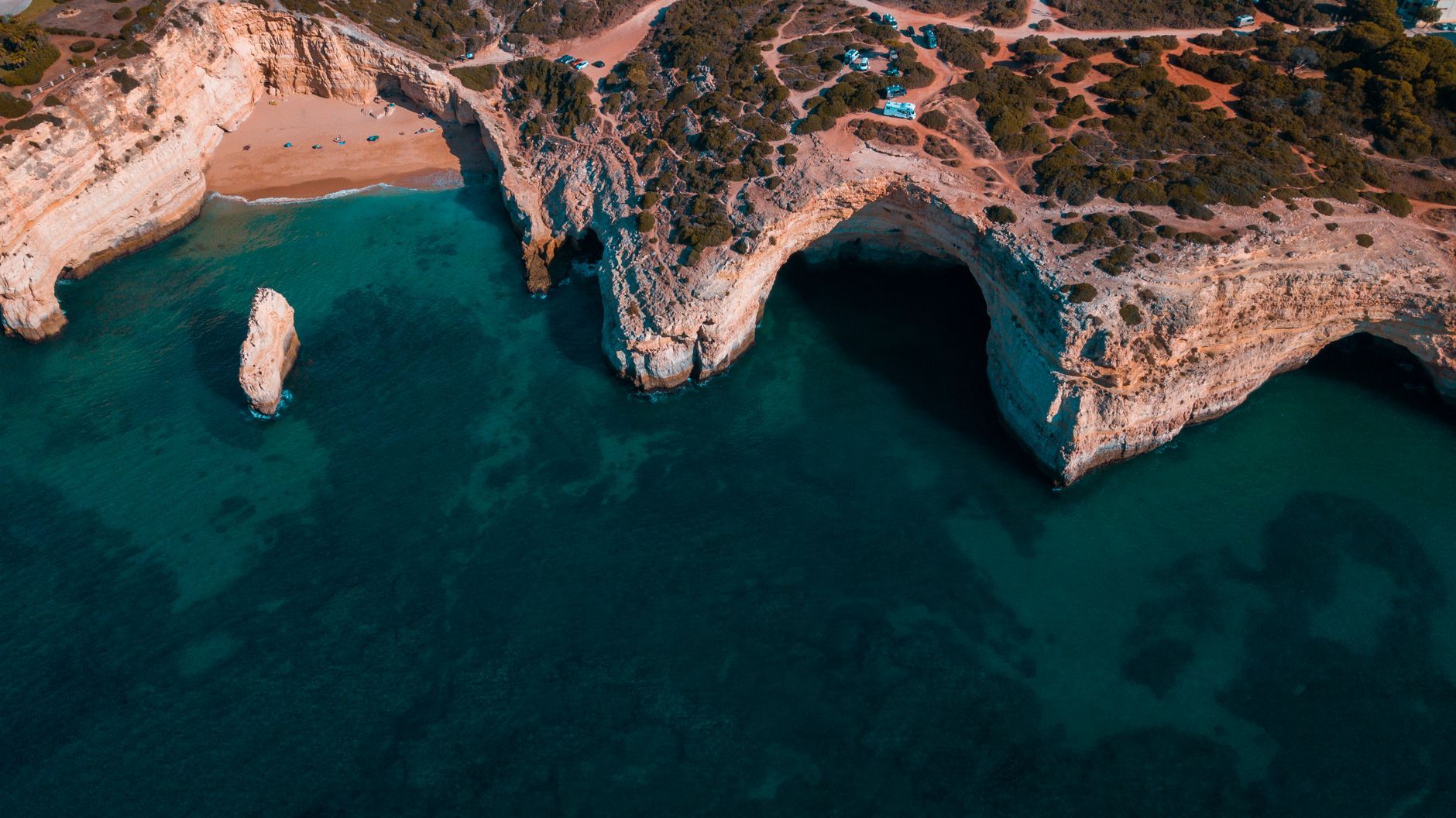
The Algarve's most-photographed sight — a domed sea cave with a hole in the ceiling that lights up the interior. You cannot swim in from Benagil beach (too dangerous, and prohibited). Options: guided boat tour from Albufeira or Portimão (€20–35), kayak from Benagil beach (€15–20/hour rental), or SUP. Morning tours have the best light.
Ponta da Piedade sea caves (Lagos)
The most dramatic coastal scenery in the western Algarve — a series of golden limestone arches, grottos, and sea stacks just south of Lagos. Walk out along the clifftop path from Lagos (2.5km from the old town) for the views, then take a boat tour from the beach below to go inside the caves.
Boat tours from the cove: €20–25 per person, 45–60 minutes. Kayak rental: €20/hour. Book in advance in July–August.
Cape St Vincent (Sagres)
The southwestern tip of mainland Europe — a dramatic headland with a lighthouse (€3 entry), 60m cliffs dropping straight to the Atlantic, and a 16th-century fortress (€3). Best visited as a day trip from Lagos (45 minutes by car). Sunset here is worth staying for.
Ria Formosa Natural Park (Faro)
A 60km lagoon system of tidal marshes, barrier islands, and migratory bird habitat — one of Portugal's most important natural parks. Boat trips from Faro marina to Ilha Deserta (uninhabited barrier island): €22–28 return. Birdwatching is excellent September–April.
Lagos Old Town
Compact and genuinely historic: the Praça Gil Eanes square, the Igreja de Santo António (baroque azulejo tiles, €3), the Mercado de Escravos (world's first slave market, €4), and the medieval walls. Half a day is enough; combine with Ponta da Piedade in the afternoon.
Silves (day trip)
The Algarve's medieval capital — a red sandstone castle (€2.80) perched above the town, a Gothic cathedral, and a riverside market in August. Accessible by train from Lagos (change at Tunes) or by car (40 minutes from Albufeira). Quieter and more authentic than the coastal towns.
Day Trips from Algarve Portugal
- Seville, Spain — 2h30 drive east along the A22 and across the border. Full day easily.
- Évora — 2h drive north. UNESCO-listed walled city, Roman temple, bone chapel.
- Lisbon — 3h by car or 3h30 by bus. Doable as a day trip from Faro; long from Lagos.
Where to Eat in Algarve Portugal
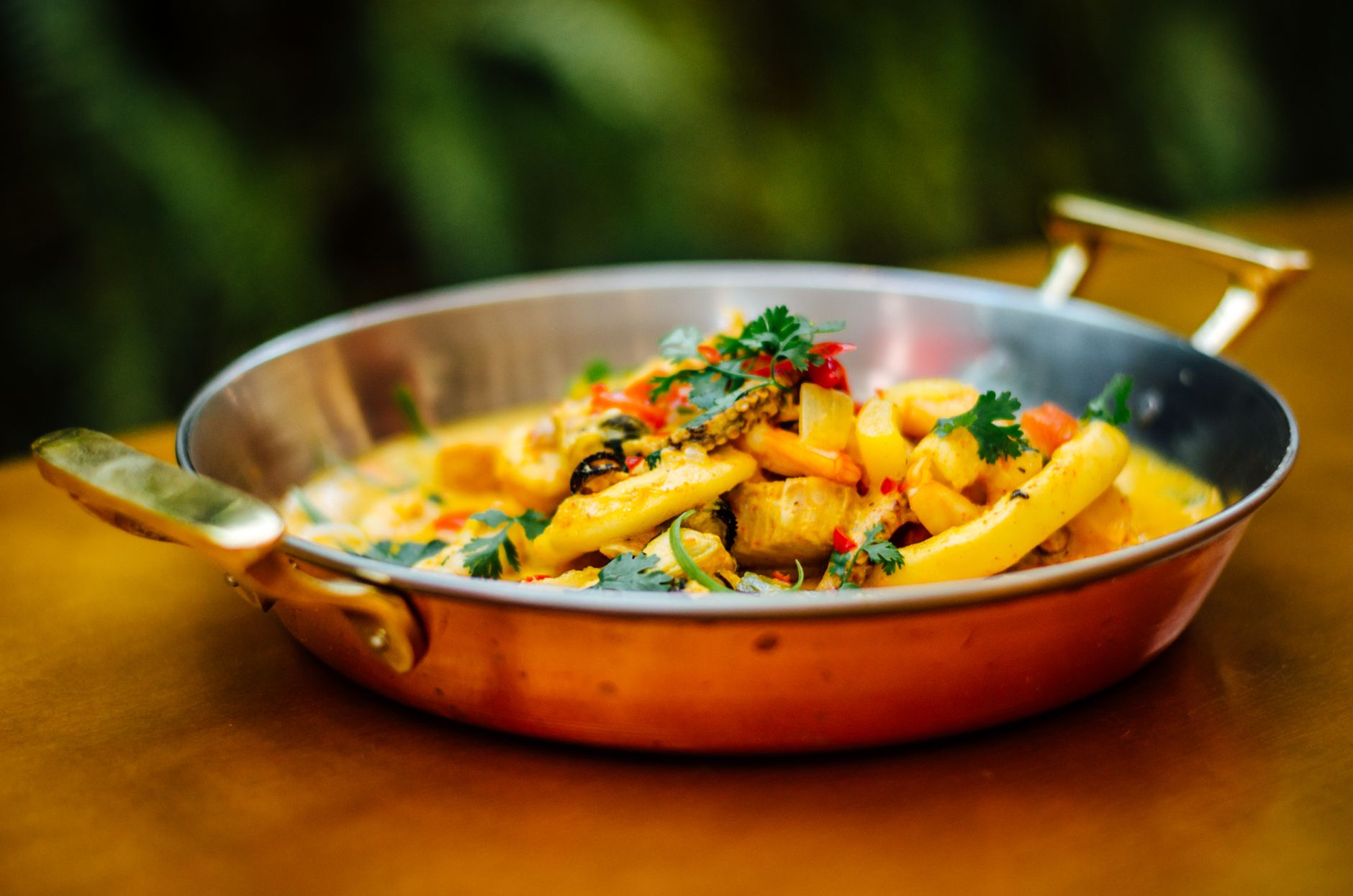
The Algarve produces some of Portugal's best seafood — tuna, sea bass, bream, monkfish, octopus, clams, and prawns landed fresh daily at ports from Sagres to Olhão.
Dishes to order:
- Cataplana — the Algarve's signature dish: seafood (clams and prawns) or pork stewed in a domed copper pot. €25–35 for one (it feeds two). Order at a proper tasca, not a beachside snack bar.
- Grilled sardines (sardinhas grelhadas) — charcoal-grilled, sea salt only. €12–16/portion at a good local restaurant. Peak sardine season is June–September.
- Grilled fish (peixe grelhado) — sea bass (robalo) or bream (dourada), grilled with sea salt and olive oil. A main course with salad and wine: €15–25 per person.
- Amêijoas à bulhão pato — clams in white wine, garlic, and coriander. Around €12–18 as a starter.
- Percebes — stalked barnacles, scarce and expensive (€25–40/100g). Worth ordering if you see them.
- Medronho — local spirit distilled from arbutus berries, 40–50% ABV. Usually free at the end of a meal at traditional restaurants.
Best towns for eating:
- Olhão — the Algarve's fishing capital. Saturday market is outstanding. Seafood restaurants along the waterfront are among the best in the region.
- Lagos Old Town — competitive restaurant scene, good value.
- Faro Doca — waterfront dining, good for grilled fish.
- Olhos de Água — small fishing village between Albufeira and Faro; local restaurants away from the resort strip.
Budget guide:
- Casual lunch (prato do dia + drink): €10–13
- Dinner at a proper restaurant: €20–35/person with wine
- Cataplana for two with wine: €50–70 total
How to Get to Algarve Portugal
By air
Faro Airport (FAO) is the main entry point — direct flights from most UK, Irish, and northern European cities. British Airways, easyJet, Ryanair, and TAP all operate routes. Journey time from Faro airport to Lagos: 60–70 minutes by car. Faro city centre is 5 minutes from the airport.
From Lisbon
- By car: 280km, 2h30 (Lagos) or 2h (Faro) via the A2 and A22 motorways
- By bus: Rede Expressos Lisbon–Faro from €18, journey ~3.5 hours. Lagos buses also available.
- By train: Lisbon Oriente → Faro (change at Tunes for Lagos): 3h–3h30, from €20.
Toll note: The A22 (Via do Infante) uses electronic tolls only (no toll booths). Hire cars must have a Via Verde transponder or you'll need to pay via the rental company's toll service. Confirm before driving.
How to Get Around Algarve Portugal
Hire car (strongly recommended)
A hire car is essential for getting the most out of algarve portugal. Without a car, you're limited to the train towns — Lagos, somewhere near Albufeira, and Faro. With a car, Sagres, Cape St Vincent, Silves, the Ria Formosa ferry terminals, and the inland Serra do Caldeirão are all reachable.
Cost: €30–60/day at Faro Airport in peak season. Book 2–3 months in advance for July–August — cars genuinely sell out.
Compare hire car prices with Discover Cars — works across all major Algarve rental agencies.
Train
The Algarve rail line runs Lagos–Faro–Vila Real de Santo António (near the Spanish border). Useful for getting between main towns.
Key routes:
- Lagos → Faro: 1h45 (change at Tunes), from €7
- Lagos → Albufeira area (Ferreiras station): 55 min, from €5
- Faro → Tavira: 30 min, from €3.50
Station note: Ferreiras station is 6km from Albufeira centre — taxi or bus needed.
Bus
Eva Bus and Rede Expressos connect all main towns. Works Lagos↔Faro, but coverage for beaches is very limited without a car.
Costs in Algarve Portugal
| Budget level | Daily per person | What you get |
|---|---|---|
| Budget | €50–70 | Hostel dorm, self-catering, cheap lunches |
| Mid-range | €100–150 | Guesthouse or 3-star hotel, restaurant dinners, 1–2 activities |
| Comfortable | €180–250 | 4-star hotel, all meals out, boat tours |
Specific prices (2026):
- Grilled sardines: €12–16/portion
- Cataplana (seafood stew, serves 2): €25–35
- Restaurant dinner per person with wine: €20–35
- Benagil Cave boat tour: €20–35pp
- Ponta da Piedade kayak: €20/hour
- Car hire at Faro Airport (peak): €30–60/day
- Hostel dorm (Lagos): €25–35/night
- Mid-range guesthouse: €80–130/night
July–August premium: expect to pay 40–60% more for accommodation than in May–June or September.
Best Time to Visit Algarve Portugal
| Month | Weather | Crowds | Price |
|---|---|---|---|
| April | 18–22°C, some rain | Low | Low |
| May–June ⭐ | 22–26°C, sunny | Medium | Medium |
| July–August | 28–32°C, very hot | Very high | Peak |
| September ⭐ | 24–27°C, sunny | Medium-low | Medium |
| October | 20–24°C, some rain | Low | Low |
| November–March | 14–18°C, mild | Very low | Low |
May–June is the sweet spot for algarve portugal. Sea temperature reaches 20–22°C by June — warm enough to swim. Beaches have space. Restaurants don't require reservations a week in advance. Accommodation costs 20–30% less than August. Right now (June 2026) is ideal.
July–August: Everything is open, it's hot (28–32°C), and the beaches are at their best — but they fill by 10am and prices peak. Book accommodation 3–4 months in advance.
September: Still warm (24–27°C), the peak crowds thin out, and prices drop. Sea temperature stays high from the summer. One of the best months to visit.
April: Wildflowers carpet the clifftops — visually one of the most beautiful times. Occasional rain. Sea is still cold (17°C). Good for walking, less good for swimming.
Suggested Algarve Itineraries
Planning your days down here depends entirely on how much you want to drive. If you only have three days, base yourself in Lagos. Spend day one walking the cliffs at Ponta da Piedade and hitting Praia do Camilo. On day two, drive 30 minutes west to Sagres to watch the sunset at Cape St. Vincent—bring a windbreaker, the Atlantic wind there is brutal. Use day three for a boat trip to Benagil Cave from Lagos marina.
Got a full week? Split your stay. Spend four nights in Lagos to cover the wild western coast, then move to Tavira in the east for three nights. Tavira feels like a different country. The water is warmer, the beaches require a quick ferry ride across the salt marshes, and the crowds are thin compared to the west.
Practical Information
Tolls on the A22 highway are fully electronic. There are no physical booths to pay with cash or card. When you rent a car, pay the extra €1.50 to €2 a day for the Via Verde transponder. It links directly to your credit card and saves you the massive headache of trying to pay at a local post office (CTT) days later.
Cash is still useful for small beach cafes or parking attendants. Keep €10 and €20 notes handy. For supermarkets, look for Continente or Pingo Doce to keep your grocery bills low. A bottle of decent local Alentejo or Algarve wine at these shops will set you back less than €4.
FAQ: Algarve Portugal
What is the Algarve known for? Algarve portugal is known primarily for its beaches — sea-carved limestone cliffs, sea caves, golden sand coves, and barrier islands. Beyond beaches: seafood (cataplana, grilled sardines, percebes), golf (over 40 courses), Cape St Vincent and Sagres fortress, and a mild climate that makes it viable from April through October.
When is the best time to visit Algarve Portugal? May–June and September are the best months. Weather is warm (22–27°C), sea is swimmable, beaches aren't packed, and prices are 20–30% below July–August rates. July–August is peak — best weather, most expensive, very crowded. Right now (June 2026) is ideal timing.
Do you need a car in the Algarve? Yes, strongly recommended. Without a car you're limited to towns served by the Lagos–Faro train line. Most of the best algarve beaches — Praia da Marinha, Praia do Camilo, Benagil, Cacela Velha — require a car or a paid guided tour to reach. Rent at Faro Airport (€30–60/day peak), book in advance for summer.
Is the Algarve expensive? Moderate — cheaper than France's Côte d'Azur or Italy's Amalfi Coast, but not backpacker-budget territory. Budget €50–70/day if you're self-catering and staying in hostels. Mid-range €100–150/day covers a guesthouse, restaurant dinners, and activities. July–August pushes those figures up 40–60%.
How many days do you need in Algarve Portugal? 5–7 days to cover the western and central Algarve properly. 4 days is tight but workable if you focus on Lagos and one other base. 10 days lets you reach Tavira and the eastern lagoon islands at a comfortable pace.
What is the best beach in Algarve? Praia da Marinha for scenery (sea caves, limestone arches, turquoise water). Meia Praia for space and ease of access. Praia da Falésia for dramatic red cliffs. Cacela Velha for quiet. Praia do Tonel (Sagres) for surfing. There's no single "best" — it depends what you're after.
Is the Algarve destination safety index? Yes — the Algarve is one of Europe's safest tourist regions. Standard precautions apply (don't leave valuables in hire cars at trailheads). The main safety concern is Atlantic swell at west-facing beaches: respect red and yellow flags, particularly at Sagres and Aljezur where currents can be strong.
What language is spoken in the Algarve? Portuguese, but English is spoken at virtually all tourist-facing businesses, hotels, and restaurants throughout algarve portugal.
Full guides: Lagos | Albufeira | Faro | Best Algarve Beaches | 2 Weeks in Portugal
City Passes — Where to Book
Save on attraction entry with official city passes, booked through Tiqets (instant e-ticket):
- Lisbon: Book on Tiqets → · Full review →
- Porto: Read my full Porto Pass review →
Most travelers land in Lisbon or Porto before heading south to the Algarve. If you are spending a few days in the capital first, the Lisboa Card is actually worth the money. It covers your ride on the Santa Justa Lift and the train down to Cascais, saving you from standing in separate ticket lines.
For the Algarve itself, there is no unified regional pass. You buy tickets individually. Book your boat tours and historic sites like the Silves Castle online at least 48 hours in advance during June and September. In July and August, make that two weeks.
Best Tours & Experiences
For guided tours and experiences, I recommend checking Viator — they have a huge selection with free cancellation on most bookings. You can also browse TripAdvisor Experiences for more local tours, day trips, and attraction tickets with real traveller reviews.
Skip the massive 50-person catamaran tours if you want to see the Benagil Cave. The cave opening is narrow, and only small speedboats or kayaks can actually go inside. A kayak tour from Benagil Beach costs around €30 and gets you onto the actual sand inside the cave, which is off-limits to motorized boats.
For dolphin watching, book a rigid inflatable boat (RIB) departing from Lagos. These boats sit low to the water and move fast. Expect to pay around €40 for a two-hour trip. Wear sunscreen and polarized sunglasses—the glare off the Atlantic is intense.
Save More
Save 5% on activities
Use code CHASINGWHEREABOUTS5 in the GetYourGuide app.
Book this exact experience in GetYourGuide appGet Travel Tips in Your Inbox
Join 5,000+ travelers. Get exclusive itineraries, honest reviews, and budget hacks once a week.
No spam. Only high-quality travel advice. Unsubscribe anytime.