

Disclosure: Chasing Whereabouts is reader-supported. This guide contains affiliate links to partners like Tiqets, GetYourGuide, Viator and Headout. If you make a purchase through these links, we may earn a small commission at no extra cost to you. This helps us continue providing free, first-hand travel guides. Thank you for your support!
🇪🇺 Planning a Europe trip? Check out our full Europe Travel Guide.
Every country in Europe has chosen an animal to represent its national identity — and the choices reveal a lot about each nation's history, mythology, and relationship with nature.
In this guide, I have compiled the national animals of every European country in one place, so you do not have to search across dozens of separate posts.
Whether you are a wildlife enthusiast, a traveller preparing for a trip, or simply curious about European culture, this is your definitive reference.
Quick Reference: National Animals of Europe at a Glance
| Country | National Animal | Type |
|---|---|---|
| Albania | Golden Eagle | Bird |
| Austria | Black Eagle | Bird |
| Belgium | Lion | Heraldic Animal |
| Bulgaria | Lion | Heraldic Animal |
| Croatia | Pine Marten | Mammal |
| Czech republic | Double-tailed Lion | Heraldic Animal |
| Denmark | Red Squirrel | Mammal |
| Finland | Brown Bear | Mammal |
| France | Gallic Rooster | Bird |
| Germany | Federal Eagle (Bundesadler) | Heraldic Bird |
| Greece | Common Dolphin | Marine Mammal |
| Hungary | Turul | Mythical Bird |
| Iceland | Gyrfalcon | Bird |
| Ireland | Irish Hare | Mammal |
| Italy | Italian Wolf | Mammal |
| Luxembourg | Red Lion | Heraldic Animal |
| Netherlands | Lion | Heraldic Animal |
| Norway | Lion | Heraldic Animal |
| Poland | White Eagle | Heraldic Bird |
| Portugal | Iberian Wolf | Mammal |
| Romania | Golden Eagle | Bird |
| Russia | Brown Bear | Mammal |
| Scotland | Unicorn | Mythical Animal |
| Serbia | White Eagle | Heraldic Bird |
| Slovenia | Proteus (Cave Salamander) | Amphibian |
| Spain | Bull | Mammal |
| Sweden | Moose | Mammal |
| Switzerland | Cow | Mammal |
| Turkey | Grey Wolf | Mammal |
| Ukraine | Common Nightingale | Bird |
| United kingdom | Lion | Heraldic Animal |
National Animals by Country — Full Guide
🇦🇱 Albania — The Golden Eagle

Advertisement
The Golden Eagle (Aquila chrysaetos) is the national animal of Albania, and it dominates the country's flag — a double-headed black eagle on a red background. The eagle has symbolised Albanian identity since the medieval era, when national hero Gjergj Kastrioti (Skanderbeg) used it as his personal emblem.
The word "Albania" itself may derive from the Illyrian word for eagle. Albanians call themselves Shqiptarët — the sons of the eagle.
Where to spot it in the wild: The Albanian Alps (Prokletije) in the north are your best chance for a sighting during summer.
🇧🇪 Belgium — The Lion
The Lion is Belgium's national heraldic animal, appearing on the country's coat of arms and across regional emblems. The Flemish lion (black on gold) and the Walloon cockerel each represent Belgium's linguistic communities, but the lion unifies the nation.
The Belgian lion dates back to the County of Flanders in the 12th century and remains a symbol of courage and strength.
Advertisement
🇭🇷 Croatia — The Pine Marten

The Pine Marten (Martes martes) — known locally as the kuna — is Croatia's national animal. It holds such cultural significance that it lent its name to the former Croatian currency, the kuna, which was used until Croatia adopted the euro in 2023.
The pine marten was historically valuable as a trading commodity in medieval Croatia. Its fur was prized, and pelts were even used as currency long before coins existed.
Where to spot it in the wild: Plitvice Lakes National Park and Risnjak National Park in Croatia are good habitats, though the marten is shy and primarily nocturnal.
🇩🇪 Germany — The Federal Eagle (Bundesadler)
Advertisement
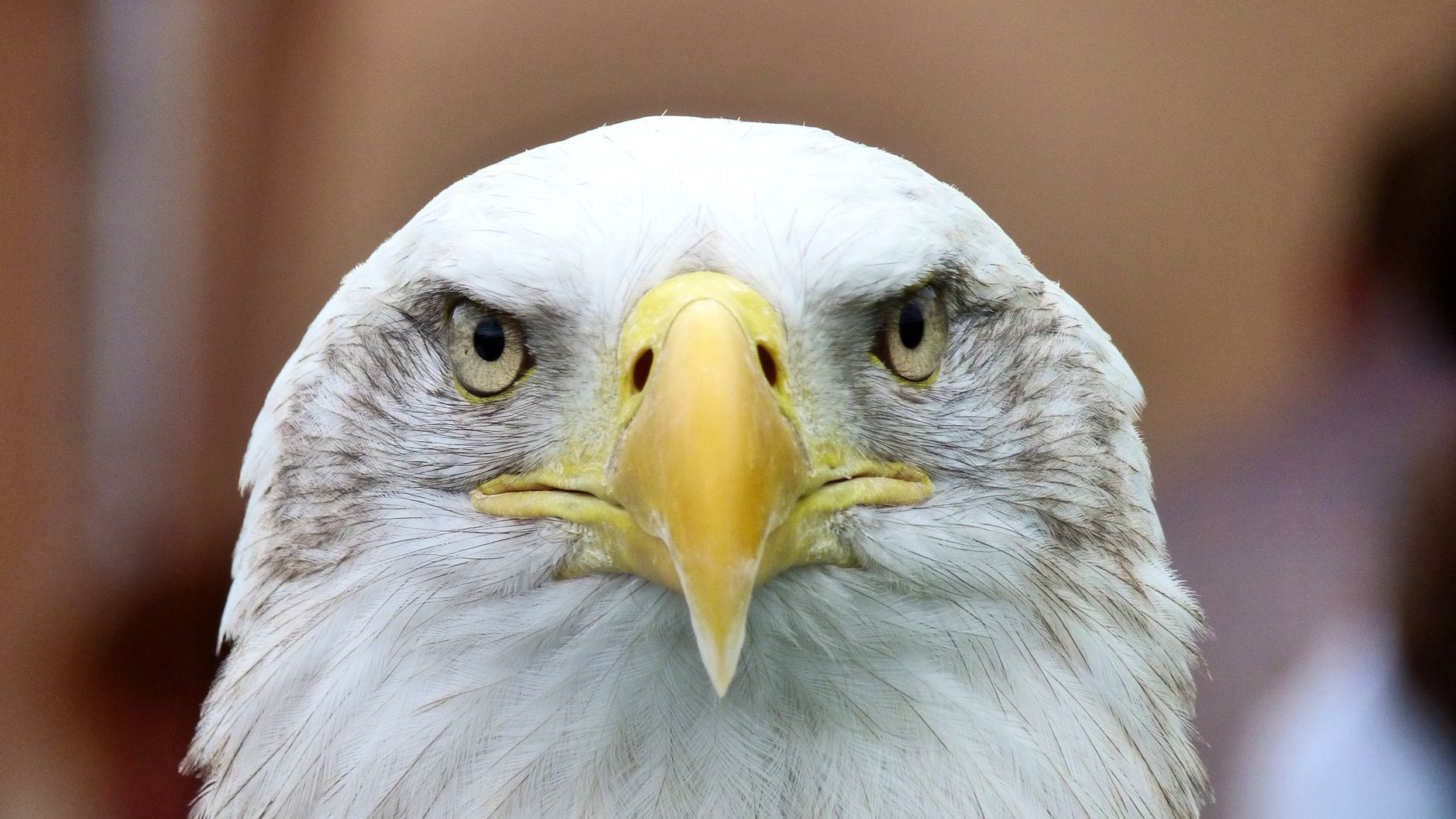
Germany's national animal is the Federal Eagle (Bundesadler) — a stylised black eagle on a golden background. It appears on the German coat of arms, official seals, and the 1-euro coin.
The eagle's roots in German identity go back over a thousand years. Charlemagne used the eagle as an imperial symbol in the 9th century, and it has been associated with German statehood ever since, through the Holy Roman Empire, the Weimar Republic, and today's Federal Republic.
The real-world equivalent is the White-tailed Eagle (Haliaeetus albicilla), which is the largest wild bird in Germany and a conservation success story. The population has recovered from near-extinction to over 700 breeding pairs today.
Where to spot it in the wild: The Müritz National Park in Mecklenburg is one of Germany's best locations for spotting White-tailed Eagles.
🇬🇷 Greece — The Common Dolphin

Advertisement
The Common Dolphin (Delphinus delphis) is Greece's national animal. In ancient Greek mythology, dolphins were sacred to Apollo and Poseidon. They were seen as protectors of sailors and messengers between the human world and the gods.
Dolphins appear in Minoan art dating back over 3,500 years, making them one of the oldest national symbols in the world.
Greece's national bird is the Little Owl (Athena noctua) — the owl of Athena, also featured on ancient Greek coins.
Where to spot dolphins: The Ionian Sea, the waters around Corfu, and the straits near Kefalonia offer some of the best dolphin-watching in the Mediterranean, especially between April and October.
🇭🇺 Hungary — The Turul
The Turul is a mythological falcon or eagle from Hungarian legend. According to tradition, the Turul led the Magyar tribes from Central Asia to the Carpathian Basin in the 9th century — the founding myth of the Hungarian nation.
Advertisement
The Turul is not a real species but is typically depicted as a large, powerful eagle or hawk. It appears on Hungarian military and government insignia and as a monumental statue at the Royal Palace in Budapest.
🇮🇹 Italy — The Italian Wolf
The Italian Wolf (Canis lupus italicus) is Italy's national animal. The wolf has deep roots in Italian culture — the she-wolf (Lupa) that suckled Romulus and Remus is the founding symbol of Rome itself.
After being nearly hunted to extinction in the 20th century, the Italian Wolf has made a remarkable recovery. The population has grown from fewer than 100 individuals in the 1970s to over 3,000 today, spreading across the Apennines and into the Alps.
Where to spot it in the wild: The Abruzzo, Lazio and Molise National Park in central Italy is the best place for wolf encounters. Early morning hikes through forested valleys give the highest chances of a sighting.
🇵🇱 Poland — The White Eagle
The White Eagle (Orzeł Biały) is Poland's national animal and appears at the centre of the Polish coat of arms — a crowned white eagle on a red background. It is one of the oldest national symbols in Europe, appearing in Polish state documents as far back as the 13th century.
The White Eagle represents sovereignty, resilience, and the enduring spirit of the Polish nation — a particularly meaningful symbol given Poland's history of partitions and occupation.
The real-world equivalent is the White-tailed Eagle, which nests across Poland's lakes and forests.
🇵🇹 Portugal — The Iberian Wolf
The Iberian Wolf (Canis lupus signatus) is Portugal's national animal. Like Italy's wolf, it carries deep mythological weight — wolves appear in Portuguese folk tales as both feared predators and symbols of wild freedom.
The Iberian Wolf is a distinct subspecies found only on the Iberian Peninsula. It is critically endangered, with an estimated 300–400 individuals remaining in Portugal, concentrated mainly in the Peneda-Gerês National Park in the north.
Where to spot it: Peneda-Gerês National Park is Portugal's only national park and your best — though still challenging — chance to hear a wolf howl at dusk.
Which European Country Has the Most Unique National Animal?
If you ask me, Slovenia stands out. Its national animal is the Proteus (Proteus anguinus) — a blind, cave-dwelling salamander also called the "human fish" because of its pale, flesh-coloured skin. It lives exclusively in the underground rivers of the Dinaric karst region and can survive without food for up to 10 years. No other country in Europe has chosen an amphibian as its national symbol.
Scotland's Unicorn is a close second for sheer audacity — Scotland's national animal is a mythical creature, and has been since the 12th century.
Conservation Status of Europe's National Animals
Many of Europe's national animals face serious conservation challenges:
| Animal | Status (IUCN) | Trend |
|---|---|---|
| Iberian Wolf (Portugal) | Vulnerable | Recovering slowly |
| Italian Wolf | Least Concern | Recovering |
| White-tailed Eagle (Germany/Poland) | Least Concern | Recovering |
| Golden Eagle (Albania/Romania) | Least Concern | Stable |
| Common Dolphin (Greece) | Least Concern | Declining in Mediterranean |
| Pine Marten (Croatia) | Least Concern | Stable |
| Proteus (Slovenia) | Vulnerable | Declining |
Frequently Asked Questions
What is the most common national animal in Europe? The Lion is the most common — appearing as the national animal of Belgium, the Netherlands, Bulgaria, Luxembourg, Norway, the United Kingdom, and several other nations. It is primarily a heraldic symbol rather than a native European species.
Which European country has a wolf as its national animal? Both Italy and Portugal have the wolf as their national animal. Italy's is the Italian Wolf (Canis lupus italicus), and Portugal's is the Iberian Wolf (Canis lupus signatus) — two distinct subspecies. Turkey also claims the Grey Wolf as a national symbol.
Does Germany have an eagle as its national animal? Yes. Germany's national symbol is the Federal Eagle (Bundesadler), a stylised heraldic eagle that has appeared on German state insignia for over a thousand years. The closest real-world equivalent is the White-tailed Eagle.
What is the national animal of France? France's national animal is the Gallic Rooster (Le Coq Gaulois). It became a symbol of France during the Renaissance due to a Latin pun: the word gallus means both "rooster" and "Gaul" (the ancient name for France).
Is there a national animal of Europe? No — Europe is a continent, not a country, so there is no single national animal of Europe. Every European country has chosen its own symbol instead, from Albania's Golden Eagle to Slovenia's Proteus. The full list is in the table and country sections above.
What are the national animals of Germany? Germany's national animal is the Federal Eagle (Bundesadler), the heraldic eagle on the German coat of arms and the 1-euro coin. The real-world bird behind the symbol is the White-tailed Eagle — so the national animals of Germany usually come down to these two eagles, one heraldic and one living.
What is the national animal of Greece? Greece's national animal is the Common Dolphin (Delphinus delphis), a symbol that goes back to ancient Greek mythology, where dolphins were sacred to Apollo and Poseidon and seen as protectors of sailors. Greece's national bird is the Little Owl, the owl of Athena.
Does Europe have a national bird? There is no national bird of Europe as a whole, but many European countries have official national birds — Finland's is the whooper swan, Iceland's is the gyrfalcon, and Greece's is the little owl.
Can you see Europe's national animals in the wild? Many of them, yes. Wolves roam Italy and Portugal; golden eagles nest across alpine and northern Europe; dolphins are common in the Mediterranean and North Sea; and white-tailed eagles have made a strong comeback across Germany, Poland, and Scandinavia.
Looking for more European wildlife and travel guides? Browse our Europe destination guides or explore our travel tips for Europe.
Save More
Save 5% on activities
Use code CHASINGWHEREABOUTS5 in the GetYourGuide app.
Book this exact experience in GetYourGuide appGet Travel Tips in Your Inbox
Join 5,000+ travelers. Get exclusive itineraries, honest reviews, and budget hacks once a week.
No spam. Only high-quality travel advice. Unsubscribe anytime.