Disclosure: Chasing Whereabouts is reader-supported. This guide contains affiliate links to partners like Tiqets, GetYourGuide and Viator. If you make a purchase through these links, we may earn a small commission at no extra cost to you. This helps us continue providing free, first-hand travel guides. Thank you for your support!
🇦🇹 This guide is part of our comprehensive Austria Travel Guide.
Vienna's food culture runs deep. The coffeehouse tradition alone is UNESCO-listed intangible cultural heritage. But the city is also one of the best places in Europe for hearty Central European cooking — schnitzels, stews, dumplings, and pastries that date back centuries to the Habsburg Empire. These are the dishes worth seeking out.
Vienna Food — Quick Reference
| Dish | Type | Where to Try | Approx Price |
|---|---|---|---|
| Wiener Schnitzel | Breaded veal cutlet | Figlmüller, Schnitzelwirt | €20–30 |
| Sachertorte | Chocolate cake | Hotel Sacher, Demel | €8–12/slice |
| Tafelspitz | Boiled beef in broth | Plachutta, Gasthaus Pöschl | €22–32 |
| Goulash | Beef paprika stew | Glacis Beisl, Gasthaus Wild | €12–18 |
| Kaiserschmarrn | Shredded pancake dessert | Most traditional restaurants | €10–15 |
| Käsekrainer | Cheese-filled sausage | Würstelstand (sausage stands) | €3–5 |
| Apfelstrudel | Apple pastry | Café Landtmann, Schönbrunn | €5–8 |
| Melange | Viennese coffee | Any Viennese coffeehouse | €4–6 |
1. Wiener Schnitzel
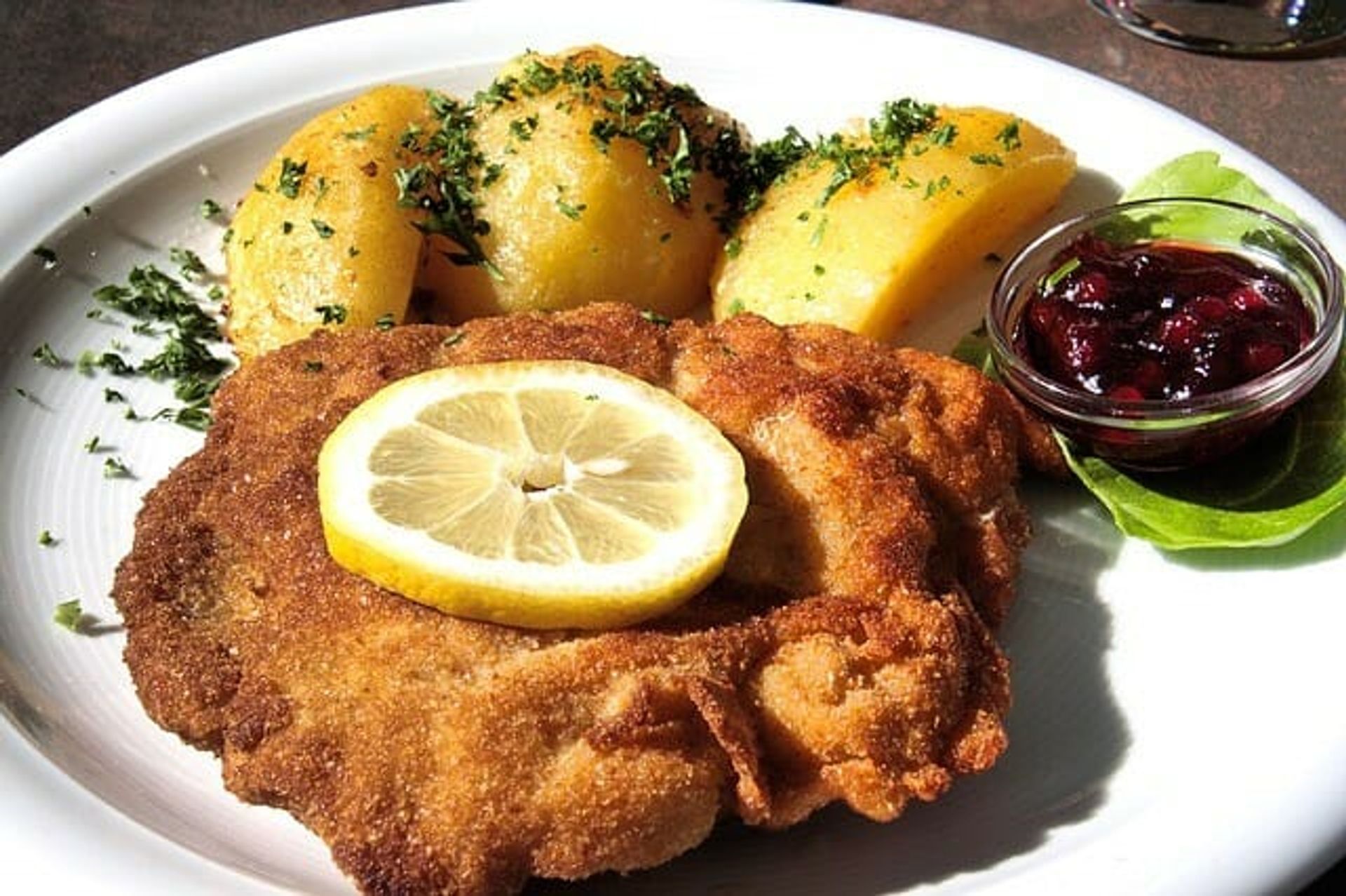
Austria's most iconic dish: a thin veal cutlet pounded flat, coated in flour, egg, and breadcrumbs, then fried in butter until golden. Traditionally made with veal — the pork version ("Schnitzel Wiener Art") is cheaper and almost as good.
What to order: Ask for the traditional veal Wiener Schnitzel with Erdäpfelsalat (Austrian potato salad) and a wedge of lemon.
Advertisement
Where to find it:
- Figlmüller (Wollzeile 5, 1010 Vienna) — the most famous, schnitzels that hang off the plate. Book in advance. ~€25–28
- Schnitzelwirt (Neubaugasse 52, 1070 Vienna) — casual, neighbourhood feel, excellent value. ~€16–20
- Restaurant Ofenloch (Kurrentgasse 5, 1010 Vienna) — traditional Viennese atmosphere, inner city
2. Sachertorte
Vienna's most famous cake — a dense, moist chocolate cake with a layer of apricot jam and a dark chocolate glaze. The "original" Sachertorte was created by Franz Sacher in 1832 for Prince Metternich.
There's a genuine debate between Hotel Sacher and Demel about which has the true original recipe. The difference: Hotel Sacher has apricot jam in the middle of the cake and under the glaze; Demel has it only under the glaze. Both are excellent.
Where to find it:
- Hotel Sacher Café (Philharmoniker Str. 4, 1010 Vienna) — the "original," €10–12/slice, formal setting
- Demel (Kohlmarkt 14, 1010 Vienna) — slightly less formal, also excellent, ~€9–11/slice
- Café Central (Herrengasse 14, 1010 Vienna) — magnificent historic coffeehouse, good Sachertorte in a stunning setting
3. Tafelspitz (Boiled Beef)
Tafelspitz is slow-boiled beef — lean cuts simmered for hours in broth with root vegetables until tender. Emperor Franz Joseph I ate it almost daily. It's a dish about patience and quality ingredients, not complexity.
Advertisement
Served with the broth as a starter, then the beef with classic condiments: chive sauce (Schnittlauchsauce), apple-horseradish (Apfelkren), and roasted potatoes or bread.
Where to find it:
- Plachutta Wollzeile (Wollzeile 38, 1010 Vienna) — the benchmark for Tafelspitz in Vienna. €28–34
- Gasthaus Pöschl (Weihburggasse 17, 1010 Vienna) — more casual Beisl setting, ~€22–26
4. Goulash
Vienna's Goulash is a descendant of Hungarian gulyás, imported during the Austro-Hungarian Empire and adapted into something distinctly its own. Viennese Goulash ("Wiener Saftgulasch") has a thicker, richer sauce and is typically served with Semmelknödel (bread dumplings) or crusty bread.
Where to find it:
- Gasthaus Wild (Radetzkypl. 1, 1030 Vienna) — excellent traditional Goulash in a local Beisl, ~€14–16
- Glacis Beisl (Museumsplatz 1, 1070 Vienna) — modern take in the MuseumsQuartier, beautiful garden terrace
5. Käsekrainer — Vienna's Sausage Stand Culture
Käsekrainer are pork sausages filled with small cubes of cheese that melt and ooze when grilled. They're eaten standing at the Würstelstand (sausage stand), served with mustard, horseradish, and a bread roll. This is one of the most characteristically Viennese eating experiences — no restaurant required.
Advertisement
Vienna's sausage stand culture is genuine street food tradition: the stands operate until 3–4am and are genuinely busy after midnight. A 1am Käsekrainer after an evening in Vienna is a rite of passage.
Where to find it: Würstelstands throughout the city centre. Look for one busy with locals. Price: €3–5 including the roll.
6. Apfelstrudel (Apple Strudel)
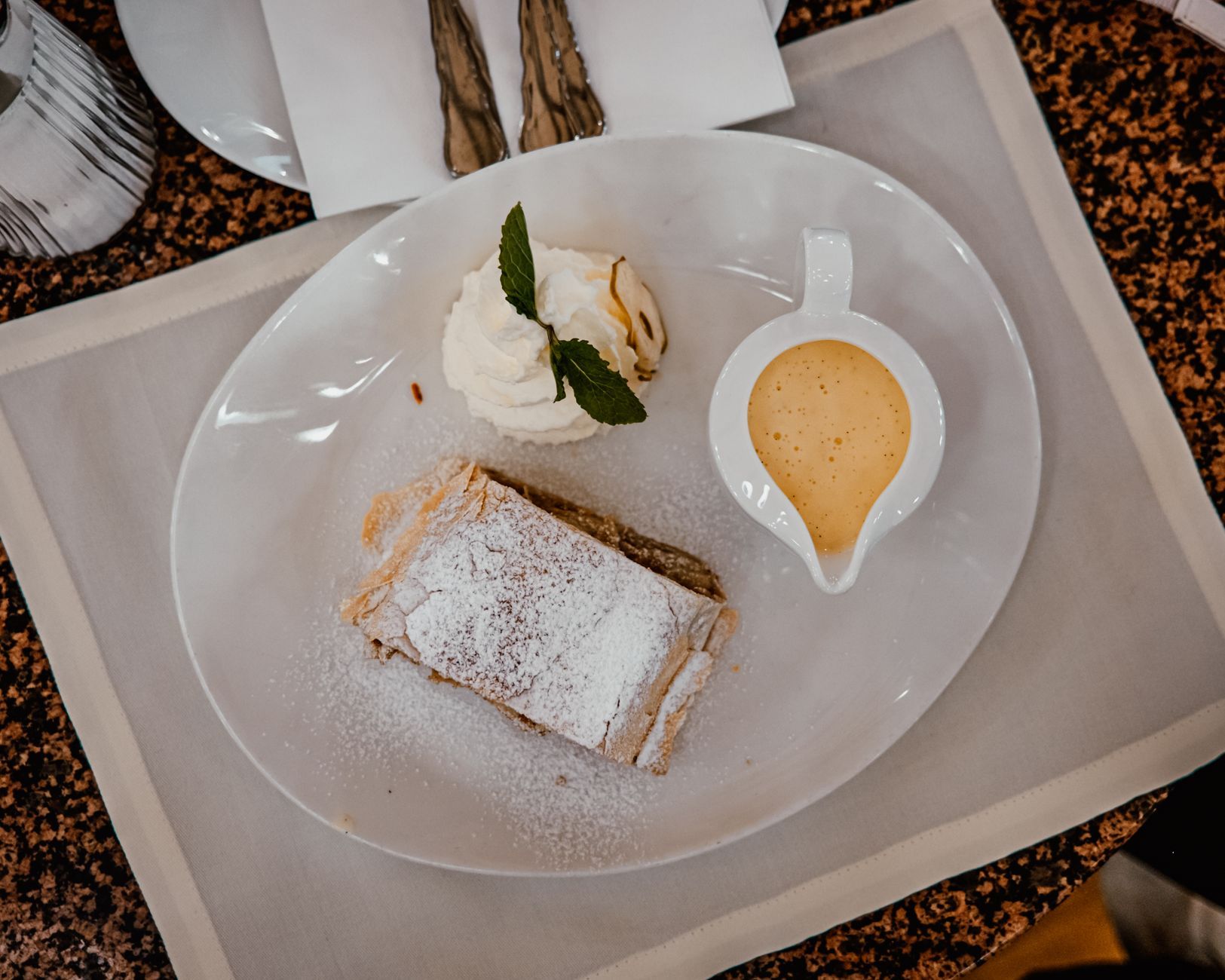
Flaky pastry stretched nearly translucent, filled with apple, raisins, breadcrumbs, sugar, and cinnamon. Served warm, dusted with powdered sugar, often with a pour of vanilla sauce or a spoonful of whipped cream.
Where to find it:
- Café Landtmann (Universitätsring 4, 1010 Vienna) — historic coffeehouse opposite the Burgtheater, excellent Apfelstrudel
- Schönbrunn Palace Café — for context: they run a Strudel show where you can watch it made and try a fresh piece (Get Your Guide — Vienna Strudel Show)
- Any traditional Viennese coffeehouse or Beisl
7. Kaiserschmarrn
A shredded pancake made with eggs, sugar, flour, and butter — torn into chunks while still in the pan and caramelized in butter with sugar. Served with plum jam (Zwetschkenröster) and a dusting of powdered sugar. Named for Emperor Franz Joseph, who was fond of it.
Advertisement
Kaiserschmarrn straddles dessert and light meal. It's rich, eggy, and substantial. Most restaurants serve it as a dessert; some list it on the main menu in alpine-style Gasthäuser.
Price: ~€10–15 at most traditional restaurants
8. Zwiebelrostbraten
Pan-fried beef steak topped with a pile of crispy deep-fried onion rings, served with roast potatoes and rich gravy. Less famous than Schnitzel but one of the most satisfying dishes in Viennese cooking.
Where to find it: Most traditional Viennese Beisln — Gasthaus Pöschl, Figlmüller, Restaurant Pruckel (Stubenring 24) all do good versions. ~€20–26
9. Erdäpfelsalat (Austrian Potato Salad)
This is the standard side dish in Vienna — and nothing like American potato salad. No mayonnaise: the dressing is white wine vinegar, mustard, red onions, chives, salt, and a small amount of oil. The result is tangy, light, and works beautifully alongside Schnitzel or sausages.
Advertisement
You'll encounter it at almost every traditional Viennese restaurant as either a side dish or a starter.
10. Melange — Vienna's Coffeehouse Coffee
Vienna's coffeehouse culture is a UNESCO Intangible Cultural Heritage. The Melange is its signature drink — similar to a cappuccino but usually without cocoa powder, topped with half steamed milk and half milk foam, served in a glass with a small glass of water. Richer and milkier than a standard cappuccino.
Other coffee terms to know:
- Verlängerter — long black (Americano equivalent)
- Brauner — plain coffee with a dash of cream
- Schwarzer — espresso (single or double)
- Einspänner — black coffee with whipped cream in a glass
Where for the full experience:
- Café Central (Herrengasse 14) — the most architecturally spectacular coffeehouse in Vienna
- Café Landtmann (Universitätsring 4) — Freud's regular; directly opposite the Burgtheater
- Café Schwarzenberg (Kärntner Ring 17) — oldest surviving Viennese coffeehouse
Price: Melange €4–6. Sit down, take your time — nobody will rush you.
11. Wiener Würstel
Similar to Käsekrainer but without the cheese filling — Vienna's version of the classic Frankfurter/Wiener sausage. Made from beef and pork in sheep's casing. Served from the same sausage stands as Käsekrainer. Try it with mustard and Austrian potato salad on the side.
12. Frittatensuppe (Pancake Soup)
A clear beef broth with thin strips of sliced pancake — originally created to use up leftover Palatschinken (Austrian crêpes). Simple but surprisingly good as a starter. Found in most traditional Beisln and Gasthäuser.
Vienna Food Practical Tips
"Beisl" vs. restaurant: A Beisl is a traditional Viennese pub-restaurant — informal, hearty portions, lower prices than tourist-area restaurants. For authentic Viennese cooking at reasonable prices, seek out a Beisl rather than restaurants near St. Stephen's Cathedral.
Prices: A schnitzel dinner with potato salad and a Melange runs €30–40 at a mid-range Beisl. At tourist-area restaurants near the Stephansplatz, prices are 30–50% higher for equivalent quality.
Vegetarian note: Traditional Viennese food is very meat-heavy. Vegetarians can find good options at coffeehouses (cakes, strudel, soups) and at the increasing number of modern Viennese restaurants, but the traditional repertoire above is not very plant-forward.
Visit a Naschmarkt: Vienna's main outdoor market (Linke Wienzeile, U4 Kettenbrückengasse) runs Tuesday–Saturday mornings. A good place to find Austrian cheeses, cured meats, bread, and seasonal produce.
FAQ: Food in Vienna
What is the most famous food in Vienna?
Wiener Schnitzel is the most internationally recognized Viennese dish. The Sachertorte is the most famous dessert. Locals would also add Käsekrainer from the Würstelstand as a quintessentially Viennese experience.
What is the typical meal price in Vienna?
A mid-range sit-down dinner (main course + drink) at a Beisl costs €20–35 per person. A Käsekrainer from a street stand is €3–5. Cake and Melange at a coffeehouse runs €10–15. Vienna is moderately priced — not cheap, but considerably cheaper than Zurich or Paris for equivalent quality.
What is Melange in Vienna?
Melange is Vienna's signature coffee drink — similar to a cappuccino but typically without cocoa powder, served in a glass with steamed milk and milk foam, accompanied by a small glass of water. It's the standard order at a Viennese coffeehouse.
Where should I eat in Vienna for authentic food?
Look for Beisln (traditional pub-restaurants) away from the main tourist streets. Figlmüller (Schnitzel), Plachutta (Tafelspitz), and Gasthaus Pöschl (Goulash/general Viennese) are the most consistent recommendations. For cakes and coffee, Café Central and Café Landtmann are both genuine historic institutions.
📍 Also see: Things to do in Vienna | Vienna Pass review | Austria Travel Guide
Book Your Trip
Locking in your Vienna plans? Book tickets and experiences in advance through Viator — free cancellation on most bookings, so you can plan now and adjust later.
Save More
Save 5% on activities
Use code CHASINGWHEREABOUTS5 in the GetYourGuide app.
Book this exact experience in GetYourGuide appGet Travel Tips in Your Inbox
Join 5,000+ travelers. Get exclusive itineraries, honest reviews, and budget hacks once a week.
No spam. Only high-quality travel advice. Unsubscribe anytime.