Disclosure: Chasing Whereabouts is reader-supported. This guide contains affiliate links to partners like Tiqets, GetYourGuide, Viator and Headout. If you make a purchase through these links, we may earn a small commission at no extra cost to you. This helps us continue providing free, first-hand travel guides. Thank you for your support!
I've been to Amsterdam three times. The first time, I bought a clog magnet from a souvenir shop on Damrak, spent €6, and threw it in a drawer when I got home. The second time, I spent €3 on fresh stroopwafels at Albert Cuypmarkt and thought about them for months. That's the difference between tourist trap tat and an Amsterdam souvenir worth buying.
This guide covers everything worth bringing back — food, drink, ceramics, flowers, art, and a few things people never think of. Where to buy, what to pay, and what to skip.
| Souvenir | Price range | Best place to buy | Authentic? |
|---|---|---|---|
| Stroopwafels (fresh) | €2–3 | Albert Cuypmarkt | Yes |
| Aged Gouda | €15–25/kg | Reypenaer (Singel) | Yes |
| Jenever (Dutch gin) | €8–30/bottle | Wynand Fockink | Yes |
| Tulip bulbs | €5–15/pack | Bloemenmarkt | Yes (check labels) |
| Delft blue ceramics | €10–300+ | Spiegelkwartier dealers | Check mark |
| Hagelslag | €2–4/box | Albert Heijn, HEMA | Yes |
| Tony's Chocolonely | €4–6/bar | Tony's Superstore | Yes |
| Dutch licorice (drop) | €2–4 | Jamin, Albert Heijn | Yes |
| Wooden clogs | €25–50 | Zaanse Schans | Yes |
| Clog keychain | €3–8 | Damrak tourist shops | Made in China |
Stroopwafels: Buy Fresh, Not from the Airport

Advertisement
Stroopwafels are the right answer to "what souvenir should I buy in Amsterdam?" Two thin wafers with caramel syrup sandwiched in the middle — when they're fresh and warm, they are genuinely one of the best things you'll eat in the Netherlands.
The problem is where you buy them. Airport stroopwafels come in a tin, cost €8–12, and taste like cardboard compared to the real thing. Albert Cuypmarkt in De Pijp has stalls selling them fresh-baked for around €2 for four. Put them on top of your coffee cup for 30 seconds to warm the caramel before eating — that's the Dutch method.
For taking home as gifts, Albert Heijn supermarket sells decent packaged stroopwafels for €2–4 a pack. The Lanskroon bakery near the Spui sells fresh stroopwafels too, at around €1.50–2 each. Skip the tourist-branded tins entirely.
Stroopwafelspread (caramel syrup in a jar) is an underrated buy — available at Albert Heijn for around €3, travels easily, tastes like the inside of a stroopwafel.
Where to buy: Albert Cuypmarkt (fresh, Mon–Sat), Lanskroon bakery, Albert Heijn (packaged)
What to pay: €2–4
Advertisement
Dutch Cheese: Aged Gouda, Edam, and Where to Get It
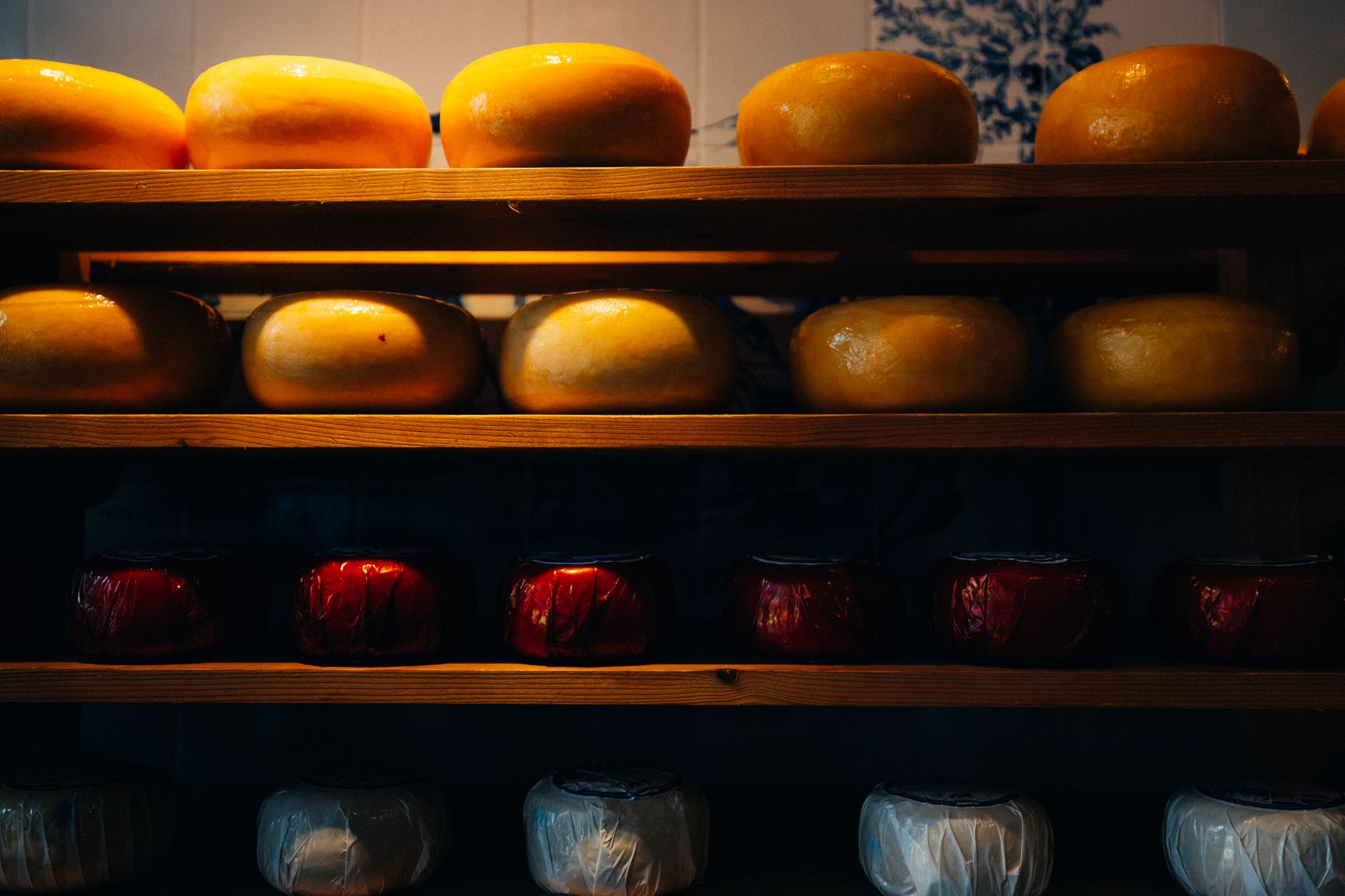
Aged Gouda is one of the best food souvenirs from Amsterdam — properly aged varieties (2–3 years, sometimes labelled extra belegen) have a crystalline texture and a rich, nutty caramel flavour that bears no resemblance to the rubbery supermarket Gouda sold at home.
The tourist cheese shops around Jordaan and on Damrak sell it at €20–30/kg and put on a whole performance (free samples, orange costumes). For a better experience go to Reypenaer on Singel 182. They age their cheese in a 100-year-old warehouse and do proper tastings for €12.50 — you try 6 ages of Gouda with wine or port. You can buy a small wheel vacuum-packed to take home.
Henri Willig has USDA-approved vacuum-packed wheels if you're heading to the US. Albert Heijn is cheapest for everyday Gouda if you just want something for the fridge.
A kaasschaaf (Dutch cheese slicer) is also a practical buy — the Dutch use them instead of knives and you can't find a good one easily at home. Pick one up at HEMA for under €5.
Advertisement
Where to buy: Reypenaer (Singel 182), Henri Willig (tourist areas), Albert Heijn
What to pay: €15–25/kg; tastings €12.50 at Reypenaer
Jenever (Dutch Gin): The Original Amsterdam Spirit
Jenever is the ancestor of modern gin — distilled from malt wine with juniper and spices, produced in the Netherlands since the 17th century. It tastes nothing like the gin you know. Oude (old) jenever is barrel-aged, malty, and warming; jonge (young) is cleaner, more neutral.
Wynand Fockink at Pijlsteeg 31 (a narrow alley off Dam Square) is the place. A tasting room since 1679, tiny and atmospheric, with dozens of house-distilled jenevers and liqueurs. Buy a bottle to take home (€15–30) or do a sampler flight. The Dutch drinking ritual is to fill your glass to the brim and lean over to take the first sip without picking it up — called a kopstootje.
Bols Genever on Keizersgracht has a museum experience and a shop. Supermarket jenever at Albert Heijn runs €8–15 — perfectly fine if you just need a bottle.
Where to buy: Wynand Fockink (Pijlsteeg 31), Bols Genever (Keizersgracht 525), Albert Heijn
What to pay: €8–30/bottle
Advertisement
Tulip Bulbs: Worth Buying, But Check the Rules
The Bloemenmarkt (floating flower market) on the Singel canal is genuinely one of the best places to buy Amsterdam souvenirs that you'll actually use. Tulip bulbs are the obvious buy — varieties like Queen of Night (deep purple), Parrot tulips, or Black Hero aren't easy to source at home, and a pack of 10 bulbs costs €5–15.
One caveat: import rules. EU travellers have no restrictions. If you're going to the US or Australia, you need phytosanitary-certified bulbs — look for the certificate on the packaging before buying. Most Bloemenmarkt stalls sell export-certified bulbs explicitly; look for "Holland Selection" labelling or ask the seller directly.
If you're in Amsterdam in April or May, Keukenhof garden shop (near Lisse, 40 minutes from Amsterdam) has the widest range of certified bulbs and is worth the day trip in bloom season anyway.
Where to buy: Bloemenmarkt (Singel, open daily), Keukenhof garden shop (April–May only)
What to pay: €5–15 per pack of 10 bulbs
Delft Blue Ceramics: Authentic vs Tourist Trap
Delftware — blue and white hand-painted pottery depicting windmills, tulips, and canal scenes — has been made in Delft since the 17th century. It's one of the most iconic Dutch souvenirs and also one of the most faked.
Advertisement
The mass-produced "Delft blue" ceramics in souvenir shops near Dam Square are almost entirely made in Asia and have nothing to do with Dutch craftsmanship. Real Delftware has a factory mark on the base — look for the Royal Delft mark: a stylised JT with a small bottle shape and "Delft" written underneath.
For genuine pieces in Amsterdam, the Spiegelkwartier antiques district (along Nieuwe Spiegelstraat) has certified dealers. Expect €25 minimum for small items; quality antique pieces are €50–300+.
A small Delft blue tile (€10–20) is a practical middle ground — decorative, portable, easier to authenticate, and more likely to be the real thing than a figurine.
For the full Royal Delft experience, the factory is in Delft itself — a 70-minute day trip by train from Amsterdam — with tours and a factory shop selling everything from €15 tiles to €500 vases.
Where to buy: Spiegelkwartier dealers (Amsterdam), Royal Delft factory (Delft)
What to pay: €10–300+ (tiles €10–20, small ceramics €25–80)
Wooden Clogs: Real vs Fake
Wooden clogs (klompen, also called wooden shoes) are the most recognisable Dutch souvenir and also the most cynically counterfeited. The €3–8 clog keychains on Damrak are plastic or low-grade wood, often made in China, and have no connection to Dutch craftsmanship.
Real hand-carved wooden clogs are made at Zaanse Schans, a heritage village 20 minutes north of Amsterdam (free entry, windmill and clog workshop). You can watch the carving process and buy small decorative clogs from €15 or wearable pair from €25–50. More of a novelty than a daily-use shoe, but at least it's the genuine article.
For a smaller-footprint version, a miniature clog from a clog workshop costs €5–10 and is a fair souvenir if you get it from the source.
Where to buy: Zaanse Schans clog workshop, De Klompenboer (Noord-Holland)
What to pay: Miniatures €5–15, decorative pairs €25–50
Hagelslag: The Most Dutch Thing You'll Bring Home
Hagelslag — Dutch chocolate sprinkles — is what Dutch people eat on buttered toast for breakfast. It sounds odd. It is slightly odd. It's also delicious and completely unavailable outside the Netherlands, which makes it one of the best Amsterdam souvenirs you've probably never thought to buy.
Get it at any Albert Heijn or HEMA for €2–4 a box. Buy the dark chocolate variety (puur hagelslag) — not the coloured fairy bread ones. It's cheap, flat-packed, and will confuse and delight whoever you give it to.
Speculaas (Dutch spiced shortbread biscuits, tasting of cinnamon, clove, and cardamom) are in the same category — genuinely Dutch, €2–4 at any Albert Heijn, and practically unknown outside the Benelux.
Where to buy: Albert Heijn, HEMA
What to pay: €2–4 per box
Food Souvenirs Worth Packing
Tony's Chocolonely is a great souvenir pick — a Dutch chocolate brand built around ending slave labour in cocoa supply chains. The bars are chunky, deliberately unevenly divided (a statement about inequality in the supply chain), and genuinely excellent chocolate. Their flagship Superstore on Nieuwendijk sells exclusive flavours you won't find elsewhere. A bar is €4–6; they ship internationally.
Dutch drop (licorice) is a divisive gift. The Dutch eat more licorice per capita than anyone in the world, and their varieties are extreme — salty licorice (zoute drop) is aggressively salty, salmiak contains ammonium chloride. Start recipients with sweet Engelse drop before escalating to salty. Buy it at Jamin candy stores or Albert Heijn. €2–4 for a bag.
Bitterballen mix is an impulse buy you won't regret — these deep-fried Dutch snack balls (beef ragout in a crispy shell) aren't easy to recreate at home, but some Amsterdam specialty shops sell branded kits. You'll have more luck with an Albert Heijn haul: stroopwafels, hagelslag, speculaas, and drop cover the full Dutch food souvenir spread for under €20 total.
Art Prints and Museum Souvenirs
The Van Gogh Museum shop sells genuinely good quality: art prints on archival paper, hardcover catalogues, and design-forward items that don't look like gift shop tat. €8–50. Worth a visit even if you're not going to the museum itself — the shop is accessible from outside.
The Rijksmuseum shop carries canal house miniatures, prints of Golden Age paintings (Vermeer, Rembrandt), and quality ceramics. Higher price point but well-curated. The small Delftware pieces here are authenticated.
Dutch Masters art prints are a strong gift for anyone who likes interior design — Vermeer's Girl with a Pearl Earring or Rembrandt's Night Watch in a good quality print frame up well and are specifically Dutch in origin.
Where to buy: Van Gogh Museum shop (Museumplein), Rijksmuseum shop (Museumstraat)
What to pay: €8–80
HEMA and Albert Heijn: The Underrated Souvenir Shops
Most people skip the supermarkets. Big mistake. Albert Heijn — the main Dutch grocery chain — has entire aisles of things you can’t find outside the Netherlands. The Toppers stroopwafels are the mass-market version, but they’re still better than any tourist-shop pack. The real win is the hagelslag section: a dozen varieties of chocolate sprinkles, from pure cacao to milk chocolate. Grab a few boxes for €2-4 each. They weigh nothing and last months.
HEMA is the department store every Dutch person uses. Their own-brand cookies, drop (licorice), and tea towels with Amsterdam canal prints are dead simple, practical souvenirs. A set of four HEMA tea towels with a canal design costs about €8. They’re made in the Netherlands, not China. I always grab a few speculaas cookie tins — the spiced shortcrust biscuits keep for weeks and make perfect gifts for colleagues. The Albert Heijn near the Bloemenmarkt also sells small Delft-style ceramic tiles for under €10, though they’re not the real thing. For an authentic Amsterdam souvenir that doesn’t scream “tourist,” a bag of Dutch chocolate sprinkles from Albert Heijn beats any keychain.
Where to Buy Amsterdam Souvenirs (by Area)
Albert Cuypmarkt (De Pijp)
Amsterdam's best market, open Mon–Sat. Fresh stroopwafels, aged Gouda, Dutch street food, flowers, vintage clothing. Not a tourist market — locals shop here. Free entry. The best single stop for authentic food souvenirs.
Bloemenmarkt (Singel)
The famous floating flower market. Tourist-facing but selling real products — tulip bulbs, cut flowers, bulb packets. Go for bulbs; skip the fridge magnets. Open daily.
Waterlooplein Flea Market
Amsterdam's oldest flea market, open Mon–Sat. Vintage clothing, antiques, secondhand oddities, Dutch collectibles. Entirely local, no tourist price inflation. Good for vintage Delft tiles and Dutch ceramics at fair prices.
IJ-Hallen Flea Market
Europe's largest flea market, held on the last weekend of most months at the NDSM shipyard (free ferry from Centraal Station). Hundreds of stalls, genuinely eclectic. Worth planning your trip around if you like secondhand markets.
Nine Streets (De Negen Straatjes)
Boutique shopping in the Jordaan. Independent Dutch designers, vintage clothing, antique shops, artisan food. Not cheap, but the right place to find something unique and genuinely local.
Spiegelkwartier (Antiques Quarter)
Along Nieuwe Spiegelstraat and Keizersgracht. Antique dealers specialising in Dutch Golden Age paintings, Delftware, silver, and furniture. The real thing — and priced accordingly.
What to Avoid
The souvenir shops along Damrak, Kalverstraat, and around Dam Square. The clog keychains, windmill magnets, and "Delft blue" ceramics are almost universally overpriced, low quality, and not made in the Netherlands. The same €3 magnet you pay €8 for here costs €2 on Alibaba.
What Can You Bring Back from Amsterdam to the US?
Most Dutch souvenirs travel fine to the US. A few things to check:
- Tulip bulbs: Need phytosanitary certification. Buy from Bloemenmarkt stalls selling export-certified bulbs explicitly — look for the paperwork.
- Cheese: Commercially vacuum-packed hard cheese (Gouda, Edam, aged varieties) is allowed. Henri Willig sells wheels specifically USDA-approved for US import.
- Jenever and alcohol: Normal airline liquid rules apply on carry-on. Checked bags: up to 5L per person duty-free (1L allowance, remainder dutiable).
- Fresh flowers or soil: Not permitted into the US.
- Chocolate and biscuits: Fine, no restrictions.
EU and UK travellers have no restrictions on any of the above.
FAQ
What are the best souvenirs from Amsterdam?
Stroopwafels (fresh from Albert Cuypmarkt), hagelslag, aged Gouda from Reypenaer, jenever from Wynand Fockink, and tulip bulbs from Bloemenmarkt. These are genuinely Dutch, not made in China, and actually unavailable at home. For non-food picks: Delft blue tiles from certified dealers or a print from the Van Gogh Museum shop.
Where is the best place to buy Amsterdam souvenirs?
For food souvenirs: Albert Cuypmarkt (fresh market, De Pijp) and Albert Heijn supermarket. For tulip bulbs: Bloemenmarkt. For authentic Delft blue: Spiegelkwartier antique dealers. For vintage and flea market finds: Waterlooplein or IJ-Hallen. Avoid Damrak tourist shops.
What souvenirs should I avoid in Amsterdam?
Anything from the souvenir strip along Damrak: clog keychains, windmill magnets, and mass-produced Delftware. Most of it is manufactured in Asia and is not meaningfully Dutch. The "Delft blue" pottery in tourist shops near Dam Square is almost never authentic Royal Delft.
What is a typical Dutch souvenir?
Stroopwafels, tulip bulbs, Delft blue ceramics, wooden clogs, jenever, aged Gouda, and hagelslag are the most recognisably Dutch. Of these, stroopwafels and hagelslag are the most practical — cheap, lightweight, genuinely Dutch, and unavailable outside the Netherlands.
What is special to buy in the Netherlands?
Hagelslag (Dutch chocolate sprinkles eaten on toast for breakfast), oude jenever aged in oak, aged Gouda that's genuinely nothing like what you get at home, and authentic Delftware from certified dealers. Tony's Chocolonely chocolate is a Dutch brand with global brand recognition and strong values — a good gift.
Are wooden clogs a good souvenir from Amsterdam?
Real hand-carved wooden clogs from Zaanse Schans are genuine Dutch craftsmanship and worth buying as a decorative souvenir (€25–50). The €3–8 clog keychains on Damrak are plastic or cheap wood, often made in China — avoid them.
Is Delft blue pottery from Amsterdam shops authentic?
Most isn't. Real Delftware carries a Royal Delft factory mark on the base. Mass-produced "Delft blue" pieces sold in tourist shops near Dam Square are typically manufactured in Asia. For authentic ceramics, go to antique dealers in the Spiegelkwartier, or visit the Royal Delft factory in Delft on a day trip.
How much should I budget for Amsterdam souvenirs?
€20–50 covers a solid haul: fresh stroopwafels, a box of hagelslag, speculaas, drop, and a small Gouda. Add €15–30 for a bottle of jenever. Delft blue ceramics and museum prints are €10–80 depending on size and quality. Skip the tourist traps and your money goes three times further.
Planning your Amsterdam trip? Read next:
- 2 Days in Amsterdam Itinerary
- 3 Days in Amsterdam: What to Do
- Amsterdam Pass Review: Is It Worth It?
- Amsterdam in Spring
- Cheap Places to Stay in Amsterdam
Save More
Save 5% on activities
Use code CHASINGWHEREABOUTS5 in the GetYourGuide app.
Book this exact experience in GetYourGuide appGet Travel Tips in Your Inbox
Join 5,000+ travelers. Get exclusive itineraries, honest reviews, and budget hacks once a week.
No spam. Only high-quality travel advice. Unsubscribe anytime.